
The truck may be rented, but you don’t have to do the heavy lifting. A small move service in Suwanee, GA can help load and unload your belongings, leaving you free to coordinate the trip from one place to the next.
Even a short move takes planning, and help with the physical work can make moving day more manageable. This guide explains what loading and unloading support involves and what to consider when planning a small move.
You’ll also learn what to consider when arranging same-day or next-day help. The load size, access at each address, and your preferred timing all affect scheduling. A clear plan helps set expectations and keep the move organized.
Key Takeaways
- Learn what professional loading and unloading help can cover for a smaller move and how to plan the handoff.
- Understand how the size and layout of the load can affect the work and schedule.
- Find out which parking, building-access, and elevator details can shape moving-day logistics in Suwanee.
- See how to think about same-day or next-day timing and where North Point Junk Removal’s services may help with unwanted items.
Professional truck loading and unloading for a small move
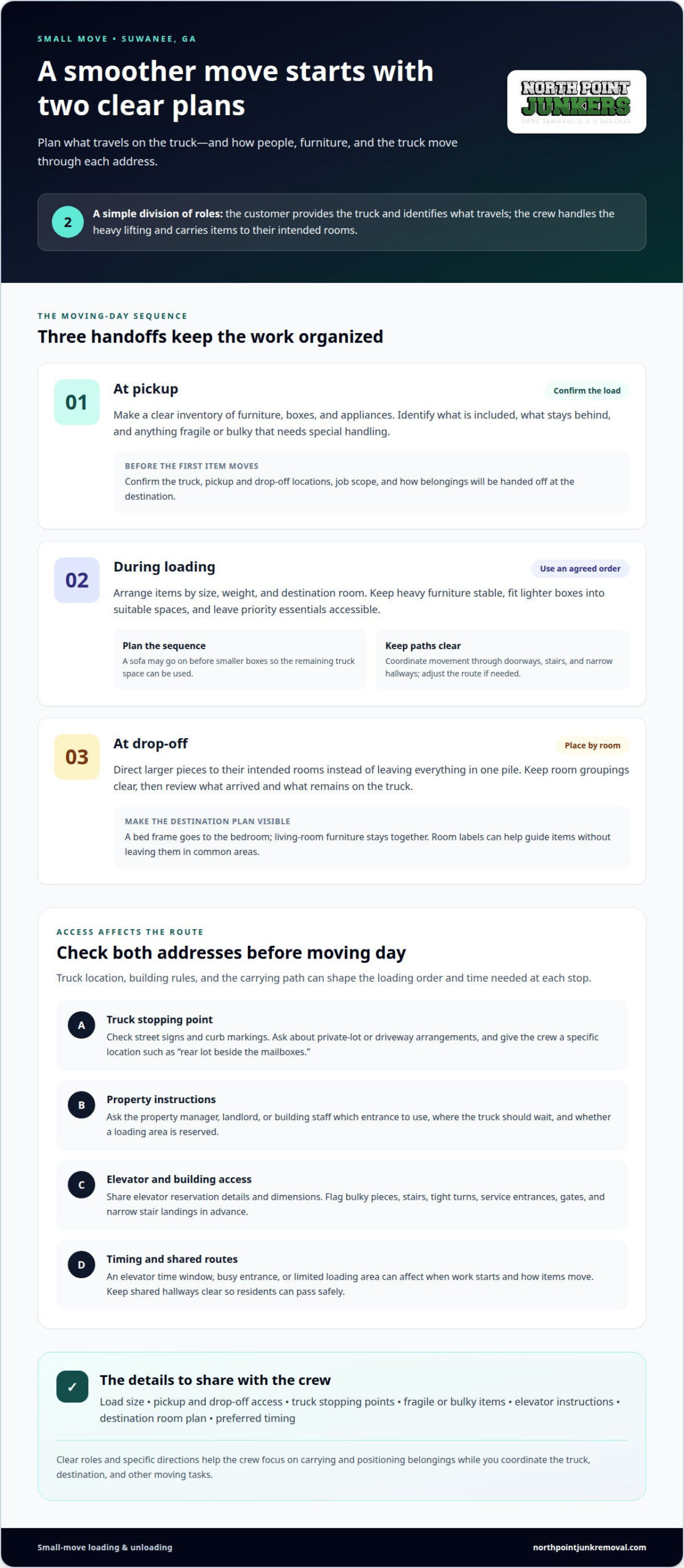
Professional loading and unloading can help make a smaller move more organized. A crew handles the heavy lifting while the customer provides the truck and identifies what travels. This arrangement can suit a studio, a few large furnishings, or belongings moving between an apartment and storage. A small move service in Suwanee, GA can focus on those physical tasks rather than packing every item or arranging the entire move.
Start by making a clear inventory of the furnishings, boxes, and appliances to be moved. Note fragile items and anything that needs special handling so the crew can plan the loading order around the truck and destination. For example, loading a sofa before smaller boxes can make it easier to use the remaining space.
Suwanee, Georgia, had a population of 15,355 people in the 2010 census, according to the U.S. Census Bureau. For a local move, the distance between pickup and drop-off still matters to the day’s logistics. The truck’s arrival time, building access, and the amount of furniture affect how the loading and unloading sequence is organized. Sharing those details early helps the crew prepare for the actual move, not an assumed one.
At pickup, items can be organized by size, weight, and destination room. Heavy furniture needs a stable position, while lighter boxes can fit suitable spaces around it. Keep essentials you’ll need first accessible. A clearly marked box of kitchen supplies, for instance, should not end up behind furniture destined for storage. This planning helps the loading process stay orderly.
Careful handling matters throughout the job. The crew can coordinate how items move through doorways, stairs, and narrow hallways, and keep the loading area clear as belongings leave the home. That helps prevent people carrying items from crossing paths with those preparing the next load. If a piece needs more room or a different route, adjust the sequence.
At the destination, unloading follows the room plan rather than leaving every item in one pile. The customer identifies where larger pieces belong, and the crew carries them to those areas. For example, a bed frame can go to the bedroom while living-room furniture stays together. That makes it easier to see what arrived and what remains on the truck. It also helps the move reach a useful finish sooner.
Before loading, agree on the scope of the job. Identify the truck, pickup and drop-off locations, bulky belongings, and anything that should stay behind. Confirm the work order and how items will be handed off at the destination. These details reduce confusion on a busy day and help the crew work efficiently without guessing about your belongings.
- At pickup: Confirm which belongings are included and note fragile or bulky pieces.
- During loading: Follow the agreed order and keep priority items accessible.
- At drop-off: Direct furniture to its intended rooms and review what arrived.
A clear plan can make loading and unloading smoother, even if you’re handling the truck or coordinating storage separately. Distance, access at both addresses, load size, and room placement all affect the work. Agreeing on roles lets the crew focus on carrying and positioning items, and helps reduce stress when several moving tasks overlap.
Are there local parking, building, or elevator rules that affect moving in Suwanee?
Access conditions can affect a move in Suwanee, but parking and property rules are separate considerations. A curbside space, apartment loading area, and private driveway each have different restrictions. First, identify where the truck can stop while belongings are carried. Its location affects the route, unloading order, and time needed at each address.
For street parking, check posted signs and curb markings near both addresses. These can show where a vehicle may stop or park. Don’t assume the space by the entrance will be available on moving day. A legal space nearby may mean a longer carry, so tell the crew the exact stopping point. Give a specific description, such as “rear lot beside the mailboxes,” rather than “near the building.”
Private lots and driveways have their own access arrangements. Ask the property manager, landlord, or building staff which entrance moving vehicles should use, where the truck should wait, and whether a loading area is reserved. A townhouse driveway may be closest, while a shared apartment lot may require another route. Clear directions help prevent the truck from blocking a driveway or entrance.
Apartment and condominium buildings may have rules for elevators, hall access, and move-in scheduling. Procedures vary by property, so ask the building office what to expect and share its instructions with the crew. If you need to reserve an elevator, its available time window can determine when loading starts or when the truck should arrive.
Check elevator dimensions as well as scheduling. A tall bookcase may not fit upright, and a wide sofa may need another route. Identify bulky pieces in advance and note stairs, tight turns, or a service entrance that could affect access. The crew can then plan the carrying path and loading order around the building layout, avoiding an item reaching an elevator that cannot accommodate it.
Shared hallways and entrances need a traffic plan. A move from an upper-floor unit, for example, may require repeated trips through the same corridor. Keep the route clear so residents can pass safely around the work. The crew can carry belongings in a steady sequence, and room labels at the destination can help direct items without leaving furniture in common areas.
- Before the move: Identify the truck’s permitted stopping point at both addresses.
- For a managed property: Get the move-in instructions from the office or manager.
- For elevators: Share reservation details, dimensions, and bulky-item concerns.
- For access: Describe the entrance, stairs, gate, or loading area clearly.
Pay attention to timing, too. A reserved elevator window, busy entrance, or limited loading area can affect the work order. Tell the crew about the tightest access point, such as a narrow stair landing or garage entrance. If building staff directs the truck elsewhere, the carrying route may change. Specific instructions help everyone follow the same plan.
When unwanted items are narrowing hallways or filling the truck, clearing them before the move can simplify access. Help with move-related clutter can make the route easier to use. Keep the distinction clear: parking and elevator procedures come from the relevant signs or property management, while the move plan organizes the crew’s path through those spaces.
Access planning can help you think through your moving budget, but averages do not determine the cost of a specific move. These figures distinguish full-service moves from labor-only help, which can help you decide what assistance you need for loading, carrying, and unloading.
For a home between 1,000 and 1,500 square feet, the estimate recommends three hours for a two-person moving crew. Building access, elevator scheduling, and the distance from the truck to the entrance are practical details to confirm when planning that work. Share the building’s instructions and the truck’s approved stopping location before move day, so the crew can consider the carrying route while organizing the job.
North Point Junk Removal
North Point Junk Removal can clear unwanted items that complicate a move, even when your main need is loading and unloading support. Removing furniture or household clutter can open walkways, improve access, and leave fewer items to sort at the new address. Residential Junk Removal is suited to unwanted household belongings, while Dumpster Rentals offer an on-site option for larger cleanouts.
Consider removal support if your move reveals belongings you no longer need, a property needs clearing, or clutter is making rooms difficult to access. Choose based on whether you need items hauled away or a dumpster for a cleanout. North Point Junk Removal also provides Hoarding Clean-up and Commercial Junk Removal for situations that call for those services.
For help choosing the relevant service for your move, contact North Point Junk Removal.
Make the next move easier to manage
Before moving day, decide which belongings are coming with you and which need a separate plan. A small move service in Suwanee, GA covers the loading and unloading side of the job; unwanted items may need separate removal. Keeping these tasks distinct helps you plan truck space and any property cleanout.
North Point Junk Removal provides Residential Junk Removal, Hoarding Clean-up, and Commercial Junk Removal. These services can help when furniture is left behind after a household move, a property needs clearing, or a business is removing unwanted items. They handle removal, rather than replacing a moving crew for loading or unloading belongings.
Choose the next step based on what still needs attention: the move itself, leftover household items, or a larger cleanout. A clear plan helps you focus on the new space instead of carrying old clutter forward. Discuss your removal needs with North Point Junk Removal, and move ahead with a little more room to settle in.
Frequently Asked Questions
What should I check before hiring a small-move service in Suwanee, GA?
Before booking a small move service in Suwanee, GA, confirm the written scope: what the crew will load and unload, which items are included, and who supplies the truck. Share details about bulky or fragile belongings and both addresses so the plan reflects the actual job. Review the schedule and how changes to the item list will be handled. Clear expectations help prevent confusion on moving day.
You May Also Like
Apartment Movers in Johns Creek and Their Truck Condition
A clean truck is only one part of a careful apartment move. When choosing apartment movers in Johns Creek, look for a road-ready vehicle suited to…