
A clean truck is only one part of a careful apartment move. When choosing apartment movers in Johns Creek, look for a road-ready vehicle suited to the load, and ask how the crew will secure belongings, protect the building, and explain applicable insurance coverage.
It’s reasonable to focus on the truck: its condition can affect how safely belongings are handled and transported. But the apartment’s layout matters just as much. Floors, doorframes, entryways, and built-in millwork can be vulnerable when furniture and boxes pass through tight spaces.
This guide explains what to look for in a moving truck, how to understand insurance details, and which protective measures can help reduce the risk of scuffs and damage inside an apartment. You’ll also learn how to assess practical needs, from access and loading to the final walkthrough, so you can make an informed decision.
Key Takeaways
- Look beyond a truck’s appearance: its cleanliness, visible condition, and ability to secure the load all matter for a well-planned move.
- Protect floors, millwork, and entryways by planning how furniture and boxes will pass through narrow or high-traffic areas.
- Understand what moving insurance covers and how the claims process works before moving day.
- Plan truck access around apartment parking rules, loading areas, and any community notice requirements.
- For unwanted items left behind, residential junk removal or a dumpster rental can help simplify a move-out cleanout.
Protecting floors, millwork, and entryways
For apartment movers in Johns Creek, protection starts before the first box leaves the unit. A sofa may clear a hallway but scrape a door casing on the turn. A dolly can cross a floor without a mark, or grind grit into its finish. The difference often comes down to the route, the load, and the protective materials used along the way.
Begin with a walkthrough from the apartment’s rooms to the truck. Note the narrowest doorway, sharpest hallway turn, elevator threshold, and any floor transition. In a Georgia apartment, a short route through a shared lobby may include tile, carpet, and a raised threshold. Each surface needs a suitable path, not one cover laid down and forgotten.
Floor protection should lie flat and stay secure underfoot. A loose edge can catch a dolly wheel or create a trip hazard. Movers can lay protective runners along the main carrying route and reposition them as work moves between rooms. For example, protect the hardwood path from a bedroom to the front door, including the turn beside the kitchen island.
- Clear grit first: Sweep the route before placing floor coverings, so dirt doesn’t become trapped beneath them.
- Cover transitions: Protect the point where hardwood meets tile or carpet, especially where a loaded dolly changes direction.
- Keep paths open: Move loose shoes, plant stands, and small furniture away from the marked route.
- Reset shifted covers: Pause if a runner bunches or slides, then flatten it before carrying another item.
Millwork needs separate attention. It includes finished wood details such as baseboards, door casings, and built-in cabinetry. Before moving a tall dresser, the crew can measure it against the doorway and plan the angle of approach. This helps prevent a drawer pull from catching the trim as the dresser pivots.
Protect exposed corners where a large item must pass close to a wall. Use suitable padding on the item or vulnerable surface, and keep straps, buckles, and hardware from rubbing against finished wood. A bed frame carried upright, for instance, can swing at the top as the crew turns. A controlled turn and clear hand signals help prevent sudden contact with a casing.
Entryways bring several risks together: outside grit, tight turns, door hardware, and frequent trips. Secure the door open without straining its hardware, and protect the threshold where wheels cross. If the entry has a glass panel or decorative trim, keep bulky items on a clear carrying line away from it.
Movers should also document existing marks before loading begins. A brief walkthrough can record a scuffed baseboard or chipped threshold in a dated photo, giving everyone a shared record of the starting condition. After the final load, retrace the same route and review those details, from the entry door to the rooms used during the move.
The truck distance changes the plan, but not the need for careful handling. A local move within Johns Creek still requires protecting the apartment’s route, while a longer move adds travel and loading considerations. When requesting an estimate, describe stairs, elevators, tight corners, and built-ins. Clear details help the moving crew plan protection from start to finish, rather than reacting after a scrape.
Ask how the crew will handle a specific challenge, such as moving a heavy table beside a built-in shelf. A useful answer explains the route, the protection, and who will guide the turn. Keep the hall clear of deliveries and other obstacles while items are moving. That preparation lets the crew focus on protecting floors, millwork, and entryways.
Are there parking or truck-access restrictions for apartment moves in Johns Creek?
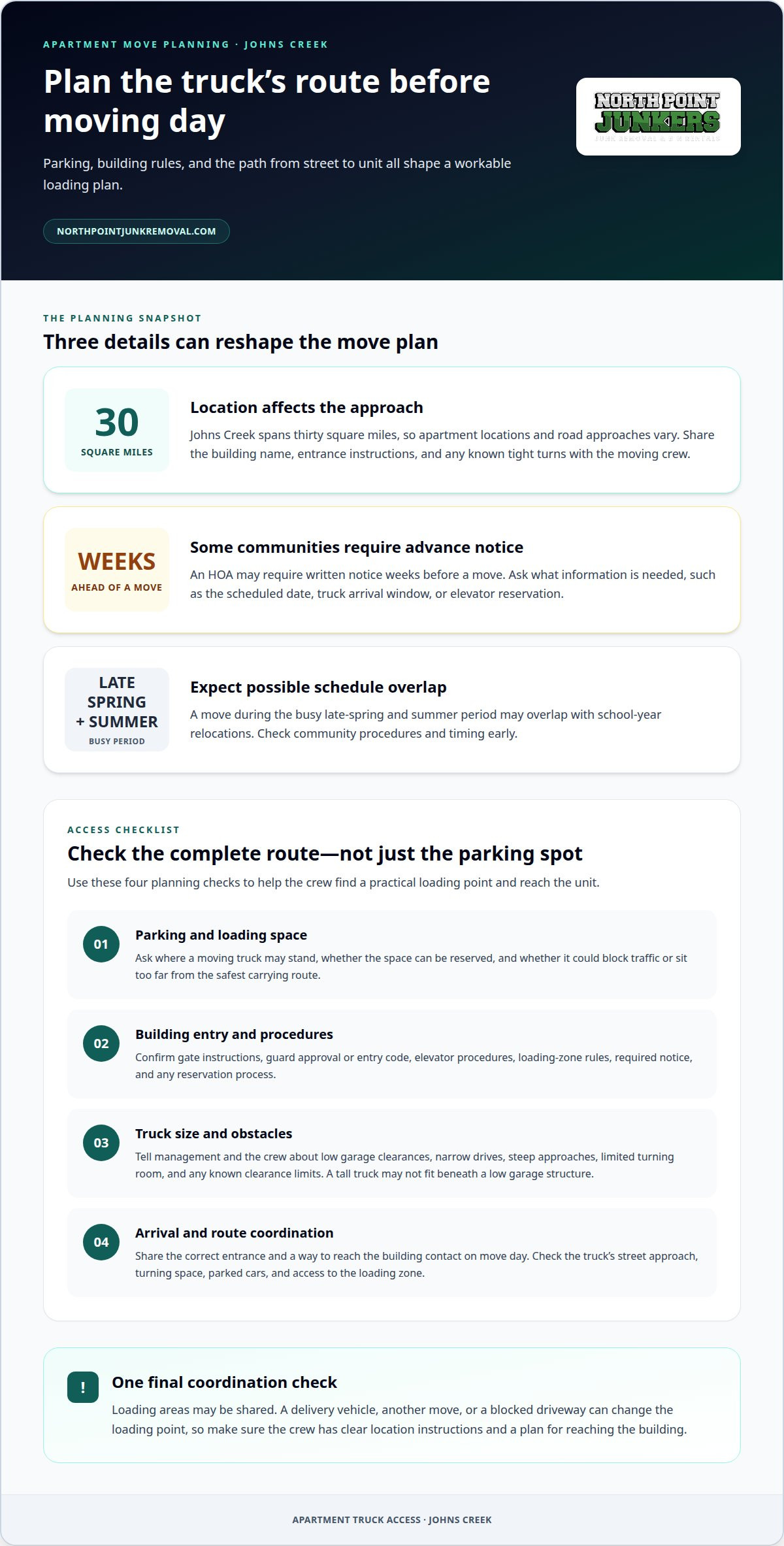
Parking and truck access depend on the apartment community, the building layout, and the route from loading area to unit. In Johns Creek, ask the property manager about designated loading spaces, gate entry, elevator use, and move-in procedures. A truck parked near the entrance may still block traffic or sit too far from the safest carrying route. Planning those details before moving day helps the crew choose a practical place to load.
Community rules can affect timing. Some communities require written notice to the HOA weeks before a move. Ask what details the notice needs, such as the scheduled date, truck arrival window, or elevator reservation. Procedures vary, so identify the relevant building contact early. A move during the busy late-spring and summer period may also overlap with school-year relocations.
Truck access starts at the entrance. Depending on the property’s procedures, a gated community may require an entry code, a guard’s approval, or a scheduled arrival. If the driveway, covered entrance, or parking garage has clearance limits, share the truck’s expected size with management. A tall moving truck, for example, may not fit beneath a low garage structure, even if a smaller vehicle can enter.
Check the full route, not just the parking space. A truck may need room to turn from the street, avoid parked cars, and reach a loading zone without blocking another resident. Johns Creek spans thirty square miles, so apartment locations and road approaches vary across the city. Give the moving crew the building name, entrance instructions, and any known tight turns. A clear location plan prevents last-minute changes to the loading point.
- Ask about parking: Find out where a moving truck may stand and whether the space can be reserved.
- Confirm building access: Note gate instructions, elevator procedures, loading-zone rules, and any required notice.
- Describe obstacles: Report low clearances, narrow drives, steep approaches, or limited turning room.
- Set an arrival plan: Share the correct entrance and a contact method for reaching the building on move day.
Loading areas often serve several residents. A delivery vehicle, another move, or a blocked driveway can quickly change access. If the community assigns a loading window, coordinate the truck’s arrival with it. Keep the route from the loading space to the apartment clear of carts, stored items, and parked vehicles. If the designated space is unavailable, ask management which alternate area is permitted.
Traffic can affect arrival times around Johns Creek, so plan around the property’s access window rather than assuming the truck can wait nearby. Tell the moving team if the truck must enter through a particular gate or approach from a specific direction. If the arrival time changes, follow the building’s process for updates. This is especially useful when the loading area is shared or access depends on staff.
Before confirming the move, put the key details in one message: building address, entrance, loading location, parking instructions, elevator arrangements, and written-notice requirements. Add a photo of a low-clearance sign or narrow driveway if it helps explain the approach. These details help the crew plan truck access and keep loading orderly, since communities do not all follow the same rules.
North Point Junk Removal
North Point Junk Removal can help with unwanted furniture, boxes, or household items left after an apartment move. Choose Residential Junk Removal for a move-out cleanout, or rent a dumpster when you’re clearing items over a longer period. These services handle cleanup after the moving truck leaves, without replacing the movers or managing the apartment’s access plan.
For a rental unit, clearing leftover belongings can make the final walkthrough easier to manage. If a home has a more extensive accumulation, Hoarding Clean-up may be a suitable next step. The right service depends on the type and amount of material to remove. Request a free estimate from North Point Junk Removal using photos of the items.
Make Your Next Move Easier to Manage
Use your move plan to decide what happens after the last box leaves. Separate the belongings you’re taking from items that need removal, then consider whether you have a few pieces or a larger cleanout. This can make the apartment handover more organized and help keep unwanted items from lingering in shared spaces.
North Point Junk Removal offers Residential Junk Removal for household items, Hoarding Clean-up for more extensive cleanout needs, and Commercial Junk Removal for business properties. These services address removal around a relocation, not truck access or transport to another home. If you’re coordinating apartment movers in Johns Creek, arrange leftover-item removal as a separate task for a clearer finish. Request a free photo-based estimate or book service online.
Choose the next step that fits what remains, then make a plan that works with your building’s move-out arrangements. For help with unwanted items, contact North Point Junk Removal today. A practical plan can make the transition feel more manageable.
You May Also Like
Small Move Service in Suwanee, GA for Loading and Unloading
The truck may be rented, but you don’t have to do the heavy lifting. A small move service in Suwanee, GA can help load and unload your belongings,…