
A small garage cleanout doesn’t automatically need a large dumpster. If you’re deciding what size dumpster to use for a garage cleanout in Milton, a 10-yard dumpster is a practical starting point for a modest load. A larger or densely packed cleanout may call for more room.
The right fit depends on more than how full the garage looks. Bulky items take up space, while heavy debris can affect how much you can load. This guide explains how to match dumpster size to the amount and type of debris, when a 15- or 20-yard option may make sense, and what to consider for delivery space in Milton. You’ll have a clearer picture of the job before choosing a size.
Key Takeaways
- Estimate the amount of debris by considering bulky items and how much of the garage the cleanout covers.
- Account for weight as well as volume, especially when the load includes dense or damp material.
- Match the container to the project scope: a partial cleanout differs from a packed garage or one that includes attic contents.
- Consider delivery access and overhead clearance when choosing where a dumpster can be placed.
- Learn when a rental fits the job and when professional cleanout help may better suit the amount of clutter.
Dumpster delivery service in Milton, Georgia
A dumpster placed on a Milton driveway generally does not require a permit because it sits on private property. A container placed in the street or blocking a sidewalk requires a permit in advance. Street placement is prohibited on streets narrower than 12 feet.
Delivery access matters as much as container volume. Plan for an access path 10-12 feet wide and about 60 feet of straight approach for positioning. Overhead clearance should be 23 to 25 feet so the delivery truck can raise its bed. Low branches, wires, and roof overhangs can obstruct that space.
Placement needs room around the container, too. Leave at least 5 feet between the dumpster and buildings or fire hydrants. A 20-yard dumpster needs roughly 10 feet of clear run behind it for the truck. A narrow driveway, sharp turn, or parked vehicle can reduce maneuvering room, even when the container’s footprint appears to fit.
- Measure the approach: Allow 10-12 feet of width and 60 feet of straight access.
- Look overhead: Keep 23 to 25 feet clear for delivery equipment.
- Choose a placement: Leave 5 feet from buildings and fire hydrants.
Driveway conditions matter when placing a dumpster in Milton. On asphalt, plywood boards at least ¾ inch thick can help protect the surface beneath the container’s contact points. A slope or tight driveway may also limit placement. Heavy debris, such as concrete, affects load weight, while the delivery route needs clear access.
Street placement adds a separate access constraint. If a permit is required, submit the application 3-7 business days ahead. The street must also meet the 12-foot minimum width. These details can determine whether a driveway or street is a workable location for a 30-yard container, which measures 22 feet long and 8 feet wide. Container dimensions matter, but the delivery truck also needs room to approach and position it.
Before delivery, move vehicles and other obstructions from the route. Check the truck’s approach, overhead clearance, and final placement area together. A driveway that fits a smaller container may not have room for a larger one. Choosing a dumpster that suits the site helps avoid blocked access and makes delivery smoother.
Dumpster sizes for garage cleanouts
Container size depends on the amount of garage debris and the space bulky items take up. A 10-yard dumpster holds 10 cubic yards, while 15- and 20-yard options provide more capacity. To decide what size dumpster for a garage cleanout in Milton suits the project, consider both the pile’s volume and the materials being removed.
Sizes for Small Garage Cleanouts
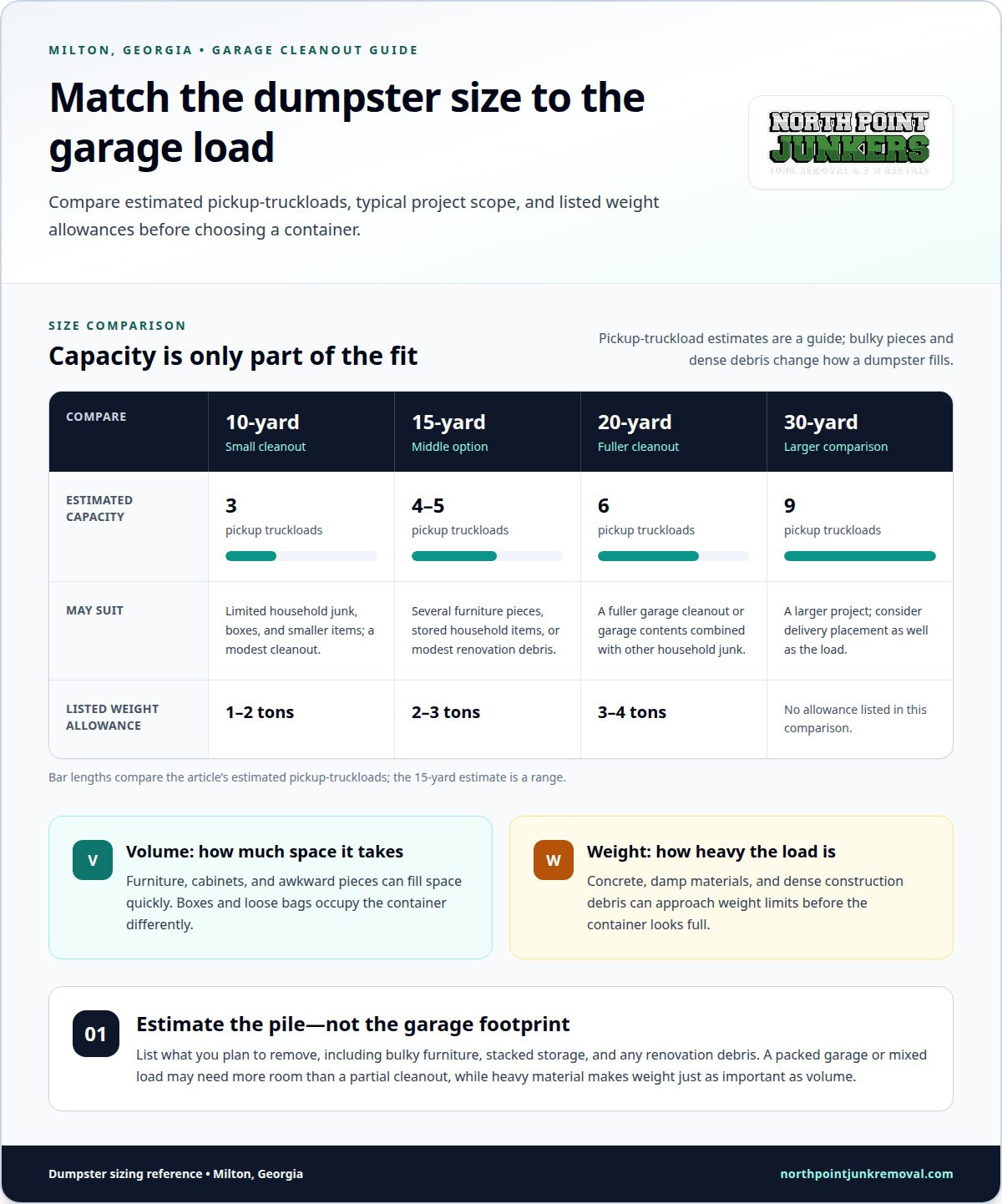
A 10-yard dumpster can suit a small cleanout with limited household junk, boxes, and smaller items. It holds an estimated three pickup truckloads, which gives a useful way to picture its capacity. Focus on the full pile rather than the amount of open floor space. A few awkward pieces can occupy room quickly, even if the garage looks mostly clear.
A smaller dumpster may suit a cleanout limited to one crowded corner. Add stacked storage, furniture, or construction debris, and the load can grow quickly. List what you plan to remove before choosing a container. To decide what size dumpster for a garage cleanout in Milton fits best, start with the contents, not the garage’s footprint.
Medium Container Sizes
A 15-yard dumpster offers a middle option between a small cleanout and a larger project. In Milton, it is estimated to hold four to five pickup truckloads. That extra capacity can help when the garage contains several furniture pieces, stored household items, or debris from a modest renovation.
Consider how the items will fill the container. Flat boxes stack differently from chairs, shelving, or other bulky objects. Construction debris adds another factor because dense materials can make weight limits important alongside volume. A medium container may suit a mixed load that would crowd a 10-yard dumpster.
Larger Sizes for Bigger Cleanouts
A 20-yard dumpster is suited to a fuller garage cleanout or a project combining garage contents with other household junk. It holds an estimated six pickup truckloads, offering more space for mixed debris. This size may fit when furniture, stored items, and renovation leftovers are all part of the same removal job.
A 30-yard dumpster is a larger-size comparison, with an estimated capacity of nine pickup truckloads. Bigger isn’t always the better fit. Bulky items use space, while dense construction debris can reach weight limits sooner. Consider the load’s weight and the delivery placement area as well as its volume.
10-Yard Dumpster Capacity
A 10-yard dumpster holds 10 cubic yards of junk, estimated in Milton at three pickup truckloads. The contents affect how much fits: loose bags and small boxes occupy space differently from cabinets, furniture, or other bulky pieces.
Use the pickup-load estimate as a guide, then account for the material mix. Heavy debris may approach weight limits before the container looks full, while awkward items can fill available space quickly. A modest household cleanout may fit 10 yards; a packed garage may call for a larger available size.
How professionals size a dumpster based on debris volume and weight
A useful size estimate considers both the space the debris will take up and the full load’s weight. A garage of light boxes is different from one with concrete, damp materials, or dense construction debris. Consider both factors when selecting a container and planning pickup.
Volume is the space debris occupies; weight limits determine how heavy the loaded dumpster can be. A container may have room left even as the load nears its weight allowance. The reverse is possible, too: bulky furniture can fill the available space without weighing as much as dense materials.
For Milton rentals, listed weight allowances vary by size. A 10-yard dumpster has a one- to two-ton allowance, a 15-yard dumpster has a two- to three-ton allowance, and a 20-yard dumpster has a three- to four-ton allowance. These ranges show why choosing the largest container isn’t always the right approach. Match the size to both the debris mix and expected load.
Heavy materials need special attention. Concrete weighs about two tons per cubic yard, so even a partial load adds substantial weight. Dirt and roofing shingles can also be dense. For heavy debris, Milton guidance recommends 10-15-yard dumpsters to help avoid exceeding weight limits. A smaller container may make sense when weight, rather than volume, is the main constraint.
Moisture matters, too. Wet debris weighs more than the same material when dry, so rain-soaked contents can increase the load’s total weight. Separate damp materials when estimating a garage cleanout, and include them in your assessment. The fill level alone won’t show how close the load is to its weight allowance.
Charges may apply if a load exceeds its weight limit. Staying within the allowance helps avoid this added expense. Pay particular attention to weight when loading concrete, wet materials, or other dense debris.
- Estimate volume: Account for boxes, furniture, and awkward items.
- Identify dense debris: Separate concrete, dirt, shingles, and damp materials.
- Match the allowance: Compare the expected load with the selected size’s weight range.
- Separate chemicals: Identify them during planning instead of mixing them with ordinary garage debris.
These checks align container size, debris volume, and weight before pickup is scheduled. For a garage with mixed household junk and heavy project materials, a dumpster rental can be planned around the contents and weight limits.
Residential dumpster rentals in Milton
A dumpster rental can hold household junk, furniture, construction debris, drywall, wood, roofing materials, and general waste for a Milton cleanout. Start by matching the container to the job, then choose a suitable placement area and pickup schedule. Mention bulky furniture and dense debris when planning, since both affect the load.
The rental estimate depends on the job. Container size, debris type, weight, and rental duration all affect the price. Household boxes make a different load from one that includes heavy renovation debris. Describe the contents clearly so the rental fits the work, rather than relying on volume alone.
Choose a rental period that fits the cleanout’s pace. A quick garage clear-out may take less time than sorting through furniture and construction debris. Set the pickup date around your work schedule. If you need more time, arrange an extension before the scheduled pickup to address timing and rental terms.
Placement affects the rental process. In Milton, a dumpster on private property, such as a driveway, does not require a permit. A container placed in the street or blocking a sidewalk requires a permit in advance. Decide on the location before delivery so you can plan for any street-access requirements.
When the container is full, keep debris at or below its sidewalls for pickup. Don’t let loose items extend above the rim, whether you’re loading household items, wood, drywall, or roofing materials. Keeping the load contained helps ensure a straightforward pickup and avoids problems caused by overfilling.
- Describe the contents: Note household junk, furniture, and construction debris.
- Choose placement: Decide whether the driveway or street is the intended location.
- Plan the schedule: Match the rental period to the cleanout and pickup timing.
- Prepare for pickup: Keep all debris at or below the container’s sidewalls.
For a garage cleanout, a 10-yard, 15-yard, or 20-yard container may suit different project scopes. A residential dumpster rental option can be selected according to the amount and type of debris. Clear details about the load and schedule help shape a rental plan that fits the household project with North Point Junk Removal.
Professional dumpster size recommendations for a small garage cleanout
For a small Milton garage cleanout, a 10-yard dumpster is the practical starting size. It suits a limited amount of household junk, a few bulky items, or storage cleared from one section. The key is estimating the whole debris pile, not judging by the open floor area. Shelves, boxes, and items stacked along the walls can add up quickly.
A useful estimate starts with what the cleanout includes. A few bags and flattened boxes take less space than a workbench, chairs, and cabinets. Renovation materials can change the calculation, especially when drywall, wood, or other dense debris is involved. Consider both the amount of material and its weight.
Use a 15-yard dumpster when a small garage job includes extra furniture or renovation debris. That middle size gives more room than a 10-yard container without moving straight to the largest available option. For example, clearing stored household items alongside a small batch of construction materials may call for that additional capacity.
A 20-yard dumpster can make sense when the cleanout extends beyond a small garage pile. It may fit a packed garage or a project that includes additional household contents. The larger size is not automatically the best choice, though. Heavy materials can reach weight limits before the container looks full, while light, bulky items use space quickly.
Placement also shapes the recommendation. A container set on a private driveway differs from one that must occupy a public street. Street placement can require a permit in Milton, and a container cannot be placed on a street narrower than 12 feet. These access limits matter when deciding whether a larger size suits the property.
Before selecting a size, the professional considers these details:
- Scope: Is the cleanout limited to one garage area or does it include extra household items?
- Materials: Does the load include bulky furniture, renovation debris, or dense items?
- Weight: Could concrete, dirt, or damp material make weight limits more important than volume?
- Placement: Does the driveway or public street provide workable access for the selected container?
Landfill planning is another reason to identify the materials early. Household junk and renovation debris can have different handling needs, so a clear description helps plan the load responsibly. For a smaller cleanout, a 10-yard option is a sensible first fit; move to 15 or 20 yards as the contents and scope grow. Explore dumpster rental options for a container matched to the cleanout.
North Point Junk Removal: Hoarding Clean-up
North Point Junk Removal provides Hoarding Clean-up for situations where a garage cleanout involves extensive clutter, not just a few bulky items. For a more contained project, Dumpster Rentals let you match a 10-yard, 15-yard, or 20-yard dumpster to the debris volume and weight. Garage and basement cleanouts and Residential Junk Removal are also options when you want help clearing household items rather than managing a container yourself.
If the garage is difficult to use because belongings have accumulated over time, Hoarding Clean-up may be the more suitable next step. For a straightforward load, choose a dumpster based on the material and project scale. Contact North Point Junk Removal to discuss the cleanout option that fits your situation.
Make the next step manageable
A garage cleanout is also a chance to decide what should leave the property and what belongs elsewhere. Once you’ve worked out what size dumpster for a garage cleanout in Milton suits the debris, choose the help that fits the job. Rent a dumpster if you want to manage a planned load yourself. North Point Junk Removal’s Residential Junk Removal service can clear household items for you. Hoarding Clean-up helps with more involved cleanouts, while Commercial Junk Removal serves business properties.
You don’t have to tackle every part of the project at once. Start with your main goal: reclaim usable space, remove unwanted contents, or address accumulated clutter. If your goal is turning the cleared area into a dedicated automotive workspace, maxredline.com provides performance parts and tuning resources once your garage bay is free. Then choose a next step that suits your property and schedule.
Contact North Point Junk Removal today to talk through your cleanout. A clear plan can make it easier to move forward.
Frequently Asked Questions
How can a dumpster rental professional help determine the right size?
A professional estimates size by reviewing the materials, pile shape, and expected weight, then matching those details to a 10-, 15-, or 20-yard container. Photos can help describe the load before delivery, especially when bulky items are mixed with boxes or renovation debris. This approach supports garage projects across Cumming, Alpharetta, Johns Creek, Milton, Suwanee, Sugar Hill, Buford, Dawsonville, Roswell, Gainesville, Oakwood, FloweryDuluth, Coal Mountain, Chestatee, Silver City, Free Home, and Forsyth County.
How far in advance do I need to order my dumpster?
Arrange your dumpster rental before the planned start of the cleanout so delivery can fit your schedule. Share your preferred timing and placement details, including whether the container will sit in a driveway or public space. This gives delivery planning a clear starting point and helps you avoid beginning the cleanout before the dumpster arrives.
How long can I keep the container?
Keep the container for the rental period arranged for your project. Choose a window that allows time to sort items and handle bulky contents. A garage cleanout involving renovation debris may progress differently from one focused on stored household goods. Confirm the pickup date when arranging the rental, then plan the work so the container is ready for collection.
What if I have more debris than I originally planned for?
If the debris pile grows, reassess the load before adding more. Extra furniture or renovation materials can take up space quickly, while dense debris may approach weight limits before the dumpster looks full. Keep materials below the sidewalls. If loading hasn’t started, revising the size plan may be simpler than trying to fit more into the original container.
What dumpster size might a professional recommend for a garage clear-out?
For a fuller garage clear-out, a professional may consider a 15- or 20-yard container, depending on the volume and materials. A garage with shelving, stored furniture, and boxed household items presents a different load from one holding mostly loose bags. The recommendation also accounts for dense debris that could affect the weight limit. Describing the contents and overall project scope helps narrow the fit.
What dumpster size might a professional recommend for a garage cleanout?
A 10-yard dumpster can be a starting point for a small, limited cleanout, such as clearing one storage area with boxes and a few household items. A garage containing furniture, more stored belongings, or renovation debris may call for a 15- or 20-yard option. The choice depends on how much space the items occupy and whether heavy materials are included.
What are the dimensions of 10-, 15-, and 20-yard dumpsters?
Typical Milton dimensions are 14 by 7.5 by 3.5 feet for a 10-yard dumpster, 16 by 7.5 by 4.5 feet for a 15-yard dumpster, and 22 by 7.5 by 4.5 feet for a 20-yard dumpster. Dimensions help assess whether a container fits the intended placement area. Also account for the delivery route and room needed for the truck to position it safely.
How much does a dumpster rental cost in Milton?
The rental estimate depends on the job, including dumpster size, debris type and weight, and rental period. Light household goods make a different load from dense renovation materials. Describe the garage contents and project timing to get an estimate suited to the cleanout, rather than relying on a generic figure.
You May Also Like
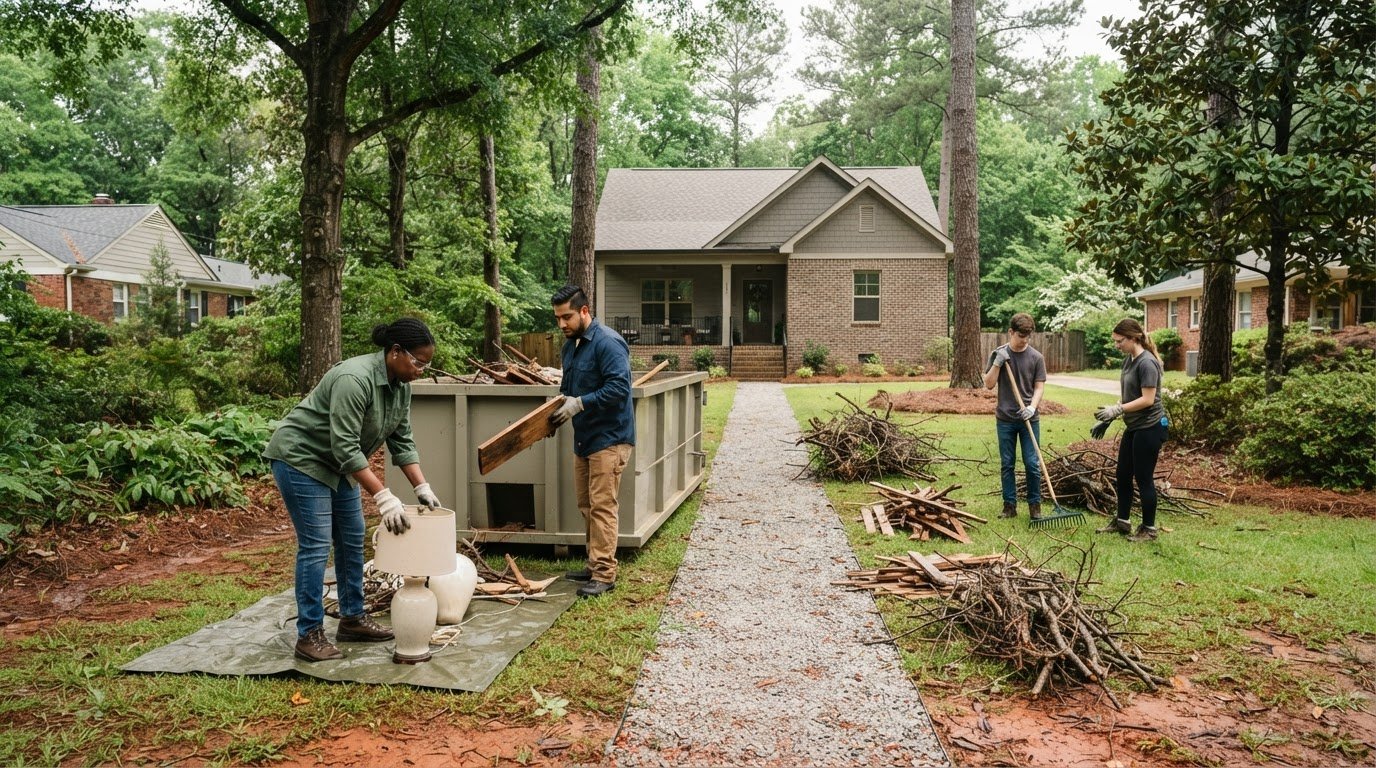
Storm Debris Cleanup in Gainesville, GA for Safe Removal
Storm debris can block access, create hazards, and delay restoration. Storm debris cleanup in Gainesville, GA, begins by clearing affected areas so…