
Storm debris can block access, create hazards, and delay restoration. Storm debris cleanup in Gainesville, GA, begins by clearing affected areas so recovery work can proceed. A careful cleanup also separates belongings that may be salvageable from debris that needs removal.
After a storm, it’s natural to want the property cleared quickly without losing belongings that can still be saved. An organized approach makes the work more manageable and focuses removal on what actually needs to go.
This guide explains how emergency cleanup typically proceeds, how to protect salvageable items while clearing damaged spaces, and what responsible debris disposal involves in Gainesville, Georgia. You’ll also learn what can affect the cleanup plan and when junk removal or a dumpster rental can help with the work ahead.
Key Takeaways
- Clear storm debris that blocks access or creates hazards before restoration work begins.
- Set aside items that may be salvageable before removing damaged materials.
- Sort debris thoughtfully to support responsible disposal and keep the cleanup organized.
- Choose a cleanup approach based on the amount of debris and the areas that need clearing.
- Residential junk removal or a dumpster rental can help manage debris when a property needs clearing.
Emergency storm cleanup
Storm cleanup starts by identifying blocked access, unstable debris, and areas where water is collecting. In Gainesville, Georgia, storm debris can create hazards and restrict movement. Before restoration begins, assess the site from a safe position and plan around clear access routes and affected areas.
Storm-related demand, road access, and the amount and location of debris can affect cleanup timing in Gainesville. When arranging service, describe any blocked driveway, entrance, or work area so the removal can be planned around the immediate need.
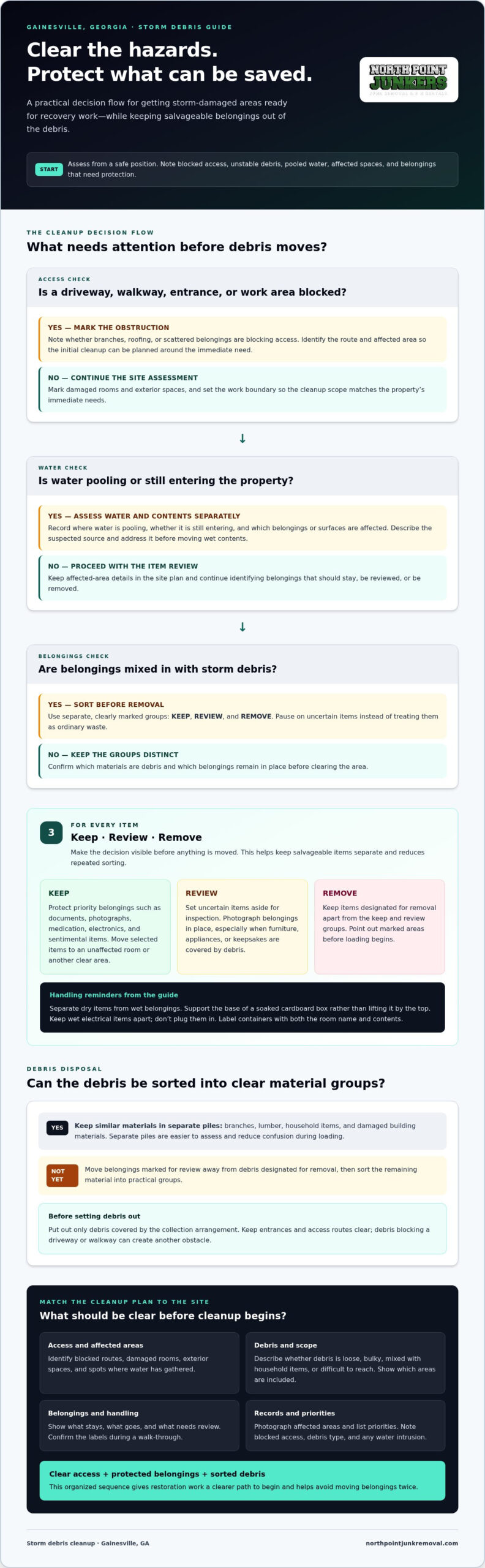
Before cleanup begins, make a short site plan. These steps help describe conditions clearly and focus the initial work:
- Identify blocked routes. Note whether branches, roofing, or scattered belongings obstruct a driveway, walkway, or building entrance.
- Mark areas needing attention. Point out damaged rooms, exterior spaces, and any spot where water has gathered.
- Separate priority belongings. Identify items you want protected or reviewed before debris is moved.
- Describe the debris. Explain whether the material is loose, bulky, mixed with household items, or difficult to reach.
- Set the work boundary. Show which areas are included, so the cleanup plan matches the property’s immediate needs.
Standing water and wet materials need a separate assessment. Note where water is pooling, whether it is still entering, and which belongings or surfaces are affected. If water continues to enter, describe the suspected source and address it before moving wet contents. For example, water near a damaged window means both the wet area and the opening need attention. Keep salvageable belongings separate from items marked for removal.
Before arranging storm cleanup in Gainesville, photograph affected areas and list your priorities. Note blocked access, the type of debris, and any water intrusion. Define the cleanup scope, how belongings should be handled, and what debris needs removal. Clear details help match the work to the property’s needs.
During the first visit, walk through the site together and point out changes since the storm. A branch blocking the side entrance may affect access differently from scattered debris in an open yard. Confirm which items stay, which materials go, and which areas need clearing first. That sequence helps avoid moving belongings twice and gives restoration work a clearer path to begin.
Protection of salvageable items
Storm damage can mix belongings with debris, so sorting carefully matters. A dry chair beside soaked boxes needs a different decision from a broken shelf under fallen branches. Before moving anything, identify what must stay, what needs inspection, and what is clearly debris. This distinction helps protect valuable or meaningful items during cleanup.
Review items visually from a safe, accessible area. Photograph belongings in place, especially where debris covers furniture, appliances, or keepsakes. Photos help you remember their locations and compare conditions after they are moved. Use separate areas or labels for “keep,” “review,” and “remove.” For example, put a family album with a damp cover in the review group rather than treating it as ordinary waste.
Use these steps to keep salvageable belongings organized:
- Mark priorities. Write down important documents, photographs, medication, electronics, and sentimental items before clearing a room.
- Separate by condition. Keep dry items apart from wet belongings, such as a dry table separated from waterlogged boxes.
- Choose a protected location. Move selected items to an unaffected room or another clear area away from debris handling.
- Label containers clearly. Mark boxes with both the room name and contents, such as “living room, framed photos.”
- Pause for uncertain items. Set aside objects covered by debris until you can inspect them without rushing.
Handle wet contents carefully. A soaked cardboard box can weaken as it moves, so support its base rather than lifting it by the top. Keep containers holding photographs or paperwork separate from loose debris for closer review. Before moving a damaged appliance, note its location and visible condition. Don’t plug in wet electrical items; keep them apart until they can be assessed safely.
Clear communication helps prevent mistakes during removal. Show the work team which marked areas contain items to keep, and point out belongings hidden behind furniture or under branches. A red tag on a cabinet, for example, can signal that its contents need review before the cabinet leaves the room. Keep the “remove” and “keep” areas separate so hurried loading doesn’t blur the decision.
Before cleanup starts, walk through each affected space and confirm the labels. Take another photograph after priority items are relocated. That final check gives you a clear record of what was protected and what remains to inspect, while allowing debris clearing to proceed without repeated sorting.
Responsible debris disposal
In Gainesville, don’t assume every storm-damaged item belongs at the curb. Put out only debris covered by the collection arrangement, and keep entrances and access routes clear. A pile blocking a driveway or walkway can create another obstacle during cleanup.
Sort materials into practical groups. Keep fallen branches separate from damaged furniture, household contents, and loose roofing pieces. Separate piles are easier to assess and reduce confusion during loading. For example, a branch pile beside broken patio chairs makes the different materials clear.
Use a simple sorting process before moving debris:
- Group similar material. Keep branches, lumber, household items, and damaged building materials in distinct piles.
- Keep salvageable belongings out. Move items marked for review away from debris designated for removal.
- Separate containers. Keep cans, bottles, and other closed containers apart from loose debris until their contents are known.
- Make piles accessible. Place sorted material where it can be reached without crossing blocked paths or unstable debris.
- Describe unusual items. Point out materials that are sharp, heavy, tangled, or difficult to move before loading begins.
Keep the curb and nearby access space orderly. A stack of branches should not hide smaller objects such as broken glass or roofing pieces. Don’t conceal loose material beneath larger items; visible piles are easier to identify. If debris is scattered across the yard, gather it into clear groups only when the area is safe to approach.
Pay attention to containers among storm-damaged materials. A sealed can or bottle may not be ordinary household debris, so keep it separate rather than mixing it into a general pile. Don’t put unknown contents into a container meant for routine household waste. Clear identification helps prevent uncertain items from being mistaken for ordinary cleanup material.
Before pickup, walk the planned route from the property to the collection point. Look for branches across paths, debris near gates, and belongings that could be loaded by mistake. Confirm which piles are included and which should remain. This final review helps avoid repeat handling and keeps removal focused on the intended materials.
Responsible disposal also means keeping the cleanup area usable after removal. Gather small loose pieces beside larger piles, check around entrances, and keep remaining debris from spreading into cleared spaces. A tidy, clearly separated staging area makes the next step easier, whether cleanup continues or restoration begins.
Storm debris removal in Gainesville, Georgia
In Gainesville, storm debris can block access and create hazards, so clearing it comes before restoration. Local pickup, contractor selection, and insurance questions each require a separate decision.
Fallen tree and power line precautions
A fallen tree can conceal damaged branches, trapped belongings, or a blocked route. A downed power line may be hard to distinguish from other wires, so don’t approach or move it. Keep people away and leave the tree or wire untouched. Describe its location and nearby access points when arranging professional help.
Which companies are licensed, insured, and highly rated? Those are separate claims, and a rating alone doesn’t establish licensing or insurance. Choose a Gainesville-area company only when its credentials and coverage can be verified, and consider whether its cleanup scope includes the debris on your property.
Free storm debris pickup and scheduling through Gainesville or Hall County depend on the arrangements announced for a specific event. Don’t assume curbside collection is free or automatically scheduled. Follow the instructions for that storm to determine whether pickup applies and how to arrange it.
Before setting debris out, note whether the pile blocks a driveway, walkway, or entrance. A clear description helps distinguish curbside material from debris still obstructing access to the property. Keep salvageable items separate from materials intended for removal.
Insurance coverage for removal
Homeowners insurance coverage for storm debris removal in Gainesville varies by policy and claim. Review the policy wording alongside the cause of damage, the affected property, and the cleanup being considered. Keep photographs and written records of damaged areas and removed materials to organize the claim details.
If it’s safe, record where a fallen tree landed and what it affected before cleanup changes the scene. For scattered branches, photograph the area and note any blocked access points. Keep receipts and removal paperwork with those records. These details help you describe the work when reviewing coverage.
Municipal collection and private removal are different options. For a city or county collection, follow the instructions for that storm and identify the designated debris placement area. For private removal, describe the pile’s location, material types, access limits, and anything that must stay. These details help define the scope and avoid confusion about what will be removed.
If restoration crews, such as disaster recovery teams like Fire Industry Restoration Experts, need access to a damaged roof, doorway, or yard, prioritize debris blocking their route. Keep trees near wires out of the cleanup area until the immediate hazard is addressed. Once access is clear, sort and remove the remaining debris in a controlled sequence.
Who provides storm debris cleanup in Gainesville, GA?
Property owners can compare municipal collection with private cleanup services. The right option depends on the debris, its location, and what needs clearing.
Which companies are licensed, insured, and highly rated? No company can be identified from the available local facts here. Treat licensing, insurance, and customer ratings as separate details, and look for clear documentation of the specific work being offered.
Free storm debris pickup from Gainesville or Hall County depends on event-specific arrangements. Follow the instructions issued for the storm to learn whether collection is offered, what debris is included, and where to place it.
To arrange pickup through Gainesville or Hall County, follow the city or county instructions for that storm. Use the stated process and provide the debris location and type so the request matches the collection plan.
Fallen tree and power line precautions
Keep away from a fallen tree if it rests on a building, blocks a route, or may conceal a downed wire. Never touch or move a power line, and keep others clear of the area. Share the exact location and visible conditions when reporting the hazard. Ordinary debris removal should wait until the danger is addressed.
For branches away from wires and structures, note whether they block a driveway, entrance, or walkway. This helps describe the cleanup without treating a potentially dangerous tree as ordinary yard debris. Don’t cut, pull, or load material tangled with a wire.
Insurance coverage for removal
Homeowners insurance coverage for storm debris removal in Gainesville depends on the policy terms and circumstances of the loss. Review the sections on storm damage, debris removal, and any limits or conditions. A fallen tree affecting a structure may be treated differently from scattered branches that caused no property damage.
If it’s safe, photograph the debris and affected areas before cleanup changes the scene. Keep a record of the work and related paperwork. For example, a photo of a tree resting against a damaged fence can help explain the circumstances described in a claim.
Before arranging private cleanup, prepare a concise description. Identify whether debris is in a yard, beside a structure, or blocking access. Separate household items from storm material, and note anything that should remain. This helps define the requested scope and distinguish debris removal from tree or power-line hazard response.
Compare service plans by matching their stated scope to the property. A scattered branch pile, damaged shed area, and mixed household contents present different removal needs. Clarify what the work includes, how salvageable belongings will be treated, and which areas will be cleared. These details help you choose an approach that fits the cleanup.
North Point Junk Removal: Residential Junk Removal
North Point Junk Removal provides Residential Junk Removal for household items that need clearing after a storm. Once immediate hazards are addressed, the team can remove damaged furniture, broken household belongings, and other unwanted items from affected spaces. This service suits home cleanups where household junk remains, rather than a downed power line or another urgent hazard.
For larger cleanouts, North Point Junk Removal also provides Hoarding Clean-up. The right option depends on what needs to be removed and the condition of the space. Set aside anything you want to keep, then describe the items and affected areas when arranging service.
Contact North Point Junk Removal to discuss residential junk removal for your cleanup.
Take the Next Step Toward a Clearer Property
Once immediate hazards are addressed, focus on the remaining cleanup that is delaying your home or workday. For storm debris cleanup in Gainesville, GA, separate items that still need a decision from household belongings you’re ready to remove. A clear description of what remains helps you choose a practical next step without confusing junk removal with urgent hazard response.
North Point Junk Removal offers Residential Junk Removal, Hoarding Clean-up, and Commercial Junk Removal. These options can help with household items or accumulated contents that need clearing after the storm. If that’s the work ahead, contact North Point Junk Removal to discuss your cleanup needs. Take the next step at your own pace and make room for the recovery work ahead.
Frequently Asked Questions
Need Debris Removal After Storms in Gainesville, GA?
Yes. If the remaining cleanup involves household items or unwanted contents, North Point Junk Removal provides Residential Junk Removal in Gainesville. First separate those items from fallen trees, downed wires, and other immediate hazards. Broken patio furniture or water-damaged household belongings, for example, may suit a residential junk removal request once the area is safe. Service is also available in nearby Oakwood and Buford.
What storm debris cleanup services are available in Gainesville, GA?
For post-storm cleanup, North Point Junk Removal provides Residential Junk Removal, Commercial Junk Removal, Hoarding Clean-up, and Dumpster Rentals. These services can help clear household belongings, business contents, or accumulated items after immediate hazards are addressed. A business clearing damaged interior items may consider commercial removal, while a homeowner handling a larger cleanout may choose a dumpster rental. Service is also available in nearby Cumming, Buford, and Dawsonville.
You May Also Like
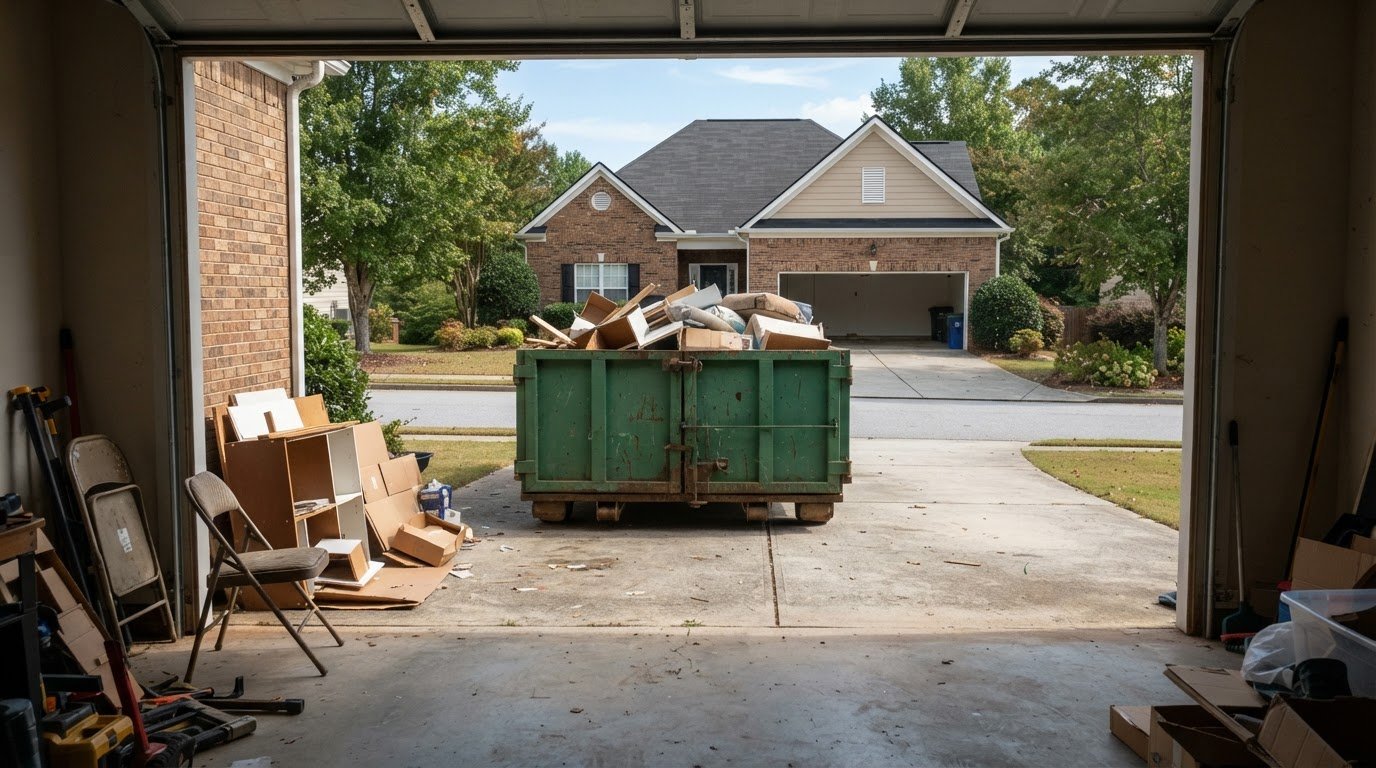
Dumpster Size for a Milton Garage Cleanout by Debris
A small garage cleanout doesn’t automatically need a large dumpster. If you’re deciding what size dumpster to use for a garage cleanout in Milton, a…