
A smooth office move involves more than transporting furniture between addresses. Office movers in Alpharetta, GA can coordinate loading, transport, unloading, and furniture setup, with disassembly planned for pieces that need it. The work depends on the furniture and the move plan.
It’s natural to want desks, chairs, and meeting-room furniture handled carefully, with each piece placed where it belongs. This guide explains how movers approach disassembly, loading, transport, unloading, and setup, and what details shape the process. You’ll also learn how commercial junk removal can help clear unwanted office items before or after a move.
Key Takeaways
- Furniture size, construction, and access conditions help determine which pieces need disassembly before transport.
- A clear setup plan helps movers place desks, chairs, and meeting-room furniture where they’re needed at the new office.
- Loading works best when items are organized by destination and handled in a sequence that supports efficient unloading.
- Building access, the volume of furniture, and the distance between the truck and work areas shape the labor involved.
- Commercial junk removal can help clear unwanted office items before or after a move.
Furniture disassembly, transport, and setup
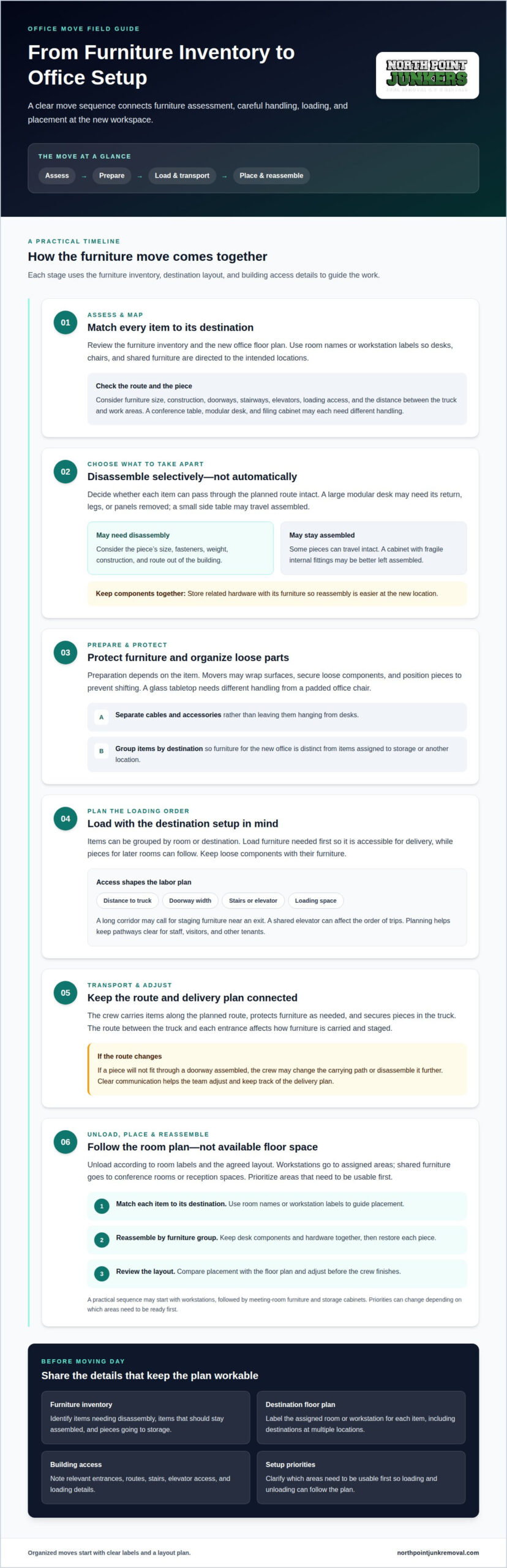
A well-planned office move follows a clear sequence: assess the furniture, prepare pieces, transport them, then place and reassemble them. Office movers in Alpharetta, GA use the inventory and destination layout to organize each step. A conference table, modular desk, and filing cabinet require different handling. Distance matters, as do stairways, elevators, loading access, and furniture size.
The process starts with assessing the items and their destination. Movers identify which desks or tables can pass through doorways intact and which need disassembly. They also note furniture that should remain assembled, such as a cabinet with fragile internal fittings. A floor plan connects each item to a specific room or workstation. Labeling a desk for a particular office, for example, helps prevent it from ending up in a shared workspace.
Disassembly is selective, not automatic. A large modular desk may need its return, legs, or panels removed to fit through a narrow corridor, while a small side table may travel intact. Movers consider each item’s construction, fasteners, weight, and route out of the building. They keep related hardware together with the correct piece, making reassembly at the new location easier.
Preparation also protects furniture and nearby belongings in transit. Movers may wrap surfaces, secure loose components, and position pieces to prevent shifting. Protection depends on the item: a glass tabletop needs different handling from a padded office chair. Separate cables and accessories rather than leaving them hanging from desks. Grouping items clearly also distinguishes furniture headed to the new office from belongings assigned to storage or another destination.
From transport to room setup
Transport planning connects the loading sequence to the setup plan. Furniture needed first at the destination can be loaded for easy access, while pieces for later rooms can follow. The team also considers the route between the truck and each entrance. A long walk, shared elevator, or narrow doorway can change how furniture is carried and staged. Planning around these details helps the crew work efficiently without blocking access.
At the new office, movers unload according to room labels and the agreed layout. They place desks, chairs, and cabinets in their assigned locations before reassembling disassembled pieces. The order matters: assembling a large desk in the wrong room may mean moving it through a tight doorway again. A practical sequence might start with workstations, followed by meeting-room furniture and storage cabinets. Priorities can shift depending on which areas need to be ready first.
- Match each item to its destination. Use room names or workstation labels to guide placement.
- Reassemble by furniture group. Keep desk components and hardware together, then restore each piece.
- Review the layout. Compare placement with the floor plan and adjust before the crew finishes.
Before moving day, share the furniture inventory, destination floor plan, and building access details with your moving team. Note which items need disassembly, which should stay assembled, and which are going to storage. If the office has several locations, specify each item’s destination. These details give the crew a workable plan from loading through setup.
A successful move depends on accurate labels, careful handling, and a setup plan suited to the new workspace. If a piece cannot fit through the planned route, movers may need to change the carrying path or disassemble it further. Discussing the furniture and building access in advance helps the team prepare. Tracking each item from its starting point to its assigned location keeps the move organized.
Loading and unloading labor
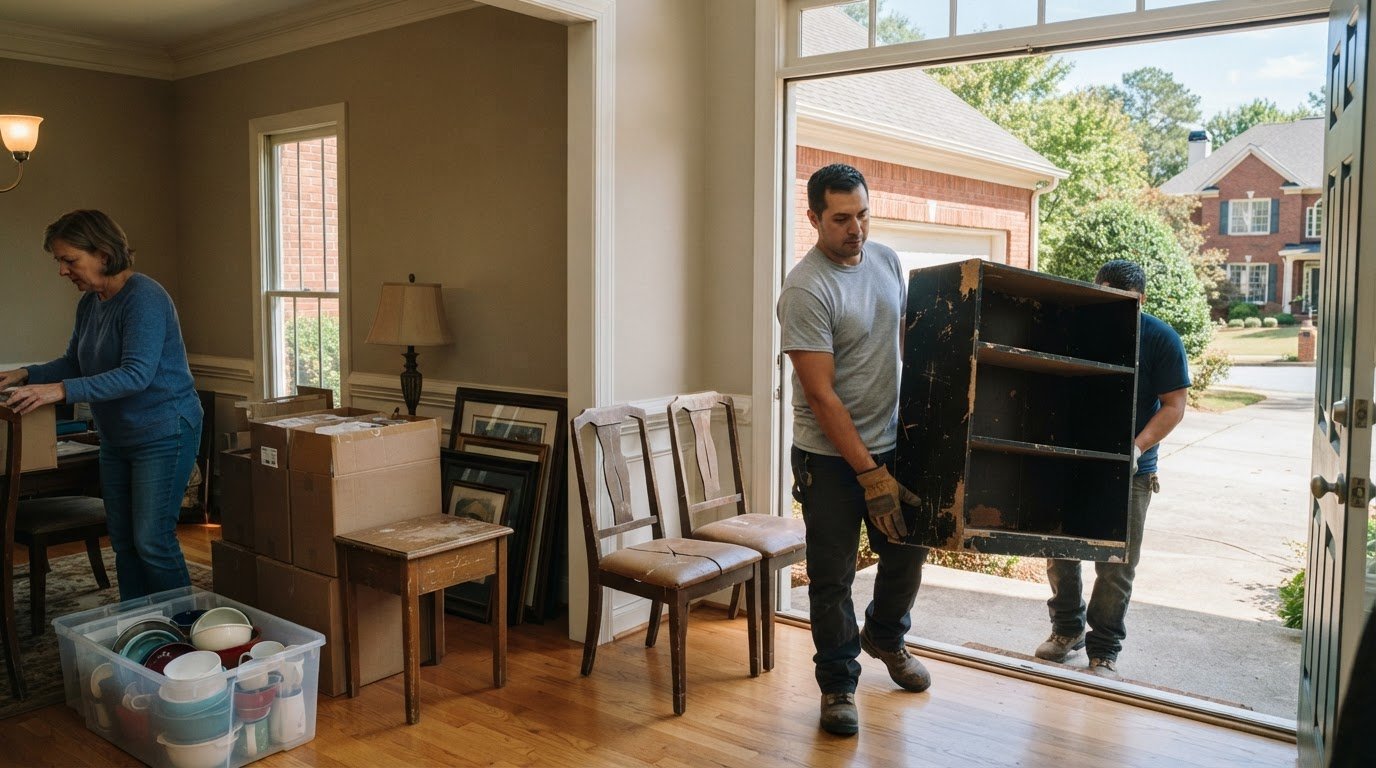
Loading and unloading involve more than carrying furniture between a building and a truck. During an office relocation in Alpharetta, movers organize the work around item size, access routes, and destination rooms. A desk near a loading entrance follows a different route from a conference table on an upper floor. A clear plan helps the crew handle pieces in sequence and avoid unnecessary trips through occupied work areas.
Before loading, the team reviews the inventory and identifies items needing special handling. A filing cabinet, boxed packing supplies, and a wide reception desk each have different shapes and carrying needs. Items can be grouped by destination and loaded so the first deliveries remain accessible. This matters when the truck contains furniture for several offices or floors. A deliberate order also reduces reshuffling and unnecessary handling.
Building access shapes the labor plan. Movers consider the distance from each room to the truck, doorway width, stairs, elevator access, and available loading space. A long corridor may call for staging furniture near an exit before loading. An elevator shared across several floors can affect the order of trips. Planning around these details helps keep pathways clear while staff, visitors, or other tenants use the building.
Loading follows a deliberate pattern. Crews bring out items suited to the route, protect furniture as needed, and secure pieces in the truck. Boxes can be grouped by destination, while loose components stay with their furniture. A crew lead can coordinate the sequence and flag changes, such as a cabinet that will not fit through a doorway assembled. Clear communication lets the team adjust while keeping track of the delivery plan.
Unloading reverses the process, with the destination layout guiding each move. Rather than placing furniture wherever space is available, movers use room labels or a floor plan to direct items. Workstations go to their assigned areas, while shared furniture goes to conference rooms or reception spaces. This placement reduces the need to move items again and helps prioritize areas that need to be usable first.
- Stage by destination. Keep furniture and boxes for each room together where practical.
- Unload in planned order. Bring in items needed first without blocking the path for later deliveries.
- Place and review. Match labels to rooms, then identify misplaced or missing pieces before the crew leaves.
Clear instructions reduce stress for the crew and office staff. Marking a box “Reception” gives more useful direction than “Office.” A floor plan showing desk rows clarifies where each workstation belongs. Someone familiar with the new space can answer placement questions while movers carry and arrange items. If the layout changes on moving day, communicate the new location before the relevant furniture leaves the truck.
Labor needs depend on the inventory, access, carrying distance, and how much packing or placement the move includes. A small office with direct truck access needs a different workflow from a suite with several rooms and a long corridor. Share these details with your moving team so the plan reflects the site. For unwanted furniture that needs clearing rather than delivery, a moving cleanout can handle that separate part of the relocation.
At delivery, a final walkthrough helps catch practical issues. Confirm that labeled items reached their intended rooms and assembled furniture is in the planned areas. Flag a desk blocking a doorway or a cabinet on the wrong floor while adjustments are still straightforward. An organized loading and unloading plan connects the inventory, building access, and room layout, making each step easier to coordinate.
North Point Junk Removal
North Point Junk Removal helps clear unwanted office items before or after a move. Commercial junk removal is useful when old desks, broken chairs, or leftover equipment need to be removed instead of transported to the new location. For larger cleanouts, dumpster rentals offer another way to manage unwanted items.
Separating items for removal from furniture scheduled for delivery keeps the moving plan organized. Set aside unwanted office contents and identify what needs clearing, so the cleanout supports the relocation instead of disrupting it. Contact North Point Junk Removal for office items that need to go.
Make the Next Move Easier to Plan
Choosing office movers in Alpharetta, GA is one part of a successful transition. Another is deciding what should travel to the new workspace and what should be removed. That decision can keep unwanted furniture and belongings from complicating the move.
North Point Junk Removal offers Commercial Junk Removal for unwanted office items, along with Residential Junk Removal and Hoarding Clean-up for other cleanout needs. Consider a cleanout when furniture or accumulated belongings should be cleared rather than transported. Separating removal from delivery gives each task a clear purpose and helps you prepare the new space.
When you’re ready to discuss removing unwanted items, contact North Point Junk Removal. A clear next step can help you move forward with confidence and make room for what belongs in your next workspace.
Frequently Asked Questions
What questions should I ask before hiring an office moving company in Alpharetta?
Ask for a written description of the work and schedule, and clarify who will coordinate changes on moving day. Confirm whether packing, furniture assembly, and placement are included or handled separately. Ask how existing damage is recorded and delays communicated. Also clarify what details the team needs about building access, delivery timing, and items that should not be moved. Clear answers help you compare the proposed scope with your office’s needs.
You May Also Like
Pre-move decluttering service in Alpharetta, GA
A simpler move starts with deciding what doesn’t need to come along. A pre-move decluttering service in Alpharetta helps you sort belongings into…

Estate Cleanout Services in Alpharetta: A Clear, Respectful Plan
What if the most important part of an estate cleanout happens before anything leaves the house? When family members are grieving or disagreeing about…

Bulk Trash Removal in Alpharetta, GA: Choose the Right Pickup Option
The right bulk trash removal alpharetta ga option depends on the size of your load, what the pickup service accepts, and how much of the work you…