
For a construction dumpster rental in Buford, GA, a roll-off dumpster is a temporary container delivered to a project site for debris. Available sizes include 10, 15, and 20 cubic yards, so you can choose based on the amount and type of material your job will produce. The rental plan also needs to account for how long you’ll need the container and when it should be picked up.
Choosing a size is only part of planning a construction dumpster rental in Buford, GA. You’ll also want to know what the rental includes, which materials are prohibited, and how delivery and pickup fit your work schedule.
This guide explains how the available sizes compare, what affects rental pricing, and how rental periods and pickup work. You’ll also learn what to expect from the process, so you can plan debris removal around the pace of your construction project.
Key Takeaways
- Compare 10-, 15-, and 20-yard dumpster sizes to find a capacity that fits your project’s debris.
- Learn how to plan for accepted household and construction materials before loading the container.
- See what can affect a rental quote and what to understand about included disposal.
- Know which materials are prohibited and how to keep them out of the dumpster.
- Plan your rental period and pickup around the work schedule to help keep the project moving.
What dumpster sizes are available in Buford GA?
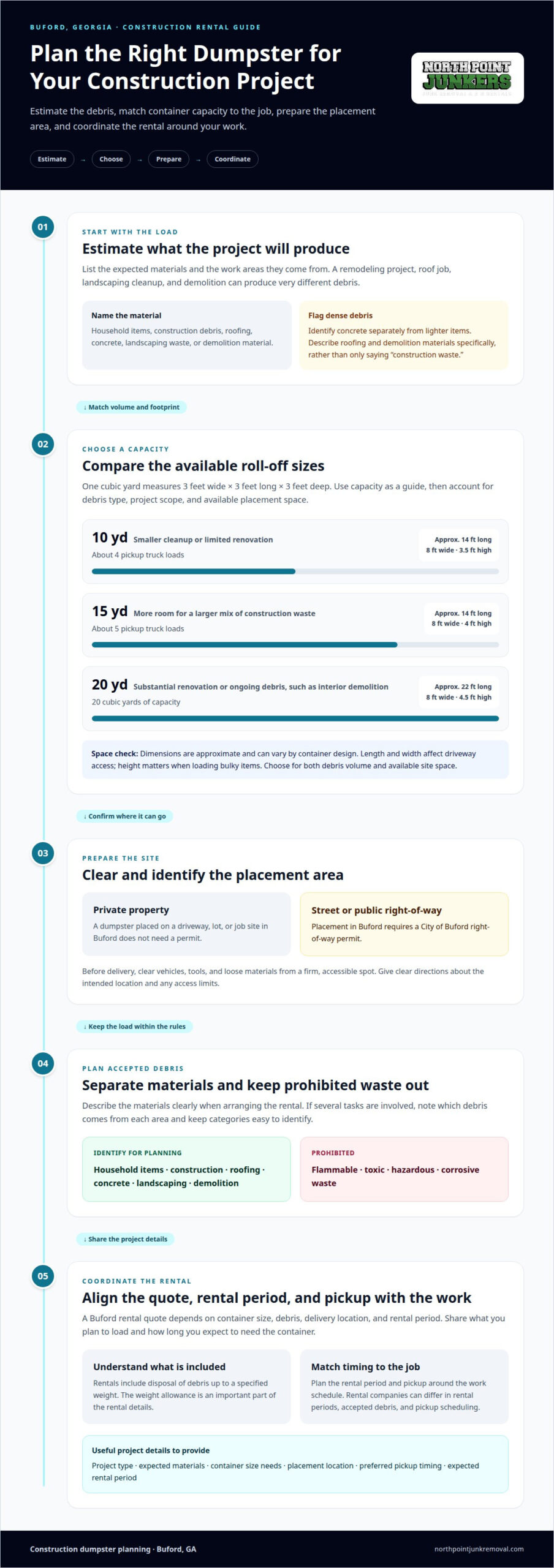
For residential renovations and construction work in Buford, the available dumpster sizes are 10, 15, and 20 cubic yards. A cubic yard measures 3 feet wide, 3 feet long, and 3 feet deep. That volume gives a useful way to compare capacity, while the debris type and project scope help determine which yard dumpster fits.
A 10-yard roll-off may suit a smaller cleanup or limited renovation debris. It holds about four pickup truck loads. A 15-yard roll-off provides more room, holding about five pickup truck loads, and can suit projects with a larger mix of construction waste. For a substantial renovation, a 20-yard dumpster holds 20 cubic yards. Larger capacity can help manage ongoing debris from work such as interior demolition.
- 10-yard: approximately 14 feet long, 8 feet wide, and 3.5 feet high.
- 15-yard: approximately 14 feet long, 8 feet wide, and 4 feet high.
- 20-yard: approximately 22 feet long, 8 feet wide, and 4.5 feet high.
Roll-off dimensions are approximate and can vary by container design. Compare the listed footprint with the available placement area: length and width affect driveway access, while height matters when loading bulky items. Choose a size that suits both the debris volume and the space at your home or construction site.
Before delivery, choose a firm, accessible placement area and clear away vehicles, tools, and loose materials. Give clear directions about the intended spot so the driver can place the container as planned.
Match the container to the debris, not just the project name. A small bathroom update may produce less waste than a multi-room renovation, while demolition can quickly create bulky debris. If you expect to produce more than the container can hold, plan for a suitable size from the start. Distribute heavier materials evenly rather than piling them in one corner.
For services in Buford, the 10-, 15-, and 20-yard choices cover different project scales without treating every cleanup alike. Estimate the debris from each work area, account for bulky pieces, and consider how much space the delivery location allows. Those steps make size selection more practical before the container arrives.
What are my options when renting a dumpster in Buford, GA?
Plan around the debris, placement location, and project needs. Before arranging a container, identify whether you’ll load household items, construction or roofing debris, concrete, landscaping waste, or demolition material.
Debris Types for Rental
A household cleanout may produce furniture, boxes, and other unwanted items. Construction work creates debris specific to the job: remodeling can generate material as rooms are cleared and rebuilt, while roofing, demolition, and landscaping each produce different types of waste. List the materials you expect to load to describe the project clearly.
Concrete requires careful planning because it is dense compared with many household discards. Identify it separately from lighter debris when describing a mixed project. The same applies to roofing or demolition material: naming these categories gives a clearer picture than saying only “construction waste.” For cleanup that spans several areas, note which debris comes from each task.
A construction dumpster rental provides an on-site container for debris collected during a project. A remodeling job may produce material across several work stages, while landscaping cleanup creates a different load. Describe the work and expected materials when arranging a rental. Flammable, toxic, hazardous, and corrosive waste is prohibited in roll-off dumpsters.
Permits and Rental Companies
In Buford, a dumpster placed on a driveway, lot, or job site does not need a permit. Placement in a street or public right-of-way requires a City of Buford right-of-way permit. The applicable rule depends on whether the container stays on private property or occupies public space.
For a project in Gwinnett County, the location matters: Buford’s stated rule applies to placement within the City of Buford. Construction dumpster rental companies can differ in available sizes, rental periods, accepted debris, and pickup scheduling. Those practical service details help match a rental to a roofing job, renovation, or property cleanup.
Before delivery, choose an accessible placement area and clear away vehicles, tools, and loose materials. Give directions that identify the intended spot and any access limits. If the container will be placed on a street or public right-of-way in Buford, account for the city permit requirement before delivery.
Separate household items from construction debris before loading, especially when a project combines different types of work. Keep concrete, roofing, landscaping, and demolition materials easy to identify. This helps you describe the load accurately and keep prohibited waste out of the container.
For construction work, note the project type, debris, placement location, and preferred pickup timing. A clear plan helps coordinate the container with the work, whether the job involves remodeling, roofing, or a broader site cleanup.
Dumpster rental prices and included services
A dumpster rental quote for a Buford project depends on the container size, debris, delivery location, and rental period. The price depends on the project and is provided after a quote request. Share the job details, including what you plan to load and how long the container will be needed, to give the estimate useful context.
The container needs to suit the volume of debris. A smaller container may work for a limited cleanup, while a larger one may be more appropriate for an extensive renovation. Material matters, too: dense construction debris differs from lighter household items. Describe the contents rather than estimating from the project name alone.
Buford dumpster rentals include disposal of debris up to a specified weight. The weight allowance is a key part of understanding what the rental includes, especially when a project involves heavy materials. Describe whether the load contains items such as concrete or roofing debris. Keep the expected material mix clear when requesting a quote.
Plan the rental schedule around the pace of the work. A short cleanup may need a brief placement window, while a renovation that produces debris in stages may require a longer one. Consider when loading will begin, when you expect the container to be ready for pickup, and whether project phases could change those dates.
The delivery address helps shape the service plan. Provide the specific Buford job-site location, not just a neighborhood or broad regional description. Driveway access, placement space, and distance from the work area vary by property, so include practical details about the site.
For projects in nearby communities such as Sugar Hill, Suwanee, or Cumming, provide the project address when planning delivery. The location helps identify placement constraints. A driveway, private lot, or active construction site may each need different placement instructions.
Portable restroom rentals and servicing are separate from dumpster rental. A construction site may need both waste removal and restroom facilities, but they are distinct services to plan independently. The dumpster rental covers its container, disposal allowance, delivery, and rental period; don’t assume restroom equipment or servicing is part of that arrangement.
Before requesting a quote, gather the Buford address, expected debris types, approximate project scale, and intended rental period. Those details help connect the container, disposal terms, and delivery plan to the work underway. A clear request makes it easier to understand the rental’s scope before scheduling begins.
Prohibited materials and disposal rules
Sorting debris before loading helps keep a Buford renovation or construction cleanup organized. Separate ordinary project waste from flammable, toxic, hazardous, or corrosive materials, which are prohibited in roll-off dumpsters.
Accepted and Prohibited Waste
Household and construction debris may come from a renovation, roofing job, demolition, or landscaping cleanup. Identify materials by project area before loading. Keeping roofing debris separate from household cleanout items helps you plan the load and spot prohibited waste before it enters the container.
Keep flammable, toxic, hazardous, and corrosive waste out of the dumpster. Don’t mix these materials into ordinary renovation debris. If a work area contains both, set the prohibited items aside rather than burying them under other waste.
A Georgia remodeling cleanup, for example, may combine household items and construction debris from several rooms. Sort materials as the work progresses and keep the container’s contents visible. Clear separation helps prevent prohibited items from being loaded with ordinary project debris.
Hazardous Materials Restrictions
Flammable, toxic, hazardous, and corrosive waste is prohibited in roll-off dumpsters, even if it comes from a small home renovation or is mixed with ordinary construction debris. Keep it out of the container rather than relying on its small size or where it sits in the load.
During cleanup, pause before loading any material that may be flammable, toxic, hazardous, or corrosive. Keep it separate from roofing, demolition, and household debris. This simple sorting step helps prevent prohibited waste from entering a container intended for project debris.
Start sorting at the work area. Create separate staging spots for household items, construction debris, and prohibited materials. As demolition or remodeling moves from room to room, take each type to its designated area instead of combining everything in one pile. This makes the contents easier to review before loading.
For roofing work, keep project debris together and separate from any hazardous or corrosive waste found during removal. Landscaping cleanup also benefits from a designated staging area, especially when construction is happening on the same property. Sort by source, then load only the debris intended for the dumpster.
Before finishing, review the visible contents of the container. Check the surface and edges, where an accidentally added item may be easiest to spot. Remove prohibited waste before covering it with more debris. Keeping flammable, toxic, hazardous, and corrosive materials out helps prevent them from being mixed into the load.
Sort consistently from the first cleanup task through final loading. Whether the job involves roofing, demolition, landscaping, or home renovation, keep prohibited materials apart and group ordinary project debris by type. This makes disposal planning more orderly and avoids treating different materials as interchangeable.
Rental periods and pickup scheduling
Plan the rental period around the work sequence, not just the delivery date. Roll-off rentals in Buford typically include 7 to 10 days. That window can suit a renovation with several debris-producing stages, such as demolition followed by construction. Set a target loading start and pickup date before work begins, so the container’s time on-site matches the project plan.
For a short cleanup, arrange the work so debris is ready during the rental period. For longer renovations, map out when construction debris will accumulate and whether work pauses between stages. A cubic yard describes volume, but the loading pace also affects pickup timing. A container filled early may need pickup sooner than one used gradually through the project.
Schedule pickup around a clear milestone, such as the end of demolition or final debris removal. Keep the access route open and put materials inside the container, not beside it. If work finishes early, arrange pickup when loading is complete. If the project runs longer, plan around the remaining work instead of waiting until the last moment.
Customers who call before mid-morning can request same-day dumpster drop-off in Buford. Keep delivery and pickup distinct when planning: drop-off starts the rental, and pickup ends the container’s time on-site.
Use a simple timeline to coordinate each stage:
- Before delivery: choose the placement area and identify the first debris-producing task.
- During the rental: track project progress and keep the access area clear.
- Before pickup: finish loading and make the container accessible for removal.
A Buford home renovation, for example, may start with interior demolition and move on to repairs and finish work. If the first phase produces most of the debris, plan pickup around that transition. If debris continues to accumulate, coordinate the rental period with the full project schedule.
A clear schedule connects delivery, loading, and pickup without disrupting work at the site. Set expected project dates, note when the container should be ready, and communicate changes promptly. These steps help keep the rental aligned with the work.
North Point Junk Removal: Dumpster Rentals
North Point Junk Removal provides dumpster rentals for projects that need a container on-site while you manage the loading. Its 10-, 15-, and 20-yard dumpsters can support different cleanup scales, from a smaller renovation to a larger property project.
For a rental property cleanout or residential project, a dumpster lets you sort and load debris at your own pace. If a home has extensive accumulation, a specialized full-service cleanout may be a better fit than loading everything yourself. Choose based on the scope of the cleanup and how you want the items removed.
Share your project details and the type of cleanup you’re planning. Contact North Point Junk Removal to discuss dumpster rentals for your Buford project.
Set up your next cleanup with a clear plan
A well-planned construction dumpster rental in Buford, GA, starts with matching debris removal to the work ahead. A renovation, rental turnover, or commercial cleanup may call for a different approach than loading a container yourself. Choosing the right kind of service can make the next phase easier to organize.
North Point Junk Removal offers Residential Junk Removal, Hoarding Clean-up, and Commercial Junk Removal when hands-on removal better suits the job. For construction debris you plan to load yourself, dumpster rentals provide an on-site container. Describe the project, materials, and how you want them removed to decide which service fits.
Ready to plan your cleanup? Contact North Point Junk Removal to discuss the service that fits your project. A clear plan can help you move forward with confidence.
Frequently Asked Questions
What is a roll-off dumpster?
A roll-off dumpster is a large waste container delivered to a site and removed after loading. Its open top makes it practical for bulky renovation debris, such as framing scraps or old cabinets. Picture a container placed near a work area, where materials can be carried in as the project progresses. The delivery spot needs enough room for the container and access for the truck.
What items can’t go in a dumpster?
Flammable, toxic, hazardous, and corrosive waste can’t go in a roll-off dumpster. Keep these materials separate from ordinary renovation debris instead of placing them beneath other items. Roofing, demolition, and household cleanups can produce mixed loads, so sort as you work and look for prohibited items before loading.
Why would I rent a dumpster?
Renting a dumpster gives you an on-site place to collect debris during a project you’re managing yourself. It can suit a renovation that produces waste over several workdays or a property cleanout involving bulky items. Load at your own pace and arrange pickup when the container is ready, making this a practical option when debris accumulates gradually.
Are there dumpster alternatives?
Yes. For a smaller cleanup, junk removal may be easier than loading a container yourself. North Point Junk Removal provides Residential Junk Removal and Commercial Junk Removal for homes and businesses. This option suits projects where you want items hauled away without managing a dumpster on-site. For a larger, ongoing project, a rental container lets you load debris as work continues.
Do I need to be present when my dumpster arrives?
You don’t need to be present for delivery if you provide clear placement directions. Specify the intended spot and note access concerns, such as a narrow driveway or a work area that must remain open. Clear vehicles and loose equipment from the placement space beforehand. Good instructions help the driver position the container as planned while you’re away.
How soon can I get a dumpster delivered?
Buford delivery is commonly available within 24 to 48 hours of a typical workday, and next-day delivery may be possible. Customers calling before mid-morning can request same-day drop-off. For a time-sensitive renovation, plan delivery before debris-producing work begins, then leave room for the truck to reach the placement area. Timing can depend on delivery availability and the project address.
What dumpster sizes are available for construction debris in Buford, GA?
Available roll-off choices for construction debris in Buford include 10-, 15-, and 20-yard dumpsters. A 10-yard container may suit a smaller room update, while a 15-yard option can provide more space for a broader remodeling job. Larger renovations may need the capacity of a 20-yard container. Compare debris volume and placement space when choosing the right size.
How much does construction dumpster rental cost in Buford, GA?
For a construction dumpster rental in Buford, GA, request a quote with details about your project. The plan depends on the container, debris, rental period, and delivery location. Dense construction material differs from a lighter household cleanup, so describe the load accurately. Include the address and expected schedule to help plan around the job.
You May Also Like
Commercial Moving in Buford, GA for Furniture and Loading Help
Furniture handling shapes the pace of a business move. Businesses searching for commercial movers in Buford, GA should clarify whether the service…
Foreclosure Cleanout in Buford, GA: A Practical Guide to Choosing Help
A foreclosure cleanout in Buford, GA, can go wrong before the first item leaves the property. If ownership or removal authority isn’t clear,…
Playset Demolition and Removal in Buford: Your Complete 2026 Guide
You look out at your Buford backyard and see it: the once-loved swing set is now a graying monument of rotted cedar and jagged, rusty bolts. It’s no…