
A storage unit cleanout in Cumming, GA, has no single set timeline. The time depends on how many items are inside, what they are, and how easy they are to reach; an estimate is provided before work begins. Set aside a dedicated block of time so you can sort without feeling rushed.
It’s also okay if the unit isn’t perfectly organized before the cleanout. Knowing what you want to keep is a helpful start. This article explains what items may be accepted, how to prepare, and how to choose between a full cleanout and removing only selected items. You’ll also learn when a professional service can help with heavy or overwhelming belongings, and what to expect from the process.
Key Takeaways
- Cleanout timing depends on the amount and type of belongings and how accessible they are. Set aside a dedicated block of time and plan around access to the unit.
- Take a quick inventory and identify what you want to keep before moving boxes. Sorting items at the unit can help clarify what should be removed.
- Furniture, boxes, and appliances may be part of a cleanout, but some items need special handling rather than being treated as general junk.
- Consider professional help when the unit feels overwhelming or contains heavy items that are difficult to move safely.
- Choose a full cleanout to clear the entire unit or a partial cleanout to remove selected belongings while keeping the rest.
How long does it take to clean out a storage unit in Cumming, GA?
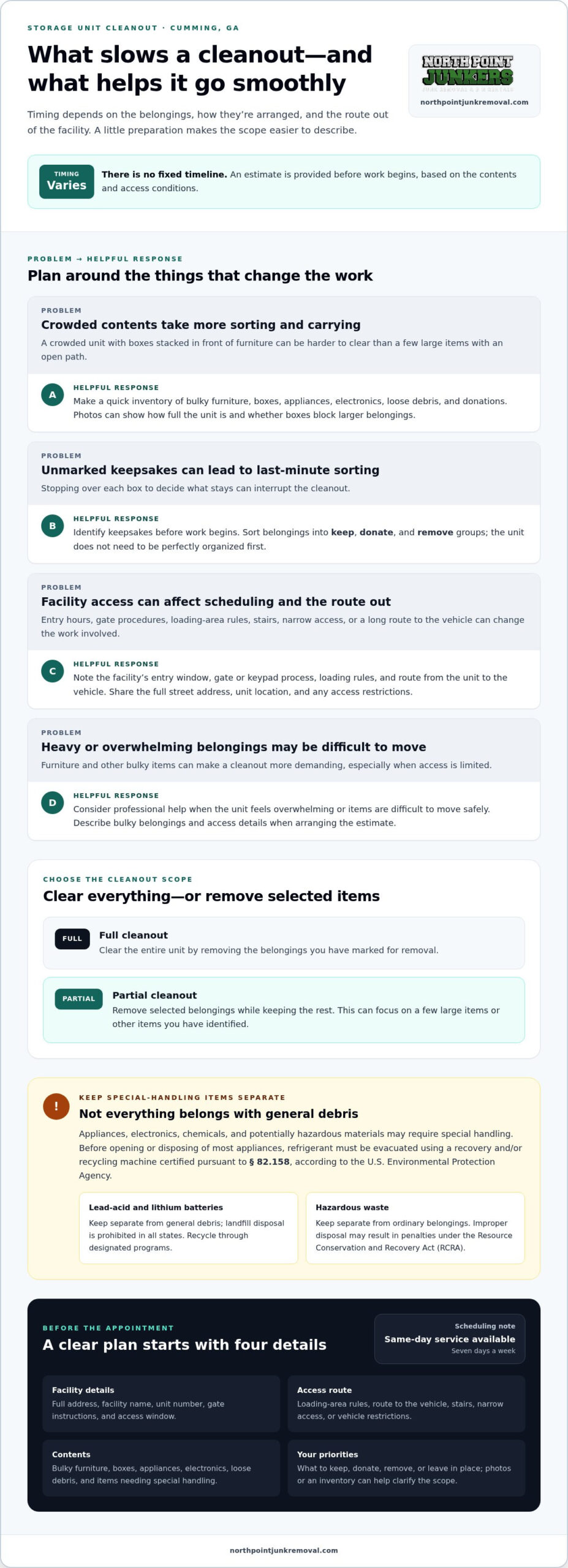
There’s no fixed timeline for a storage unit cleanout in Cumming, GA. The estimate depends on the quantity and type of belongings, plus how easy they are to reach. A crowded unit with boxes stacked in front of furniture takes more sorting and carrying than a clear path to a few large items. The estimate is provided before work begins, so you can plan around the expected scope.
Set aside a dedicated block of time rather than squeezing the cleanout between errands. Identify keepsakes, donation items, and belongings to remove before work begins to avoid stopping over each box. You don’t have to organize the entire unit first. Mark what you want to keep, then plan the remaining items for removal.
Access at the facility also affects scheduling. Before booking, note the entry hours, gate or keypad process, loading-area rules, and route from the unit to the vehicle. A unit near a clear loading area may be easier to empty than one requiring a long walk past other units. Sharing these details helps clarify the job and avoid preventable delays.
Before moving anything, make a quick inventory of bulky furniture, electronics, appliances, loose debris, and items you plan to donate. Photos can show how full the unit is and whether boxes block larger belongings. When arranging the appointment, mention narrow access points, stairs, or limited vehicle access. These details help describe the work involved more accurately than the unit’s size alone.
Flexible scheduling can help coordinate access with a facility manager, family member, or rental deadline. North Point Junk Removal offers same-day service, available seven days a week. Share your timing needs and unit details when booking. The amount and type of items, as well as access conditions, determine the work involved.
- Confirm the facility’s access process and available entry window.
- Identify keepsakes before the crew begins moving items.
- Describe bulky belongings, electronics, and loose debris.
- Share photos or an inventory to clarify the unit’s contents.
A clear plan helps you schedule the cleanout around facility access and your priorities. Separating keepsakes before the appointment, for example, can prevent last-minute sorting as the unit is emptied.
Storage-unit cleanout service areas in North Georgia
For a storage unit in Cumming, Georgia, provide the facility’s exact street address. The city name alone may not identify the right entrance, access road, or loading area. Include the facility name, unit location, and gate instructions when arranging hauling. This helps clarify the location and access plan.
Georgia’s disposal rules matter wherever a unit is located. Georgia does not currently enforce a statewide e-waste landfill ban, but that does not mean every item belongs in general refuse. Before opening or disposing of most appliances, refrigerant must be evacuated using a recovery and/or recycling machine certified pursuant to § 82.158, according to the U.S. Environmental Protection Agency. Hazardous-waste disposal may result in penalties under the Resource Conservation and Recovery Act (RCRA).
Facilities across Cumming and nearby North Atlanta communities can have different layouts and access requirements. A cleanout near a main road may have a different loading route from one on a controlled-access property. Before booking, gather the facility address, unit number, and entry instructions. Note any vehicle-access or loading-zone restrictions and share them when arranging service.
For Cumming and surrounding areas, the useful question is how the unit’s location affects the work. A facility in town may have a short route between the unit and loading area; a unit outside town may require more travel between locations. Either way, an accurate address helps clarify the job’s logistics. It also helps you plan when to meet someone who has the gate code or facility access.
Use this short checklist to prepare a location-based cleanout request:
- Write down the facility’s full address and unit number.
- Record gate instructions and the facility’s access window.
- Describe the route from the unit to the loading area.
- Separate electronics and appliances from ordinary debris for discussion.
That last step matters for appliances containing refrigerant and for electronics. Lead-acid and lithium batteries require recycling through designated programs; landfill disposal is prohibited in all states. Keep batteries separate from general debris rather than placing them in a box of household items.
A North Georgia location can also shape how you reclaim the unit: a partial cleanout may focus on a few large items, while a full cleanout addresses everything you’ve marked for removal. Give the facility name and access details at booking, then identify any items requiring special handling. Clear location information helps the scheduling conversation stay focused on the unit, the hauling route, and the materials involved.
Furniture, boxes, appliances, and other accepted items
A storage unit cleanout involves identifying what should leave, setting aside items to keep, and removing the unwanted contents. The job may include furniture, boxes, household goods, and other belongings marked for removal.
Common examples include a sofa, dining chairs, shelving, packed boxes, and small household appliances. The item’s condition and type affect how it should be handled. Refrigerators and other appliances may need special disposal procedures, while chemicals or other potentially hazardous materials should be kept separate from general belongings.
Before the cleanout, make a quick inventory and sort items into three groups: keep, donate, and remove. Set a lamp or chair aside for donation, for example, and keep it separate from items for removal. Sorting at the unit makes decisions visible and helps you reclaim space without accidentally removing something you value.
Remove valuables and personal documents from the unit before loading begins. Gather passports, family photographs, financial papers, jewelry, and small keepsakes in a clearly marked bag or box that stays with you. Check each box for important documents before adding it to the removal pile.
Treat sentimental belongings with the same care as paperwork. Use a labeled “keep” box for items such as a child’s artwork, letters, or a family heirloom. Keep it near the unit entrance, away from furniture and debris, so it’s easy to identify. If you’re unsure about an item, set it aside for a final review instead of mixing it with items for removal.
- Keep: documents, photographs, heirlooms, and belongings you still use.
- Donate: usable furniture, household goods, or clean items you no longer need.
- Remove: broken furniture, unwanted boxes, and other items selected for disposal.
- Set aside: appliances or unusual materials that may need separate handling.
You don’t need to organize the entire unit before help arrives. Identify keepsakes first, then group easy-to-recognize items, such as boxes of books or patio chairs. Label mixed boxes or leave them for review. This creates a simple plan without requiring you to unpack every container.
Keep belongings you’re retaining separate from everything marked for removal. A visible keep area and removal area reduce mix-ups during loading. Share your groupings and any special handling needs when arranging the cleanout so the work can follow your priorities.
When should I consider hiring a professional service?
Consider professional junk removal if the unit feels overwhelming or heavy belongings are difficult to move safely. A sofa wedged behind stacked boxes, a crowded walkway, or several bulky items can make a solo cleanout physically demanding. Professional help can also make sense when you have limited time before a move or rental deadline.
Heavy lifting deserves particular care. OSHA recommends limiting individual lifts to 50 pounds or less during storage unit cleanouts. A box of books, compact filing cabinet, or appliance can quickly become difficult to handle alone. Don’t twist while carrying, and keep the path to the door clear. If an item is awkward, unstable, or too heavy to lift safely, leave it for trained removal rather than risking injury.
Professional help can also suit a unit with mixed contents, such as a mattress, broken shelving, cartons, and a refrigerator. Before work begins, identify what stays and what goes. Clear instructions help prevent a family keepsake or important document from being removed by mistake.
Some contents need more caution than ordinary household belongings. Materials suspected of containing asbestos in items from pre-1980 structures require professional assessment before disturbance. Avoid breaking, cutting, or sweeping suspicious material. Keep people away from the affected area and don’t mix it with regular debris. This is a different situation from routine junk removal and calls for careful assessment before anyone moves it.
Plan the final inspection, too. After removal, check the floor, corners, and wall edges for loose paper, dust, or small debris. A broom and dustpan can collect ordinary leftover material. Don’t sweep unknown powders or damaged material, as disturbing it could spread dust. Check behind the door and beneath any shelving before returning the unit.
Professional service may help if you’re clearing a full unit, managing a difficult cleanout, or facing bulky furniture you can’t move safely. It may be less necessary when the unit contains only a few light boxes you can carry without strain. Use these signs to decide:
- Get help: furniture blocks access, the contents feel overwhelming, or heavy lifting is unsafe.
- Proceed carefully: damaged or suspicious materials need assessment before disturbance.
- Handle it yourself: a small number of light items can be carried safely and sorted easily.
For a manageable cleanout, prepare a clear path and mark the belongings that must stay. For bulky or difficult contents, professional removal can reduce the physical burden and let you focus on the remaining steps. For readers coordinating cleanouts in regions like Melbourne, services such as jdrubbishremoval.com.au offer dedicated collection and same-day pickup for heavy or unwanted belongings.
Full and partial storage unit cleanouts
A full cleanout removes all belongings you’ve selected for removal, leaving only the items marked to stay. Choose this approach when closing the unit, clearing an inherited locker, or preparing for a move. Before pickup, separate keepsakes and documents from items for removal. Clear boundaries help prevent mistakes and give the work a defined finish.
A partial cleanout targets specific contents while leaving the rest in storage. It can work well if you’re keeping seasonal decorations, tools, or furniture but want to reclaim floor space or reach items at the back. Mark the selected items clearly and, where practical, group them near the entrance. A labeled keep area helps distinguish what stays from what goes.
Choose an approach based on the unit’s purpose and your next deadline. If the rental is ending, a full cleanout may fit your goal. If you still need stored belongings, partial removal can make the space easier to use. Removing unused chairs and empty boxes, for example, may open a path to holiday decorations without clearing the entire unit.
- Choose full removal when you’re ending storage or clearing everything out.
- Choose partial removal when useful items need to remain accessible.
- Set aside keepsakes before pickup to protect items with personal value.
- Identify donation items separately from belongings meant for disposal.
A friend or family member can help with a heavily cluttered cleanout. Give them one task, such as identifying items to keep, while you review another area. Don’t make removal decisions from memory alone. Check each shelf, box, and corner before sorting, especially when containers hold mixed belongings.
When the crew is due to arrive, keep your chosen piles distinct. Place retained items together and move clearly marked removal items toward the unit entrance when safe. Inspect any box containing both keepsakes and unwanted objects before pickup. A quick review can prevent a search for a misplaced photograph or tool later.
For a full cleanout, walk through the unit after removal and check behind the door, beneath shelves, and along the walls. For a partial cleanout, make sure the items staying behind remain orderly and reachable. Separating donation items from other belongings gives each group a clear destination and supports thoughtful handling in the community.
Choose full or partial removal based on how you want to use the unit next. Once you’ve marked what stays and what goes, you’ll have a clear plan for reclaiming the space.
North Point Junk Removal: Residential Junk Removal
North Point Junk Removal provides Residential Junk Removal for households clearing unwanted belongings from storage units. The service can help with furniture, boxes, and other household items, whether you’re clearing the whole unit or selected contents. For a difficult clutter situation, Hoarding Clean-up may be a better fit. Commercial Junk Removal and Dumpster Rentals serve different cleanup needs.
Before arranging service, identify the items you want removed and set aside anything you plan to keep. This gives the cleanout a clear scope and helps you choose the right next step for reclaiming the unit.
Contact North Point Junk Removal to arrange your storage unit cleanout.
Make room for what comes next
A storage unit cleanout in Cumming can mark a fresh start, not just an empty locker. Decide what you want the space to make possible next: ending a rental, preparing for a move, or making stored belongings easier to access. Your goal can guide the final choices and keep the cleanout focused.
If you’re ready to move forward, share the unit’s contents and whether you want a full or partial cleanout. North Point Junk Removal can help you take the next step with a plan that fits the job. Contact North Point Junk Removal to discuss your cleanout needs.
You don’t have to solve every detail at once. Start with the outcome you want, then make a clear plan to get there. A more usable space is within reach.
Frequently Asked Questions
What is the first thing I should do when I arrive at the unit?
Confirm the unit number and document its condition before moving anything. Take photos of the doorway, floor, and visible contents, then make sure you have permission to clear the items. Keep the access key or code with you. This gives you a reference if you need to verify what was inside or distinguish existing damage from marks noticed during the cleanout.
What should I do with items that are still in good condition?
Set aside clean, usable belongings for donation or reuse instead of mixing them with items for removal. Group an intact side table, working lamp, and clean kitchenware, for example. Check that boxes are dry and easy to carry, and label them by item type. Keeping these belongings separate makes them easier to direct to a suitable recipient and reduces confusion during removal.
What types of storage junk will you haul away in Cumming, GA?
North Point Junk Removal handles household items such as furniture, mattresses, appliances, televisions, exercise equipment, and general debris. For a Cumming storage cleanout, describe the main items and mention bulky pieces such as a sofa or treadmill. Photos can help show the contents and clarify the removal scope before work begins.
What storage unit cleanout services are available in Cumming, GA?
North Point Junk Removal provides Residential Junk Removal for unwanted household belongings from storage units. The local service area includes Cumming, Alpharetta, Johns Creek, Milton, Suwanee, Sugar Hill, Buford, Dawsonville, Roswell, Gainesville, Oakwood, FloweryDuluth, Coal Mountain, Chestatee, Silver City, Free Home, and Forsyth County. Share the facility location and the items you want removed when arranging a cleanout.
How much does a storage unit cleanout cost in Cumming, GA?
The price depends on the job and is provided after a quote request. Factors include the amount and type of belongings, access to the unit, and whether you need a full or partial cleanout. North Point Junk Removal offers estimates based on photos, which can help show the contents and scope. Include bulky items in your description so the estimate reflects the work involved.
How do storage unit cleanout companies price jobs?
The amount and type of belongings, along with access to the unit, help define the cleanout. A unit with large furniture may involve different handling from one containing mostly small boxes. North Point Junk Removal offers free photo-based estimates, so pictures can help communicate the job’s scope before work begins.
What should I look for in a junk removal company near Cumming, GA?
Match the service to the job. North Point Junk Removal offers Residential Junk Removal for household belongings, Hoarding Clean-up for difficult clutter, and Commercial Junk Removal for business contents. For a storage unit, describe whether you need selected items removed or a broader clearout. This helps identify the service that fits your situation without assuming every cleanout has the same scope.
How should I prepare for a storage unit cleanout?
Before the appointment, coordinate the facility’s entry process with anyone who needs to provide access. Keep the unit number, address, and gate instructions together, and keep your phone available for arrival updates. If someone else is deciding what stays, agree on a clear way to identify those belongings. Clear directions can help prevent delays at the facility.
You May Also Like
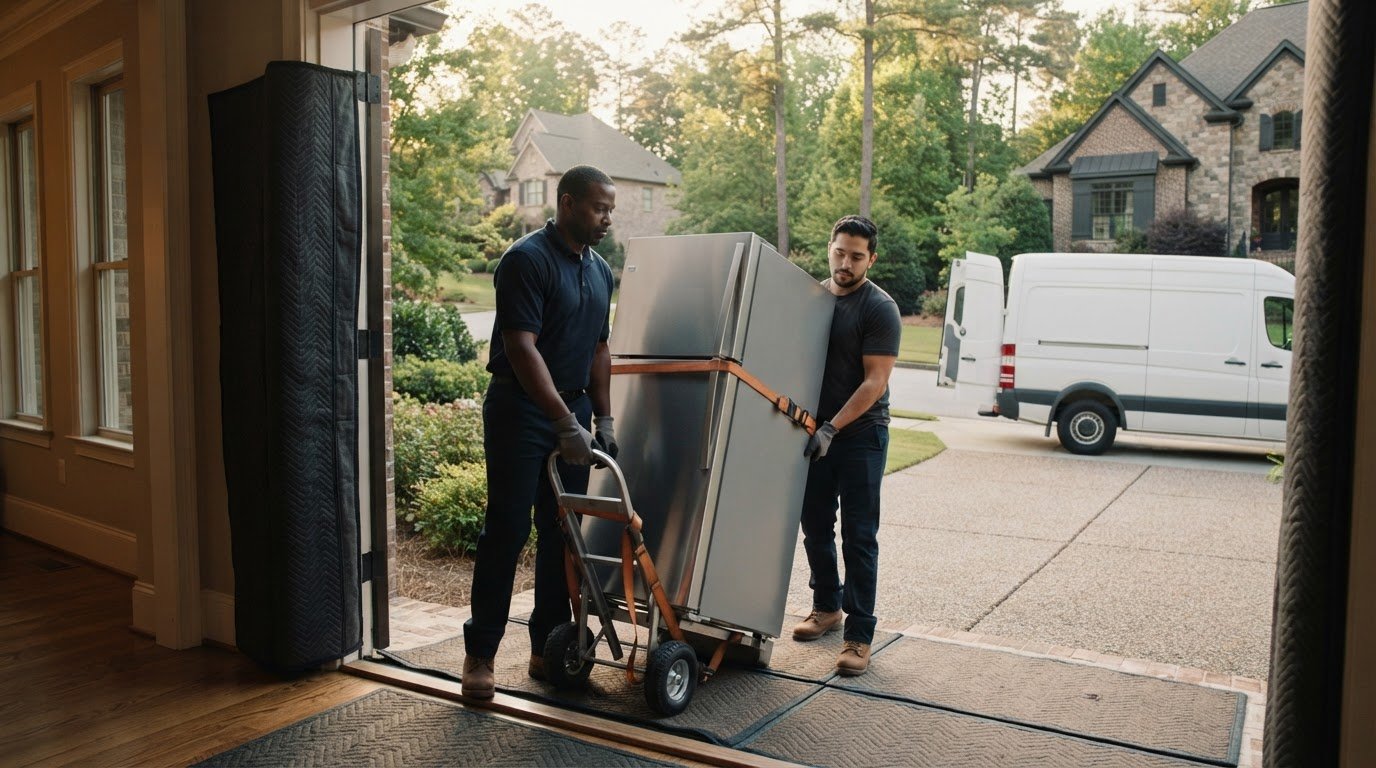
Refrigerator Disposal in Roswell, GA: A Simple Step-by-Step Guide
A refrigerator can turn a simple cleanout into a risky lifting job. If you’re planning refrigerator disposal Roswell GA, you shouldn’t have to…
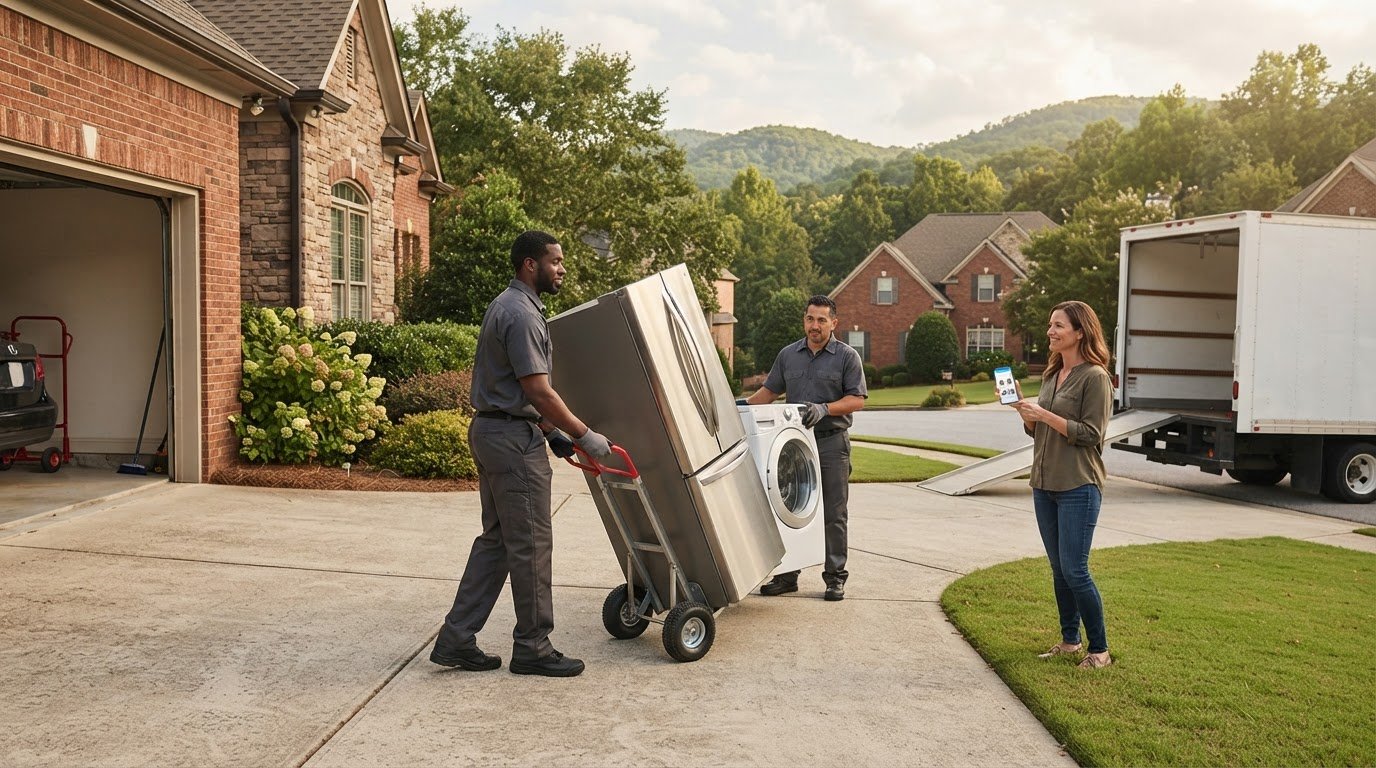
Appliance Removal in Dawsonville, GA: How to Arrange a Pickup
Before arranging appliance removal dawsonville ga, confirm that the hauler accepts your specific appliance. A refrigerator, washer, or other bulky…
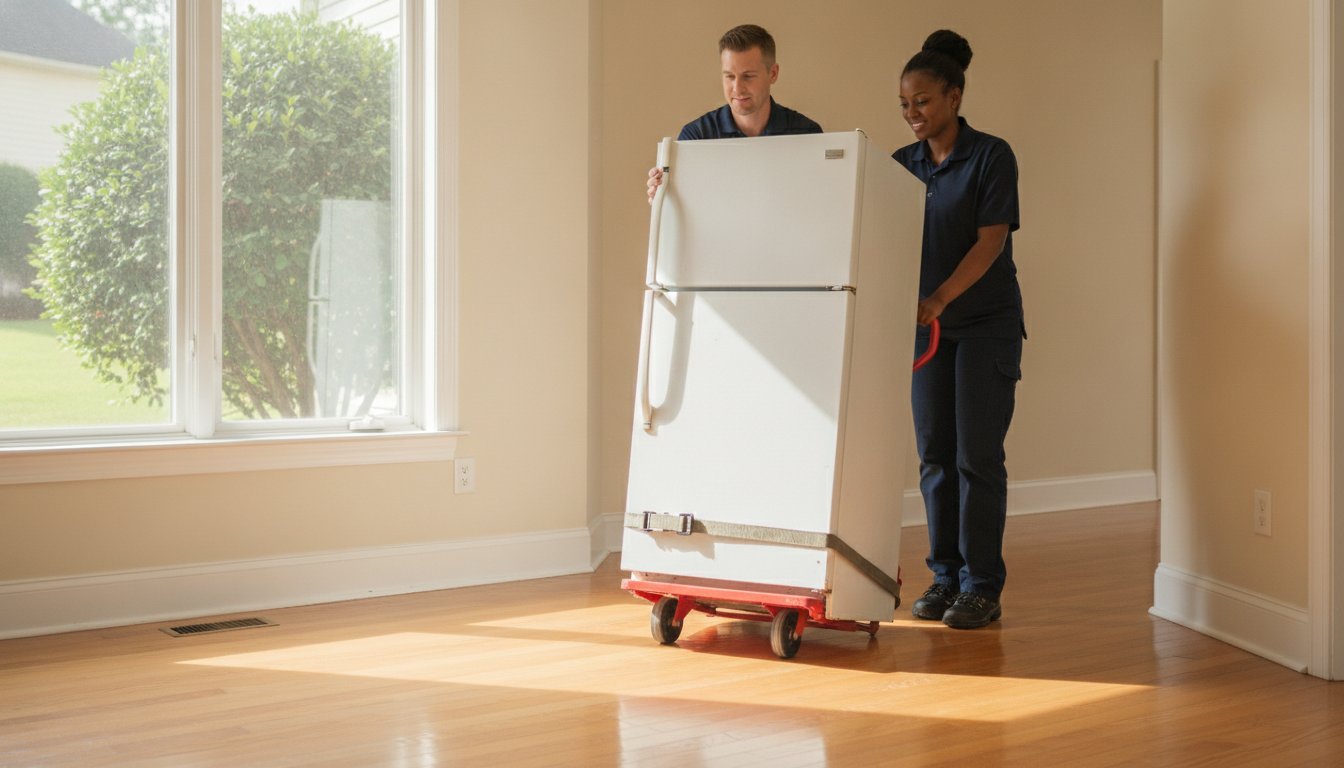
Professional Appliance Removal in Johns Creek, GA: The Complete Disposal Guide
You finally upgraded to that sleek new refrigerator, but now your old unit is sitting in the middle of the kitchen like a 200-pound roadblock. You…