
A complete retail cleanout can help property managers prepare a space for its next use by removing unwanted fixtures, displays, furnishings, and packaging. Retail store cleanout services in Milton, GA can simplify the process when a space is being prepared for a new tenant, renovation, or sale. The quote depends on the volume and type of items, access, and the work involved.
It’s understandable to focus on what needs to go and how soon the space can be ready again. A well-planned cleanout can ease the work of coordinating removal and help keep reusable materials separate from waste.
This guide explains the main cost factors, the fixtures and materials commonly included, and how clearing a retail space can support property managers. It also outlines how to plan a cleanout in Milton and what to expect when arranging service.
Key Takeaways
- Cleanout quotes depend on the volume and type of material, access to the space, and the labor involved, so a clear item list helps define the project.
- Plan which shelving, displays, furniture, and non-hazardous inventory should be removed before the cleanout begins.
- Coordinate cleanout timing with store closures or remodels to help prepare the space for its next use.
- For buildings constructed before 1978, lead-safe work practices are required under the EPA Renovation, Repair, and Painting Rule, according to the U.S. Environmental Protection Agency.
- Use the Milton service-area information to plan the site, removal needs, and next steps for your retail space.
How much do you charge for a retail store cleanout?
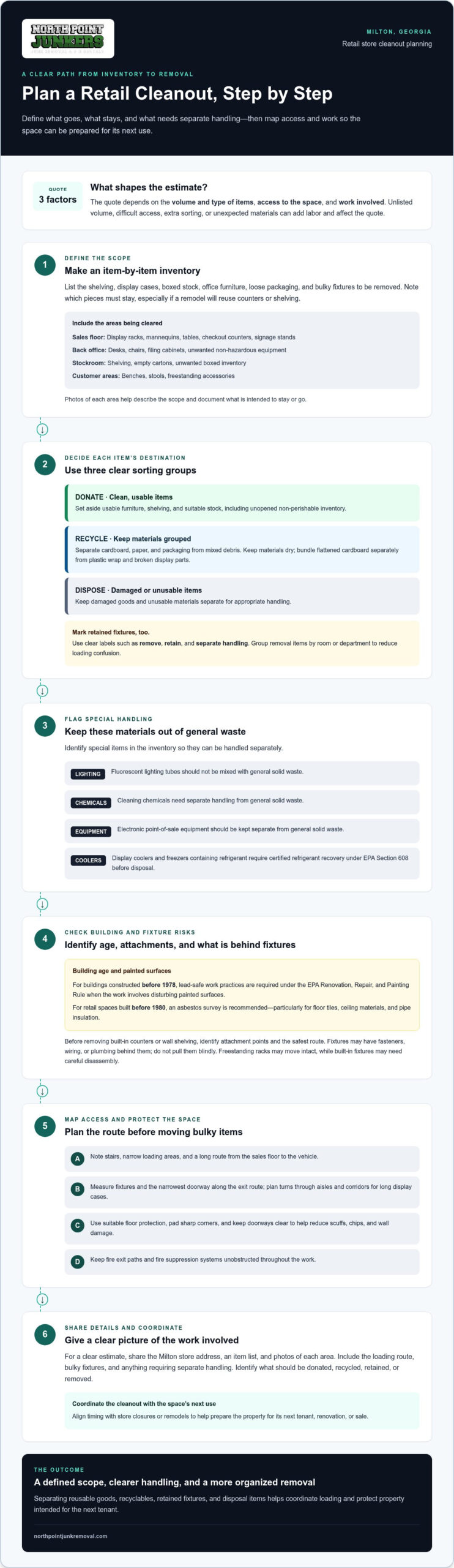
The quote depends on the volume and type of items, access, and the work involved. To describe the job clearly, list the shelving, display cases, boxed stock, office furniture, and loose packaging to be removed. Note stairs, narrow loading areas, or a long route from the sales floor to the vehicle. Sharing these details and photos helps define the scope and estimate.
Can reusable retail items be donated or recycled during a store cleanout in Milton? Yes. Separate usable shelving, furniture, and unopened non-perishable inventory from damaged goods, then arrange donation or recycling where appropriate. Recycling cardboard, paper, and packaging can also keep clean materials out of landfill. Keep items dry and grouped by material to make handling easier.
Sorting before removal gives each material a clear destination. Mark areas for reusable goods, recyclable materials, and items for disposal. For example, bundle flattened cardboard separately from plastic wrap and broken display parts. Record which fixtures must stay, especially if a remodel will reuse counters or shelving. A simple inventory can prevent confusion during loading and help protect property intended for the next tenant.
- Donation: Set aside clean, usable furniture, shelving, and suitable stock.
- Recycling: Group cardboard, paper, and packaging away from mixed debris.
- Disposal: Keep damaged or unusable materials separate for appropriate handling.
What risks or extra fees can arise during a retail store cleanout? Unlisted volume, difficult access, extra sorting, or unexpected materials can add labor and affect the quote. Fluorescent lighting tubes, cleaning chemicals, and electronic point-of-sale equipment shouldn’t be mixed with general solid waste. Flag these items in the inventory so they can be handled separately. Refrigerant-containing display coolers and freezers also need appropriate refrigerant recovery before disposal.
Building age matters when the work involves disturbing painted surfaces. According to the U.S. Environmental Protection Agency, lead-safe work practices under the Renovation, Repair, and Painting Rule are required for buildings constructed before 1978. For retail spaces built before 1980, an asbestos survey is recommended, particularly for floor tiles, ceiling materials, and pipe insulation. Identify the building’s age and planned work before removal begins.
For a clear estimate, share the Milton store address, an item list, and photos of each area. Include the loading route, bulky fixtures, and materials that need separate handling. Identify what should be donated, recycled, retained, or removed. These details help define the scope and account for the work involved.
What Types Of Retail Fixtures And Materials Can Be Hauled Away?
A retail cleanout can include freestanding shelving, display tables, checkout counters, chairs, desks, and unwanted stock. Items might include seasonal displays, boxed merchandise, fitting-room benches, and outdated office furniture. Make a removal list that names each item and notes what stays. This is especially important when fixtures will be reused, sold, or left for a new tenant.
What is included in a retail store cleanout service? The scope may include removing listed fixtures, furniture, equipment, clutter, and non-hazardous inventory from the sales floor, stockroom, or office. It can also include sorting items for removal and leaving designated pieces in place.
Fixture removal takes planning. Mark each cabinet, shelf, or display for removal, then clear merchandise and loose objects from it. Identify attachment points and the safest route through the store. Freestanding racks may move intact, while built-in counters or wall shelving may need careful disassembly. Don’t pull fixtures blindly, since fasteners, wiring, or plumbing may be behind them.
- Sales floor: Display racks, mannequins, tables, checkout counters, and signage stands.
- Back office: Desks, chairs, filing cabinets, and unwanted non-hazardous equipment.
- Stockroom: Shelving, empty cartons, and unwanted boxed inventory.
- Customer areas: Benches, stools, and freestanding accessories.
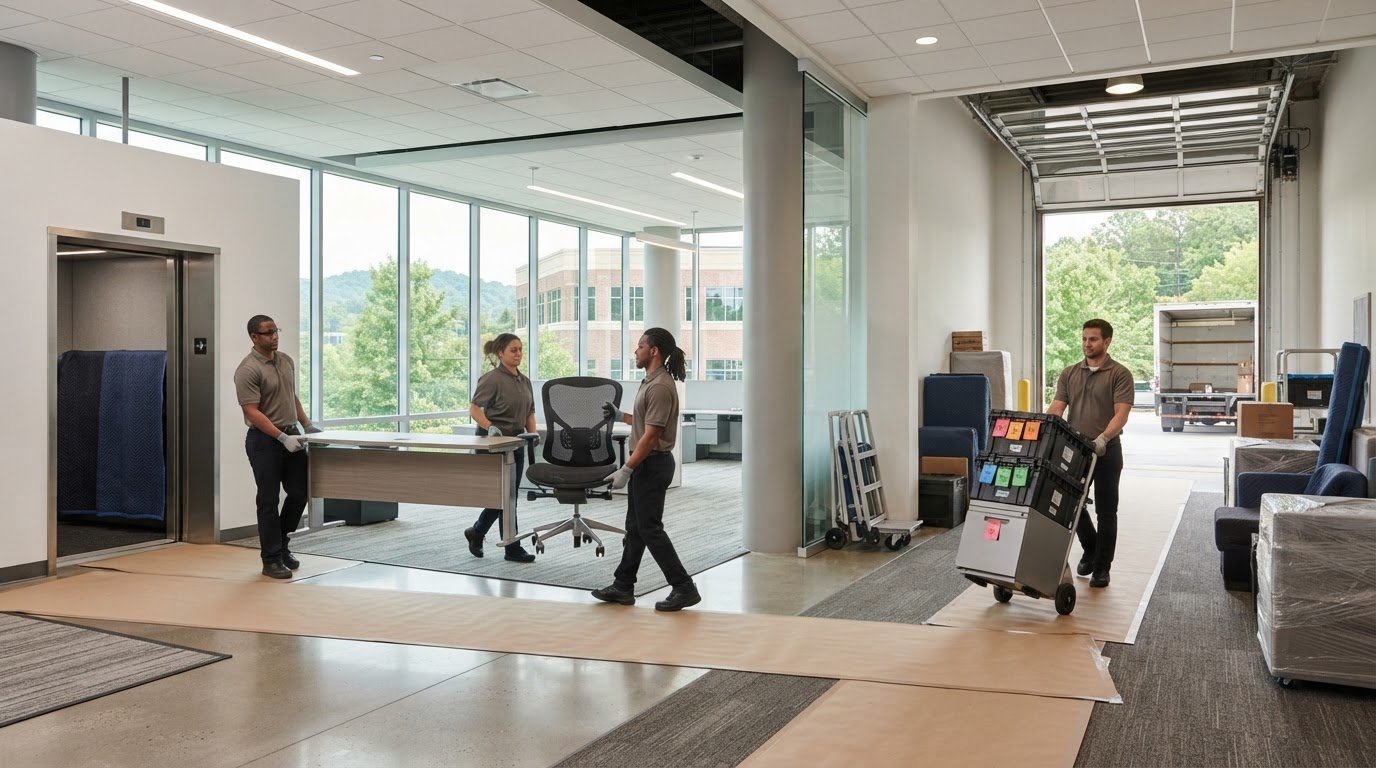
Protect the route before moving bulky items. Use suitable floor protection, pad sharp corners, and keep doorways clear. Measure the fixture and the narrowest doorway along its exit route. For a long display case, plan the turns through aisles and corridors before lifting. These steps help reduce scuffs to floors, chips to doorframes, and damage to walls.
Equipment needs a closer look before removal. A standard desk or empty display stand differs from equipment containing chemicals, refrigerant, or electronic components. Fluorescent lighting tubes, cleaning chemicals, and electronic point-of-sale equipment must stay separate from general solid waste. Refrigerant-containing display coolers and freezers require certified refrigerant recovery under EPA Section 608 before disposal. Identify these items clearly in the inventory.
Keep the process organized with three labels: remove, retain, and separate handling. Clearly tag retained fixtures, then group removal items by room or department. For example, list front-counter furniture separately from stockroom shelving. Photos taken before work begins can document the agreed scope and help prevent usable fixtures from being mistaken for clutter. Clear item descriptions also make loading and disposal easier to coordinate.
During a Milton retail cleanout, separate cardboard, paper, and packaging for recycling. Keep fire exit paths and fire suppression systems unobstructed throughout the work. Milton does not provide municipal curbside bulk trash collection, so private hauling is needed for bulk item removal.
Milton Building Division permits may be required when a cleanout involves removing built-in cabinetry, demolishing interior walls, or clearing a property for renovation or sale. A tree removal permit is required when trees are removed during property clearing. For multi-tenant properties, accurate records showing which HVAC equipment serves each tenant can make maintenance and troubleshooting easier.
How Does Complete Retail Clearing Help Commercial Property Managers?
A planned store clearing gives property managers a defined handoff from tenant closure to the next stage, such as remodeling or lease turnover. Set the removal date around the tenant’s move-out, contractor access, and target inspection or occupancy dates. A written scope can distinguish tenant property, landlord-owned fixtures, items for removal, and materials requiring separate handling. This helps prevent confusion about what stays.
What permits or disposal rules apply to commercial cleanouts in Milton and Fulton County? Georgia’s Comprehensive Solid Waste Management Act, O.C.G.A. § 12-8-20, governs commercial waste handling, transport, and disposal. Milton commercial waste must be containerized or loaded directly onto removal vehicles, not placed at the curb; hazardous materials must stay separate from general solid waste.
Plan site access before the crew arrives. Identify the loading entrance, service-elevator arrangements, parking restrictions, and shared corridors. In a multi-tenant building, notify neighboring businesses and property staff about the work window. Keep fire exits and fire suppression systems unobstructed, and keep loose debris away from storm drains, ditches, and drainage easements.
How should a business prepare a retail space for a cleanout? Create an item list, mark landlord property that must remain, and remove personal records and valuables. Share the loading route and access instructions with the crew. A floor plan or marked photos can show which rooms and fixtures are included.
Build disposal planning into the schedule. Milton does not operate municipal solid waste collection for commercial businesses, so retail businesses must use licensed private haulers. Commercial waste haulers must have current licensing compliant with Fulton County and City of Milton ordinances. Large-volume commercial waste transported to permitted disposal facilities requires manifest documentation. Georgia landfill disposal must use facilities permitted by the Georgia Environmental Protection Division.
Some projects involve more than hauling. Fixture removal that affects electrical, plumbing, or HVAC systems can trigger permit and inspection requirements under Milton’s adopted building codes. Structural or mechanical alterations require building permit applications through Milton’s Community Development Department. Schedule demolition or trade work separately from basic clearing to avoid blocking contractors or disrupting building systems.
Cost and timing depend on the volume, material types, access route, and sorting or loading work. The price depends on the case and is provided after a quote request. Give a detailed inventory and photos when requesting a quote, and identify hazardous items separately. These details help owners coordinate the cleanout with closure dates, remodel milestones, and the next tenant’s access without treating disposal as an afterthought.
Retail cleanout service areas in Milton
For a Milton retail cleanout, planning starts with the store’s exact location and removal route. Share the property address, suite number, loading entrance, and parking instructions. A storefront on a busy shopping corridor may have different loading access from a unit in a multi-tenant center. These details help shape a practical hauling plan for the specific site.
A retail cleanout is a commercial job, whether the space is a standalone store, a shopping-center unit, or a ground-floor suite in a mixed-use property. The layout affects how the crew reaches inventory and fixtures. A rear service door, for example, may allow direct loading, while a shared corridor requires coordination with property staff.
Retail store cleanout services in Milton, GA should be planned around the site, not just its neighborhood. Provide the address and note gate access, loading restrictions, shared docks, or narrow driveways. List the areas to clear, such as the sales floor, stockroom, office, or storage room. Property managers can use this information to coordinate access and keep other tenants’ routes open.
When choosing an insured cleanout company in Milton, review proof of insurance, current commercial-hauler licensing, and the written removal scope. The plan should identify the loading location, materials being hauled, and how debris will be contained. Milton commercial haulers must have current licensing compliant with Fulton County and City of Milton ordinances.
Environmental handling matters at every Milton site. Separate cardboard and clean packaging from mixed debris, and identify materials requiring separate handling before hauling starts. Keep loose material away from storm drains, ditches, and drainage easements. Commercial waste cannot be placed at the curb in Milton; it must be containerized or loaded directly onto removal vehicles. Account for this in the loading plan.
For a multi-tenant property, map the route from the store to the vehicle before the appointment. Note doors, elevators, shared corridors, and access limits. Tell building staff which retail spaces are included and which must remain untouched. If a neighboring tenant will be open during clearing, plan loading to avoid blocking its entrance or disrupting customer access.
Before requesting an estimate, prepare the address, site photos, an inventory of large items, and access notes. Include whether the store is vacant or still operating and the intended clearing date. These details help match the hauling plan to the Milton property’s layout, tenant activity, and removal needs. The result is a scope tailored to the retail space rather than a one-size-fits-all plan.
Which Milton-area companies specialize in retail store cleanouts
Retail cleanouts involve more than removing a few unwanted boxes. The work may include coordinated removal of shelving, display cases, checkout furniture, and remaining non-hazardous inventory. A store closure differs from clearing a home or single room. The scope, loading route, tenant requirements, and disposal plan all shape the job. Businesses looking for retail store cleanout services in Milton, GA need a clearly defined commercial cleanout plan.
A well-organized project distinguishes what leaves from what remains, maps the route to the loading area, and notes materials requiring separate handling. For example, a property manager may need display units removed while keeping landlord-owned counters in place. A store preparing for remodeling may need its stockroom cleared without blocking contractors or other tenants.
In Milton, a commercial cleanout also requires practical site coordination. Retail waste must be containerized or loaded directly onto removal vehicles, not placed at the curb. Commercial haulers must have current licensing compliant with Fulton County and City of Milton ordinances. Location-specific planning matters, especially at shopping centers with shared docks or corridors.
A focused service plan should make the job’s boundaries easy to understand. Look for a scope that identifies:
- The retail rooms included, such as sales floor, office, and stockroom.
- Fixtures and furniture designated for removal or retention.
- Access instructions, including loading doors and shared routes.
- Materials that need separate handling from general debris.
- How reusable items and recyclable packaging are sorted.
These details help owners coordinate a cleanout with lease turnover, remodeling, or a new tenant’s move-in. They also reduce the risk of removing fixtures that belong to the property. Keep an inventory and mark retained items before the crew arrives. Photos of the sales floor and stockroom can clarify which areas the agreed scope covers.
Include environmental handling in the plan. Separate clean cardboard and packaging from mixed materials, and keep debris clear of storm drains and drainage easements. Keep electronic point-of-sale equipment, fluorescent lighting tubes, and cleaning chemicals separate from general solid waste. Clear descriptions help define the removal scope and prepare for responsible handling.
For a Milton store closure or remodel, bring together the address, item inventory, access notes, and target schedule. A defined scope makes it easier to coordinate building staff, tenants, and contractors around the clearing work. Arrange a retail cleanout plan based on the store’s contents and site access.
North Point Junk Removal: Residential Junk Removal
North Point Junk Removal provides commercial junk removal for Milton stores during closures, remodels, and tenant turnovers. Share the item list, access details, and what should stay so the removal plan reflects the space and its contents.
For projects where you want to load items yourself, dumpster rentals offer another way to manage debris. North Point Junk Removal also provides residential junk removal and hoarding cleanup for separate home cleanout needs. Choose the service that fits the property and the work involved.
Keep hazardous materials separate from general debris, and plan for their proper handling. For a retail cleanout, a clear inventory and loading plan help organize the next steps. Contact North Point Junk Removal to discuss your cleanout, or visit northpointjunkremoval.com.
Set Up the Space for Its Next Chapter
A store cleanout is an opportunity to plan a transition, not simply empty a room. Before work begins, decide what the space needs next: a new tenant, a remodel, or a return to active business. That goal can guide which fixtures stay, what goes, and how the cleared space should be handed over. A short written plan gives owners, property managers, and the removal crew a shared point of reference.
For retail store cleanout services in Milton, GA, North Point Junk Removal provides commercial junk removal for business spaces, as well as residential junk removal and hoarding cleanup for other property needs. Choose the service that fits the space, then outline the items and access details that matter. A clear plan helps turn an overwhelming transition into practical next steps.
Contact North Point Junk Removal today to discuss your cleanout. A well-prepared space is one step closer to its next use.
Frequently Asked Questions
Why Is Professional Retail Store Clearing Important For Business Owners?
Professional clearing helps business owners hand over a usable space without diverting staff from closing tasks. Employees can focus on inventory records, customer notices, and account closeout while the removal is handled separately. A clear scope also distinguishes company property from landlord-owned fixtures. In Milton, coordinating removal with building management can help avoid conflicts over shared entrances, loading areas, and neighboring tenants.
How quickly can a Milton cleanout company clear a retail space?
North Point Junk Removal offers same-day pickups, seven days a week. The time needed to clear a space depends on its contents and access. A mostly empty boutique with a clear loading route is different from a stockroom packed with shelving and boxed goods. Share photos, an item list, and access details when arranging service so the work can be planned around the closure or turnover schedule.
Do Milton store cleanout services handle fixtures, shelving, inventory, and construction debris?
Commercial junk removal can include unwanted fixtures, shelving, furniture, and non-hazardous inventory. Separate items that belong to the landlord or should stay for the next tenant. For construction debris from a remodel, a dumpster rental may help manage waste on-site. Keep materials requiring separate handling apart from general waste and identify unusual items before arranging removal so the plan fits the project.
You May Also Like
Office Furniture Removal in Roswell, GA: A Business Buying Guide
What makes office furniture removal in Roswell, GA difficult is often not lifting desks, but planning the pickup. Bulky furniture, building access,…