
An office cleanout doesn’t end when the space is empty; the next step is deciding what happens to each item. With office cleanout services in Suwanee, usable items may be donated, recyclable materials sorted for recycling where accepted, and unwanted items loaded and hauled away for proper disposal.
Sorting can feel like another project on top of clearing desks, furniture, and shared spaces. The right route depends on each item’s condition and material, while the cleanout’s scope, the amount to remove, and the work involved all affect the quote.
This guide explains how office cleanout pricing works in Suwanee and what can affect the final quote, without relying on a one-size-fits-all figure. You’ll also learn how donation, recycling, disposal, loading, and hauling fit into the process, so you can plan the cleanout and understand what happens to items after they leave the office.
Key Takeaways
- Plan the cleanout around what needs to leave and how the space will be used next; the scope of the job shapes its timing.
- Understand how the amount and type of items, access, and loading work can affect a cleanout quote.
- Sort items by condition and material to identify what may be donated, recycled, or disposed of.
- Prepare for heavy lifting and transport by considering how furniture and other bulky items will be moved out of the property.
- Learn when property junk removal and hauling can simplify clearing an office or other space.
Item Disposal After a Suwanee, GA Property Clean Out
Start scheduling with a clear list of what must leave the office. Note the rooms involved, large items such as conference tables, and access limits such as a narrow hallway. These details help define the work and plan around staff, customers, and building use. Cleanup time depends on the amount to remove, item size, carrying distance, and sorting needs. A few desks in one room call for a different plan than a whole office with cubicles, filing cabinets, and break-room appliances.
North Point Junk Removal is a licensed, fully insured, and bonded commercial and residential junk removal company. When arranging office cleanout services in Suwanee, share the rooms and items involved so the work can be clearly scoped.
North Point Junk Removal provides commercial junk removal for office cleanouts in Suwanee. The service includes hauling unwanted workplace contents, with the plan shaped by the items and rooms involved. Share the scope and access details to help define the work.
Do office cleanout services in Suwanee handle furniture, electronics, and confidential files? Furniture and electronics may be included in a cleanout, but confirm which items are part of the planned removal. Separate confidential files first; keep records with the business and arrange secure handling through its own document procedures.
Prepare the space before the scheduled arrival. A simple room-by-room plan helps keep wanted items separate from items for removal:
- Mark desks, chairs, and cabinets that should stay.
- Set aside electronics and confidential files for separate handling.
- Group furniture and other unwanted items by room.
- Clear a route from each room to the building exit.
- Tell staff which areas are being cleared and when.
Plan the work around the office’s operating needs. A business might clear one department before another or arrange access when fewer employees use shared spaces. First identify items to keep, set aside sensitive materials, and make removal areas accessible. In a shared building, note entry procedures and loading-area restrictions when planning. These details help avoid delays and keep the cleanout focused.
Before the cleanout begins, walk through each room with the item list. Point out anything that must remain, such as a printer still in use or a cabinet holding active records. Revisit the list when the scope changes. That final check gives staff and the removal team a shared plan, helps prevent accidental removal, and keeps the property ready for its next use.
Cleanout pricing factors
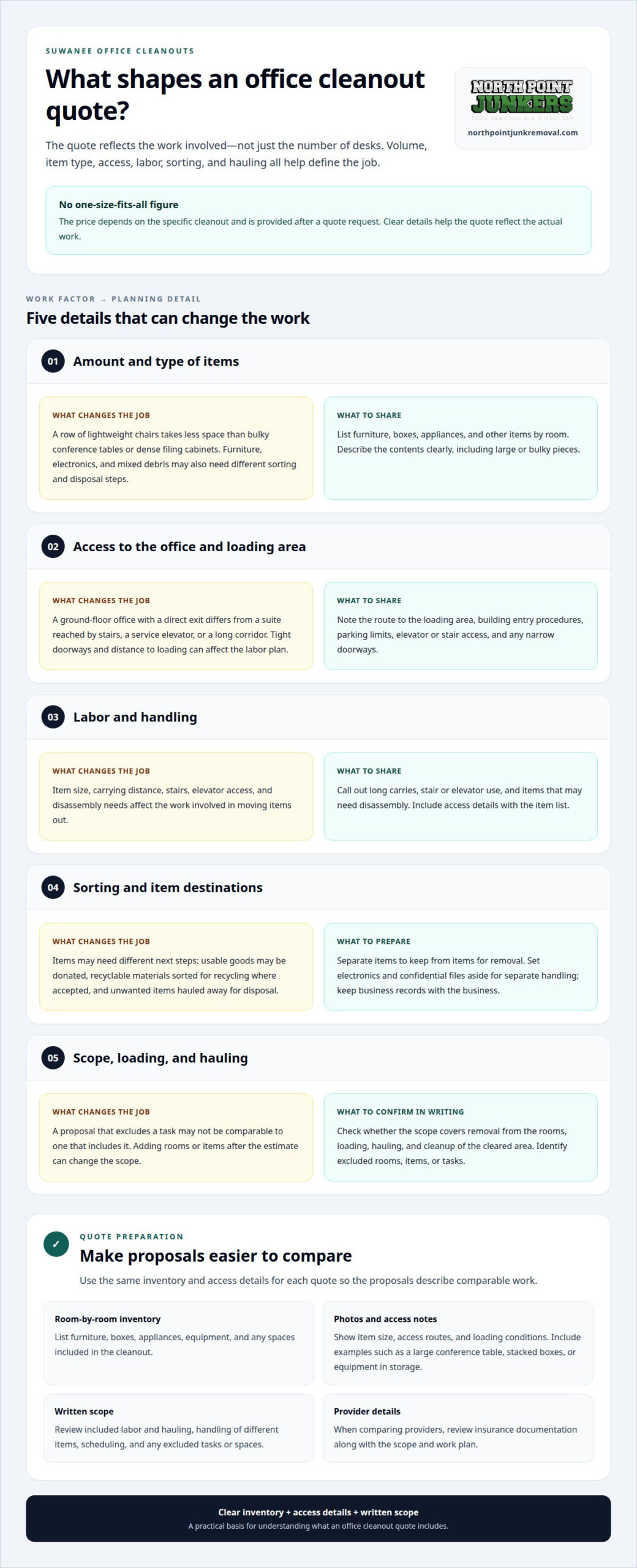
An office cleanout quote reflects the work involved, not just the number of desks. A single room with chairs and boxed supplies differs from a full suite containing cubicles, filing cabinets, and break-room appliances. The price depends on the specific cleanout and is provided after a quote request; key factors include the volume and type of items, access, labor, sorting, and hauling needs.
Volume matters because it affects loading and transport. A row of lightweight office chairs takes less space than bulky conference tables or dense filing cabinets. Item type matters, too: furniture, electronics, and mixed debris may need different sorting and disposal steps. Describe the contents clearly so the quote reflects the actual job, not just the number of rooms.
Access can affect the labor plan. A ground-floor office with a direct exit differs from a suite reached by stairs, a service elevator, or a long corridor. Tell the team about the distance to the loading area, building entry procedures, and parking limits. Mention tight doorways, too, so the team can plan how items will be moved and loaded.
When reviewing a proposal, check that the written scope covers removal from the rooms, loading, hauling, and cleanup of the cleared area. A quote that excludes a task may not be comparable to one that includes it. Ask for the scope in writing, with any excluded items or spaces clearly identified.
What should businesses compare when choosing office cleanout services in Suwanee? Review the written scope, volume-based pricing, included labor and hauling, handling of different items, scheduling, and the provider’s insurance documentation. Use the same inventory and access details for each quote so the proposals describe comparable work.
- Amount: List furniture, boxes, appliances, and other items by room.
- Labor: Note stairs, elevator access, long carries, and disassembly needs.
- Sorting: Separate items the business wants to keep from removal items.
- Transport: Identify loading access and any building restrictions.
- Scope: Confirm which rooms and tasks the quote includes.
Changes after the estimate can affect the job’s scope. Adding a storage room or cabinets that were originally staying, for example, may require more handling. Before work begins, review the item list and mark anything that must remain. This helps prevent confusion and gives the crew a clear boundary for the job.
For a useful estimate, prepare a room-by-room inventory and photos showing item size, access routes, and loading conditions. Include examples such as a large conference table, stacked boxes, or equipment in a storage area. Clear details help shape a practical quote and removal plan.
Donation, recycling, and disposal
Sort office contents by condition and material before deciding where they should go. A usable desk, a damaged chair, and a stack of cardboard need different next steps. Group items for reuse, materials that may be recyclable, and items for disposal. This makes each item’s destination clearer and reduces the chance of mixing reusable goods with debris.
Donation can keep serviceable furniture and supplies in use. Check each item for stability, cleanliness, and missing parts. A sturdy conference table may be suitable, while a chair with a broken frame may not be. Keep potential donations clean and accessible, and record what is available. Acceptance depends on the item’s condition, size, and quantity.
Recycling starts with identifying materials. Flatten clean cardboard boxes, separate paper from mixed waste, and keep metal shelving apart from general debris. Group computers, monitors, printers, and cords separately from ordinary office waste. Recycling routes vary by material, so identify items before sorting rather than assuming every facility accepts every material or electronic device.
Use a practical sorting sequence:
- Mark items the business intends to keep.
- Set aside clean, usable furniture and supplies for possible donation.
- Group cardboard, paper, and other recyclable materials by type.
- Separate electronics and bulky items for appropriate handling.
- Place remaining unwanted contents in the disposal group.
Items that cannot be reused or recycled through an available route may need disposal. Examples include badly damaged particleboard furniture, torn carpet squares, and broken plastic organizers. Keep them separate from donation items so damaged goods are not mistaken for items ready for reuse.
Before removal, label each group with clear words such as “keep,” “donate,” “recycle,” or “dispose.” Add a room name, such as “conference room,” when several areas are being cleared. Labels guide people handling the items and reduce sorting errors. For boxes, note whether they contain reusable supplies, recyclable paper, or items for disposal.
Keep business records and confidential papers out of general cleanout piles. A box marked “records” should stay with the business until its contents are reviewed and handled through company document procedures. Take the same care with storage devices that may hold company information. Separating these materials before moving furniture and debris helps prevent accidental disposal.
Finally, walk through the office and check each area against the sorting plan. Look behind desks, inside storage cabinets, and beneath reception counters for overlooked items. Confirm that donation candidates are clean, recycling groups are separated, and disposal items are clearly identified. This final check gives every item a defined destination before hauling begins.
Heavy lifting, loading, and transport
Moving office contents takes more than carrying items to an exit. A conference table, filing cabinet, and boxed supplies each need a different handling plan. Identify which items need lifting, which can be moved on wheels, and which should be separated into smaller parts. This inventory helps organize the route from each room to the loading area and shows staff where to keep walkways clear.
Large furniture can create tight turns at doorways and hallways. Measure the route and compare it with bulky items, such as a reception desk or boardroom table. Clear loose cables, small boxes, and wastebaskets from the path. If a piece cannot pass through a doorway intact, identify it before moving begins. Disassembly may help, but only if the item is designed for it and the necessary parts can be kept together.
Loading is easier when items are grouped by size and type. Keep boxes together and position chairs and smaller furnishings separately from long desks. Move items that must remain away from the loading route. A clear “keep” label prevents confusion as the crew moves between the office and truck.
- Prepare: Clear the route from each room to the exit.
- Protect: Move loose supplies and cables out of traffic areas.
- Separate: Keep retained items away from furniture for removal.
- Stage: Group boxes, chairs, and large furniture for efficient loading.
- Review: Check the rooms and route before transport begins.
Transport planning also depends on the building. Note whether the office uses a service entrance, elevator, loading dock, or shared parking area. A suite with a long corridor, for example, may need a different staging point from a ground-floor office beside its loading area. Share access instructions and building limits in advance so the route and loading sequence suit the property.
During removal, keep the path open and point out fragile fixtures near the exit. A glass partition, wall-mounted display, or narrow stair landing can affect how bulky items move through the space. Flag these details before loading starts. After transport, inspect the office, hallway, and staging area for overlooked items, debris, or furniture meant to stay.
A clear handoff helps bring the job to a close. Keep a room list nearby and check each area as it is emptied. Confirm that the right furniture has left, retained equipment remains, and the loading route is clear. These steps help coordinate heavy-item removal without disturbing other office contents.
Property junk removal and hauling
Property junk removal clears unwanted contents from a building and hauls them away. For a business, that might mean desks from an office, boxed supplies from a storage room, or worn furniture from a reception area. Define the work by location and item type to distinguish contents for removal from fixtures or equipment that should stay.
Think beyond the main office. A cleanout may include a back room, storage area, or shared workspace with extra chairs and old shelving. Make a room list and note what each space contains. Distinguish empty cartons from boxes of records, for example, and mark a spare conference table separately from built-in counters. This creates a property-wide plan instead of focusing on a single pile.
A smooth handoff between the business and removal crew starts with clear responsibilities. Identify who can approve removal, open secured rooms, and confirm which areas are excluded. If a landlord or property manager controls access, include their instructions in the plan. This helps avoid delays caused by locked doors, unclear ownership, or items staff expected to remain.
A useful property cleanout plan follows a simple sequence:
- List every room, storage area, and shared space in scope.
- Mark items that must remain or belong to another occupant.
- Identify bulky contents that need a clear path to the exit.
- Set aside records and personal belongings for the business to review.
- Walk through the cleared areas and confirm the agreed scope.
Timing can be especially important during a property turnover. A business moving out may need desks and shelving removed before another occupant uses the suite. A property manager clearing a rental unit may need household contents removed from several rooms. In either case, a room-by-room list helps distinguish the cleanout from other planned work, such as painting or repairs.
Keep the removal scope separate from renovation debris or materials created by building work. Office furniture, loose household items, and boxed contents differ from construction waste. Name the contents clearly so everyone understands what the hauling job covers. Flag changes before work begins, such as adding a storage closet or excluding a room.
After hauling, inspect each space against the original list. Check closets, corners, and behind doors for overlooked items. Confirm that retained property remains in place and the agreed areas are clear. A room-by-room walkthrough provides a practical final check before the property moves to its next stage.
North Point Junk Removal: Residential Junk Removal
North Point Junk Removal helps businesses clear unwanted office contents with Commercial Junk Removal. It’s a practical option when desks, chairs, or other items need to be removed from a workplace. Businesses seeking office cleanout services in Suwanee can choose full hauling service or rent a dumpster when they want to manage loading themselves.
For homes and other properties, Residential Junk Removal and rental property cleanouts address different needs. Hoarding Clean-up is available for properties requiring that focused service. Choose based on the property type and whether you want help removing items or a dumpster for the cleanup.
Contact North Point Junk Removal to discuss the cleanout that fits your property.
Make the Next Move With a Clear Plan
A cleared office can mark more than the end of a cleanout. It can make room for a new layout, a tenant transition, or a more focused way of working. Before scheduling, decide who will make final decisions about items and property access. A clear point person helps keep the next stage organized.
Choosing office cleanout services in Suwanee is one part of planning that transition. North Point Junk Removal offers Commercial Junk Removal for workplace cleanouts, along with Residential Junk Removal and Hoarding Clean-up for other property needs. Match the service to the space and help needed, then share the plan with everyone involved.
Whether you’re preparing a workplace for its next use or clearing a different property, a defined plan helps you move forward with confidence. Connect with North Point Junk Removal to discuss your cleanout and take the next step toward a space ready for what comes next.
Frequently Asked Questions
What office cleanout services are available in Suwanee?
Commercial Junk Removal is available for businesses clearing office contents in Suwanee. It suits companies preparing to vacate a suite, reorganize work areas, or remove unwanted office items. For a smaller job, Single-Item Removal may fit better than clearing an entire property. Describe the space and items involved so the requested service matches the cleanout’s scope.
How much does office cleanout cost in Suwanee, GA?
The cost depends on the cleanout’s scope and is provided after a quote request. Share photos, an item list, and details about the rooms involved to describe the job accurately. For example, note whether the request covers an entire suite or only a reception area. Include what should stay, too, so the estimate reflects the intended removal rather than an unclear scope.
Do Suwanee office cleanout companies offer free estimates or on-site quotes?
North Point Junk Removal provides free estimates based on photos. Photograph the items from clear angles, including larger pieces and the surrounding space, to show their size and quantity. Add a short description of the areas involved. This gives the estimate request useful context without requiring a long written inventory.
How quickly can an office cleanout be scheduled in Suwanee?
Same-day pickups are available, and service is offered seven days a week. Have the item list, property access details, and preferred timing ready to help plan the job. For example, note whether a building manager must unlock a loading entrance before removal can begin. This helps coordinate access and the cleanout plan.
How are office cleanout items donated, recycled, or disposed of in Suwanee?
Items may be donated, recycled, or properly disposed of, depending on their condition and material. A clean, usable desk differs from a broken chair or mixed debris, so sort items by their likely destination before removal. Keep company records and information-bearing devices separate for internal handling. This helps distinguish reusable office contents from items that need another disposal route.
What risks or extra fees can arise during an office cleanout?
An unclear scope, blocked access, or items mistakenly marked for removal can complicate a cleanout. North Point Junk Removal has no hidden fees or tricky specials. Before work begins, agree on the rooms and contents included, identify items that must stay, and share access instructions. If the requested work changes, clarify the revised scope before proceeding.
You May Also Like

Foreclosure Cleanout Pricing and Quotes in Forsyth County
Insurance is an important part of a responsible foreclosure cleanout. North Point Junk Removal provides foreclosure cleanout services in Forsyth…