
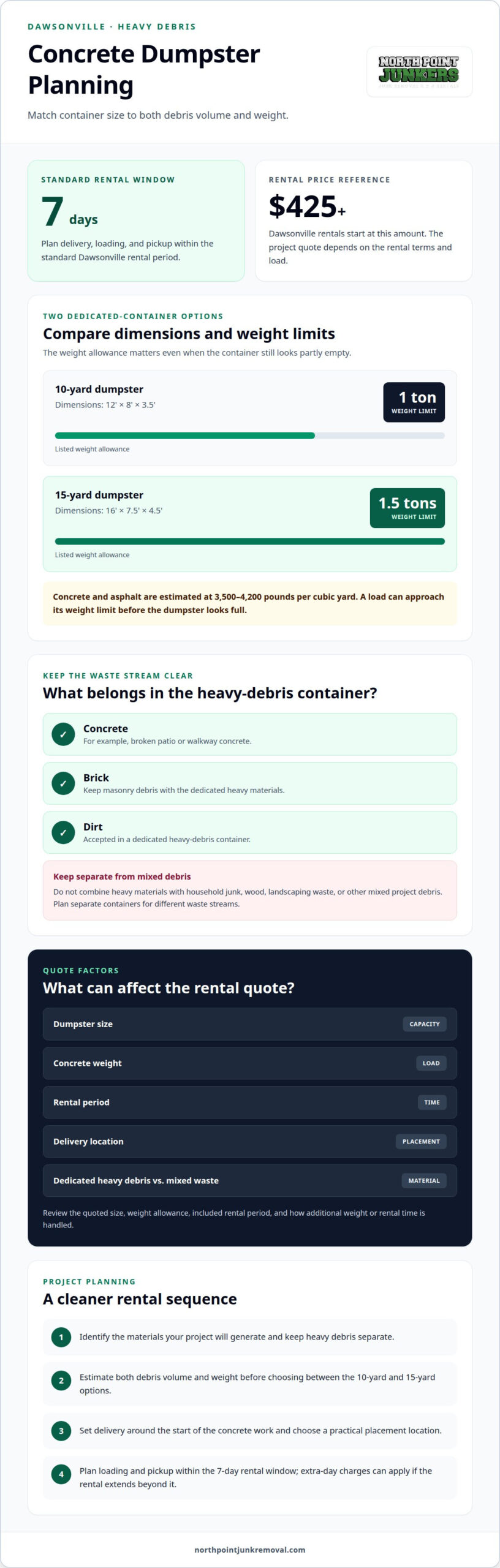
For concrete disposal in Dawsonville, choose a dedicated heavy-debris dumpster: concrete, brick, and dirt are accepted when kept in a separate container. A 10- or 15-yard dumpster may fit, with listed weight limits of 1 ton and 1.5 tons, respectively. The right choice depends on how much debris you have and how heavy it is.
It’s easy to focus on a container’s size, but concrete can reach a weight limit before the dumpster looks full. That affects the size you need and the rental cost. This guide explains how to plan a dumpster for concrete disposal in Dawsonville, including which materials belong in a dedicated heavy-debris container, how weight affects your choice, and what to consider when arranging a rental with North Point Junk Removal.
Key Takeaways
- Concrete, brick, and dirt belong in a dedicated heavy-debris container, separate from mixed waste.
- A standard Dawsonville rental period is 7 days; plan your project timeline around the rental window.
- Concrete’s weight can fill a dumpster’s limit before the container is full, so match the size to both debris volume and weight.
- Learn what affects rental pricing and how to choose between a 10-yard and 15-yard container for heavy debris.
- Find out which masonry materials fit the dedicated-container rules and when dumpster rental can simplify cleanup.
What Can Go in Your Dawsonville Dumpster?
Dawsonville accepts concrete, brick, and dirt in a dedicated heavy-debris container. Keep these materials apart from household junk, wood, and other mixed debris. For example, put broken patio concrete in its own box instead of combining it with garage cleanout items. Renting a dumpster for concrete disposal in Dawsonville starts with identifying which materials the project will generate.
The standard rental period in Dawsonville is 7 days. Use that window to coordinate delivery, complete the concrete work, and load the debris. Schedule delivery when the work area is ready, rather than while you’re still clearing a garage. If you’re planning a dumpster for concrete disposal in Dawsonville, fitting delivery and loading into the rental period helps keep the project organized.
Extra-day charges can apply when a rental extends beyond its included period. Build the planned pickup date into your schedule, especially if contractors are working in stages. A delayed demolition or slow masonry repair can extend loading. Align delivery and pickup with the debris-producing work, so the container isn’t occupying space before the project needs it.
Delivery timing affects how efficiently you can load. A container delivered before concrete removal begins may sit unused, while a late delivery can leave debris stacked elsewhere. Set the delivery date around the project sequence, then plan loading and pickup within the 7-day rental window. For a driveway project, make sure the planned placement leaves practical access to the work area.
Plan the container’s placement in Dawsonville or Dawson County before scheduling delivery. A private driveway and a public street are different locations, so don’t assume the same placement requirements apply to both. Consider access to the garage, work area, and driveway when choosing a spot. The location matters when considering local placement rules or permits.
Choose a Dawsonville rental with a dedicated container for heavy materials. Concrete, brick, and dirt belong in that container, not mixed with other debris. This suits projects such as removing a walkway or clearing masonry from a larger job. Keep the dedicated-container requirement in mind when deciding where each material will go.
- Schedule delivery around the start of concrete work.
- Keep heavy materials separate from mixed project debris.
- Plan loading and pickup within the 7-day rental period.
- Account for possible extra-day charges if the work runs long.
For example, arrange delivery once the work area is ready, load concrete and brick as the job progresses, and plan pickup before the rental period ends. That sequence gives a garage renovation or masonry project a clear cleanup timeline. It also helps prevent delays from leaving heavy debris in the work area or extending the rental beyond its planned schedule.
Dawsonville dumpster rental prices
Concrete-only dumpster rental pricing depends on more than the container’s capacity. A 10-yard box and a 15-yard box can differ in included weight allowance, while concrete reaches weight limits quickly. Rental duration, delivery location, and whether the load contains only heavy debris also affect the quote. For a Dawsonville driveway project, estimate debris volume and identify the material before selecting a container.
Rental pricing depends on the project and is provided in a quote. Factors include dumpster size, concrete weight, rental period, delivery location, and whether debris is separated from mixed waste. A load of broken walkway concrete differs from a container holding landscaping waste, household items, and masonry together.
When comparing rental prices, look at the terms alongside the quoted amount. Confirm the container size, included rental period, weight allowance, and how additional weight or rental time is handled. A rate for a general-purpose container may not apply to a dedicated concrete-only rental. Material type and loading plan matter as much as capacity.
For concrete-only work, keep the load separate from ordinary renovation debris. A dedicated heavy-debris box is intended for concrete, brick, and dirt; mixing those materials with landscaping waste or garage cleanout items can change how the load is handled. If a driveway replacement also produces wood, packaging, or household junk, plan those materials separately rather than assuming one container suits every waste stream.
To find a suitable rental in Dawsonville, look for a provider offering dedicated heavy-debris containers and clearly defined rental terms. The quote should identify the container size, weight allowance, included rental period, and the costs that may change if the load exceeds those terms. The article’s next sections explain how weight limits and container dimensions help match a rental to the concrete volume.
- Separate concrete and masonry from mixed project debris.
- Compare published terms, not just the displayed rental amount.
- Include size, weight, rental duration, and delivery location in the quote request.
- Choose a dedicated container for concrete rather than a general yard dumpster.
Dawsonville dumpster rentals start at 425. These figures provide a general reference when reviewing a quote.
Dumpster sizes and weight limits for concrete
For concrete work in Dawsonville, consider both container dimensions and the weight allowance. Concrete and asphalt are heavy, so volume alone does not show how much a load weighs.
Container Sizes and Included Weight
A 10-yard dumpster measures 12′ x 8′ x 3.5′ and has a 1-ton weight limit. A 15-yard dumpster measures 16′ x 7.5′ x 4.5′, with a 1.5-ton limit. Those figures help homeowners match a container’s footprint and capacity to demolition debris. Review both measurements and weight allowance before choosing a size for a residential project.
The listed weight allowance matters because concrete and asphalt weigh an estimated 3,500-4,200 pounds per cubic yard. A container can look partly filled and still approach its weight limit. For example, a bathroom demolition may produce broken tile, concrete backer material, and other debris. Keep the actual concrete quantity in mind instead of judging capacity by the visible fill level.
Size-Based Limits and Overage Fees
The 10-yard limit is 1 ton; the 15-yard limit is 1.5 tons. A larger container provides more space, but its listed allowance still sets the weight boundary. Weight-related overage fees depend on the rental terms. The quote’s included weight and extra-weight charges determine the cost if a load exceeds its allowance.
Plan the load in stages. First, separate concrete from lighter demolition material. Next, estimate how much concrete the project will produce, such as a walkway removal or bathroom renovation. Then compare the estimate with the container’s weight allowance. For a large concrete removal, account for the material’s density before filling the container to the top.
Use the listed dimensions to assess where a dumpster can sit and how easily debris can be loaded. A 10-yard container is shorter than the 15-yard option, while the 15-yard container provides a larger listed footprint. That difference can matter in a residential driveway with limited room, or beside a work area where contractors move concrete by hand.
Don’t confuse yard measurement with weight allowance. Yard size describes container volume, while a ton limit describes allowed load weight. Concrete’s estimated weight per cubic yard makes the distinction especially important. For a dumpster for concrete disposal in Dawsonville, compare the project’s concrete volume with the size-specific allowance, then account for any other material sharing the container.
- Use container dimensions to assess fit at the driveway or job site.
- Compare the 1-ton and 1.5-ton limits with the concrete load.
- Review the rental terms for charges above the included weight.
Recommended containers for concrete and heavy debris
For Dawsonville projects, use a dedicated heavy-debris container for concrete, brick, and dirt. Keep these materials separate from mixed construction debris.
Containers for Heavy Debris
A 10- or 15-yard heavy-debris dumpster is recommended for concrete, brick, dirt, and asphalt in Dawsonville. Choose between them by considering the amount of material and its weight, not volume alone. A smaller concrete removal may suit the 10-yard option, while a larger project may need more container space. The dedicated box keeps heavy material apart from mixed loads.
For example, a homeowner removing part of a walkway can put the concrete in the heavy-debris container. Projects producing concrete, brick, and dirt can use the same dedicated stream. Keep these materials together by type instead of mixing them with household or construction debris. This makes the container’s purpose clear while loading.
Construction Debris Disposal
Concrete disposal needs a different plan from mixed construction cleanup. Separate concrete, brick, and dirt from other debris before loading. If a renovation also produces wood, packaging, or household items, keep those materials out of the dedicated heavy-debris load. Decide whether the project produces one heavy-material stream or several distinct types of debris.
For demolition, sort materials as they come out. Set aside concrete and masonry for the dedicated container, then keep other construction debris separate. This avoids treating the dumpster as a catch-all and helps match the container to the materials being removed, rather than filling available space without regard to weight or contents.
Use this simple sequence for a Dawsonville job:
- Identify the concrete, brick, dirt, or asphalt the work will generate.
- Keep those heavy materials separate from mixed construction debris.
- Select a 10- or 15-yard heavy-debris container based on project volume.
- Load only the separated heavy materials into that dedicated box.
A driveway replacement, masonry repair, or concrete demolition can each produce a different mix of materials. Sorting at the work area helps keep lighter renovation debris out of the concrete load. If the job produces several material types, make separate piles before loading. This makes container selection more practical and keeps heavy debris distinct.
For concrete disposal in Dawsonville, use a dedicated container and keep heavy debris separate. Match the container to the project’s material volume, and sort other construction debris apart from concrete, brick, and dirt.
Concrete, rocks, brick, and masonry restrictions
In Dawsonville, concrete, brick, and dirt go in a dedicated container. Keep them separate from mixed debris, and sort loose rocks separately rather than assuming they belong in the same load. Sorting before loading helps keep the container suited to its intended contents.
Accepted Concrete and Masonry Materials
Broken concrete slabs, walkway pieces, bricks, and dirt belong in a dedicated heavy-debris container. For example, patio removal may produce concrete and brick that need to stay apart from household cleanout items. Sort loose rocks separately rather than treating them as concrete.
Masonry and roofing work can produce several types of debris at once. Removing a brick wall, for example, may leave bricks, concrete, wood, and packaging in the work area. Keep accepted heavy materials together in their dedicated container and separate other debris. This is useful on larger projects, where materials can accumulate quickly.
Preparing Concrete for Pickup
Before loading, gather concrete pieces in a designated area and separate them from other debris. If concrete contains rebar, consider the combined load weight when estimating how much material the container can hold. Dawsonville’s listed limits are 1 ton for a 10-yard dumpster and 1.5 tons for a 15-yard dumpster.
Concrete and asphalt are estimated at 3,500-4,200 pounds per cubic yard. A container may approach its weight limit before it looks full, so don’t judge the load by height alone. For a larger slab removal, the material’s weight can be more important than the remaining space.
- Sort concrete, brick, and dirt into a dedicated heavy-debris container.
- Keep wood, roofing material, and household items apart.
- Include rebar when estimating the load’s combined weight.
- Stay within the listed limit for the selected container.
For a clear loading plan, sort debris in the work area before moving it to the container. Keep loose rocks distinct from concrete, and separate roofing and other construction materials from the accepted heavy debris. This helps homeowners and contractors manage cleanup without treating every material as part of one load.
For a Dawsonville concrete project, sort materials by type and consider weight as well as volume. Careful sorting makes pickup preparation more straightforward and helps keep the work area clear.
North Point Junk Removal: Dumpster Rentals
North Point Junk Removal offers dumpster rentals for on-site project cleanup. After sorting concrete and masonry from mixed debris, consider a rental for a residential renovation or larger property project. Describe the materials and project scope to help plan the right cleanup.
For projects involving more than debris loading, North Point Junk Removal also provides residential and commercial junk removal and hoarding clean-up. These services address other cleanup needs, while a dumpster rental lets you manage project debris on-site.
Contact North Point Junk Removal to discuss your cleanup and dumpster rental needs.
Set Your Concrete Project Up for a Clean Finish
Before work begins, decide where debris will collect and how cleanup fits into the project schedule. A clear plan keeps the work area organized and makes it easier to separate concrete from other materials as they come out. This preparation matters whether you’re clearing a small residential area or coordinating a larger renovation.
Choosing a dumpster for concrete disposal in Dawsonville is one part of planning a smoother project. Match the cleanup approach to the work ahead. North Point Junk Removal also handles residential junk removal, hoarding clean-up, and commercial junk removal when a project involves more than containerized debris.
Ready to plan your cleanup? Contact North Point Junk Removal to discuss the work you’re tackling. A practical plan can help you move forward with confidence and leave the space ready for what comes next.
Frequently Asked Questions
Questions Before You Book?
Before booking, note the materials, approximate debris amount, placement location, and expected cleanup timing. A broken patio with concrete and timber, for example, needs a different loading plan from a concrete-only removal. Identify whether the container will sit in a driveway or another location. These details help shape a useful rental quote and avoid planning around the wrong type of load.
What are the prices for a concrete dumpster rental in Dawsonville?
Rental pricing depends on the project, and North Point Junk Removal provides free estimates based on photos. Factors include container size, concrete weight, rental period, delivery location, and whether the debris is separated. A small walkway removal and a larger slab project may need different container plans. Describe the work and materials so the estimate reflects the specific job.
What dumpster sizes are available for concrete disposal near Dawsonville?
Available dumpster sizes include 10-yard, 15-yard, and 20-yard options. For concrete, size selection should account for both the debris amount and its weight, since the largest container isn’t automatically the best fit. A 20-yard option is available, but its concrete weight allowance isn’t provided here. Match the container to the job’s material and loading needs instead of choosing by volume alone.
Are there weight limits or overage fees for concrete dumpsters in Dawsonville?
Yes, the listed limits are 1 ton for a 10-yard dumpster and 1.5 tons for a 15-yard dumpster. Concrete’s density can make weight the deciding factor before the box looks full. Any charge for exceeding an allowance depends on the rental terms. Include your estimated concrete amount in the quote request, and review the stated allowance and excess-weight terms before booking.
What are the risks and restrictions of using a standard dumpster for concrete disposal?
A standard mixed-load container may not suit concrete, which belongs in a dedicated heavy-debris container. Mixing concrete with household or renovation debris conflicts with that separation requirement, and dense material can reach a weight limit before the container is full. Don’t combine broken patio concrete with wood and packaging in one mixed load. Sort materials by type when planning cleanup.
What local rules or permits apply to placing a dumpster in Dawsonville or Dawson County?
Placement requirements depend on whether the dumpster sits in a private driveway or on a public street, so consider the location before scheduling delivery.