
The biggest dumpster isn’t automatically the best choice for a business cleanout. A roll-off dumpster is delivered to a project site for temporary use, then hauled away when the work is done. For commercial dumpster rental in Roswell, available sizes include 10-, 15-, and 20-yard dumpsters, giving businesses options for different debris volumes.
Choosing a container is only part of the plan. Consider where it can sit, when it should arrive, how pickup fits your schedule, and which materials belong inside. Office, retail, and property cleanouts generate different waste, so planning ahead helps keep the work area organized and the cleanup moving.
This guide explains how roll-off dumpsters work, how to choose a size for your project, and how to plan delivery and pickup. You’ll also learn how to sort common materials and decide when a dumpster rental can make a business cleanout easier to manage.
Key Takeaways
- Understand how roll-off dumpsters support temporary business cleanouts and what to consider when choosing a container size.
- Match the dumpster to the project’s debris volume, from office and retail cleanouts to construction work.
- Plan placement, delivery, and pickup around your work schedule to keep the site organized.
- Sort materials before loading so prohibited items stay out of the dumpster.
- See when dumpster rental or commercial junk removal can help simplify an office, retail, or property cleanout.
What is a roll-off dumpster?
A roll-off dumpster is a large container delivered to a project site and hauled away after loading. For a business cleanout or renovation, choose based on the amount of debris and the space available for placement.
Available Roll-Off Container Sizes
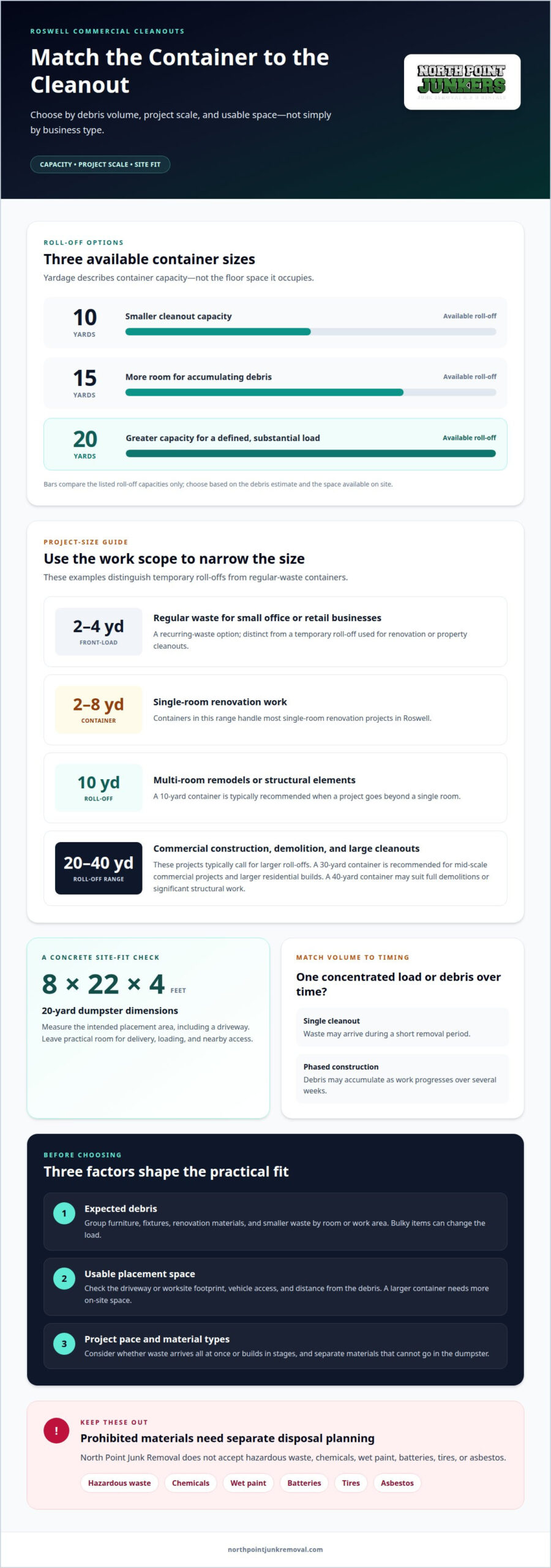
Available roll-off options include 10-, 15-, and 20-yard dumpsters. The yard measurement describes container capacity, not the amount of floor space it takes up. A 10-yard container can suit a smaller cleanout, while a 15- or 20-yard option provides more capacity for accumulating debris. Compare the expected volume with the project’s site space before choosing.
Sizing for Retail and Office Businesses
Retail and office cleanouts can produce different debris volumes. Clearing a few rooms of unwanted furnishings creates a different load from removing fixtures across a whole store. Small retail or office businesses commonly use 2- to 4-yard front-load dumpsters for regular waste in Roswell. Those are distinct from roll-off containers used for temporary projects, such as renovations or property cleanouts.
Choose by the work, not just the business type. A small office renovation may produce bulky materials from several rooms, while a retail refresh may involve shelving, displays, and packaging. For single-room renovation work in Roswell, 2- to 8-yard containers handle most projects. A 10-yard container is typically recommended for multi-room remodels or projects involving structural elements.
Commercial construction, demolition, and large cleanout projects in Roswell typically call for 20- to 40-yard roll-offs. A 20-yard option may suit substantial projects with a defined debris load. Larger or longer projects can create more volume as work continues. A 30-yard container is recommended for mid-scale commercial projects and larger residential builds. Full demolitions or significant structural work may call for a 40-yard container, especially when debris accumulates over several weeks. For waste management needs requiring hook lift containers in these larger capacities, rapidroll-off.com offers dedicated 20-yard and 40-yard dumpster rentals for substantial cleanup work.
Container dimensions matter as much as capacity. A 20-yard dumpster is 8 feet wide, 22 feet long, and 4 feet high. Measure the intended placement area, including a driveway, and consider nearby access points. A container that suits the debris volume still needs a practical location for delivery and loading.
Estimate volume by grouping debris by project area. List furniture, fixtures, renovation materials, and other bulky items separately from smaller household or office waste. Then consider whether work will happen all at once or in stages. A construction project running for weeks may build debris gradually, while a single cleanout can create a concentrated load. This inventory helps narrow the size choice without guessing from the project label alone.
For a business roll-off rental, match capacity to the cleanup plan and placement space. A smaller container may not leave enough room for bulky materials, while a larger one requires more space on site. Both the expected debris and the available footprint shape the practical choice.
What size dumpster rental do I need for my Roswell project?
Choose a container by estimating debris volume, identifying material types, and matching capacity to the project’s pace. Commercial dumpster rental companies in Roswell, Georgia, offer roll-off options for business cleanouts, construction, and demolition projects.
When comparing rental options, consider whether the container size suits your debris, placement fits the site, and delivery and pickup align with the work. Check accepted materials and the disposal process, too, since they determine what you can load.
Construction debris can fill a container differently from office cleanout waste. A renovation that removes shelving, desks, and carpet creates a different load from demolition work. Group expected materials by work area, then estimate how much space each group will take. This gives you a more useful sizing estimate than relying on the project name alone.
Roswell commercial construction, demolition, and large cleanout projects typically need 20- to 40-yard roll-off dumpsters. A 20-yard option may fit a contained work area with a defined debris load. Larger or longer projects can create more volume as work continues. A 40-yard container is recommended for full demolitions, significant structural work, or debris that compounds over several weeks.
Plan the project in stages. First, list the rooms, work areas, or structures being cleared. Next, separate bulky items from construction materials. Then consider whether debris will arrive all at once or accumulate as the job progresses. A phased construction project may generate debris over time, while an office cleanout may produce most of its waste during a short removal period.
Capacity isn’t the only constraint. A dumpster needs a practical location with room for delivery and loading. Consider the available driveway or worksite area, vehicle access, and how close the container can be to the debris. If it’s too far from the work, loading may be less efficient; if it blocks site access, it can disrupt the project.
Material type matters, too. Keep hazardous waste, chemicals, wet paint, batteries, tires, and asbestos out of the dumpster. Separate these items from ordinary construction debris and office contents. North Point Junk Removal does not accept these prohibited materials, so plan separately for their disposal.
For a business project that calls for a temporary container, explore dumpster rental options alongside your debris estimate. The right choice balances the amount and type of waste, project timeline, and usable space at the site.
Delivery, pickup, scheduling, and rental periods
Coordinate the container schedule with the work plan at your Roswell job site. A few business days is sufficient booking lead time for most Roswell dumpster rental projects.
Arranging Delivery and Pickup
To plan delivery and pickup, choose a drop-off date and placement area, and estimate when loading will finish. Share access needs and the work schedule so delivery doesn’t conflict with site operations. For an office cleanout, plan around staff movement and the route for carrying furniture. At a construction site, place the container where crews can reach it during debris removal.
Tie pickup to the project’s loading sequence. If crews will clear one area before another, plan the rental around that order. A clear schedule helps avoid having the container arrive before the site is ready or remain after the cleanup is complete.
Rental Periods and Included Service
The rental period should reflect how the work will unfold, not just the expected start date. A focused office cleanout may load quickly, while a renovation can produce debris across several phases. Set the planned delivery and removal dates around those phases, and understand how the rental arrangement handles delivery and pickup.
Allow time for the steps between clearing and loading. A property team, for example, may need to gather items from several rooms before moving them outside. A retail crew may clear fixtures in sections to keep the rest of the space accessible. Scheduling the rental around these tasks helps keep the container useful throughout the project.
Loading and Pickup Frequency
Load material as work progresses, keeping the route to the container clear for employees and crews. Commercial dumpster pickup frequency in Roswell typically ranges from 1 to 5 times per week. Service may be weekly, bi-weekly, or on-call, depending on the business’s waste flow. Restaurants and construction sites with high waste volumes often schedule multiple pickups per week.
Consider how quickly the container fills and whether pickups need to follow a regular rhythm. A restaurant’s ongoing waste differs from a one-time office cleanout, while a construction site may generate debris as each phase advances. Align pickup timing with the project’s pace to avoid disrupting work or leaving accumulated waste in active areas.
Before delivery, decide who will coordinate access and confirm when loading is complete. If the business will remain open during the cleanout, make the delivery and pickup plan clear to staff. A designated point person can help crews follow the schedule and keep the work area orderly. Set the rental period around the planned tasks, then adapt as the project progresses.
Accepted and prohibited materials
Sort materials before loading so prohibited waste stays separate from ordinary project debris. For Roswell businesses, material type also affects disposal planning and how much the container can hold.
Accepted Waste Materials
Commercial cleanouts can produce furniture, shelving, packaging, and renovation debris. Separate materials by type before loading, and group bulky items to use the space efficiently. An office refresh may include desks and fixtures, while a construction project may generate building debris. These examples help you plan the load, but accepted-material rules still determine what belongs in the container.
Estimate the volume and consider the material’s weight. Dense debris can be heavy even when a container isn’t full, while lighter items may take up space quickly. Keep the load organized and exclude prohibited materials. Sorting makes the contents easier to assess and helps prevent restricted items from being buried beneath other waste.
Prohibited Waste
Some materials, including chemicals, wet paint, batteries, tires, and asbestos, may not be accepted in dumpster rentals. Keep these items out of the container, even when they appear in small quantities during an office cleanout or renovation. Set them aside from ordinary junk removal and construction debris so they don’t enter the dumpster during loading.
Separate prohibited materials as soon as you find them. A renovation crew might uncover wet paint, while a business cleanout may turn up batteries or unwanted computers and office equipment. Don’t mix either with furniture, packaging, or other project waste. Sorting items separately keeps the dumpster load compliant, while organizations such as the Electronic Recycling Association (ERA) show how businesses can responsibly recycle and donate unwanted technology instead of sending it to a landfill.
Permits and Disposal Planning
Placement matters, too. In Roswell, placing a dumpster in the public right-of-way, such as on a street, typically requires a permit from the City of Roswell’s Public Works department. A private driveway or worksite location avoids that particular placement issue, while still requiring enough room for delivery and pickup.
Landfill charges and dumpster rental charges are different parts of disposal planning. Material type and weight influence how a load is handled, so sort waste before estimating the project’s disposal needs. Don’t apply a fee from another city named Roswell to a Georgia project. Keep hazardous materials separate, plan permitted placement where needed, and make sure the container holds only accepted waste.
Commercial dumpster rentals for office, retail, and property cleanouts
Office, retail, and property cleanouts follow different work patterns. An office clear-out may involve furniture from several rooms, while a store refresh can require staged fixture removal. A roll-off container gives crews one place to gather debris as they work. The right plan depends on which spaces are being cleared and how the work fits around normal site activity.
Start by mapping the cleanout by area. For an office, group unwanted items by room so teams can clear one section without disrupting the rest of the workplace. For a retail space, identify which fixtures must go before crews begin clearing. At a rental property, organize items by unit or room. This approach makes it easier to coordinate staff, contractors, and loading as the project moves forward.
Plan container placement around the site’s daily use. A shop may need to preserve customer access, while an office building may have a busy entrance or shared loading area. A rental property’s driveway may still need to remain accessible to residents. Choose a loading spot that works with the clearing route and keeps essential paths open.
Set the rental period to match the work sequence. A team clearing one office section at a time may need the container across several work sessions. A retail crew may schedule fixture removal around renovation tasks. For a property manager, timing may depend on when each space is ready. Coordinate delivery and pickup with these milestones instead of treating every cleanout as one uninterrupted task.
Assign a point person to guide the cleanup. In an office, they can direct teams to the correct room and loading area. At a retail site, they can coordinate fixture removal with store operations. For a rental property, a manager can keep the work focused on the unit being cleared. Clear responsibilities help prevent usable items from being mistaken for debris.
Separate materials that need different handling before loading begins. Follow the rental’s accepted-material guidance, and keep excluded items out of the container. Sorting first helps crews maintain a clear loading plan throughout the cleanout.
A roll-off container can suit a defined cleanout where a business team or property crew will load items. If you need hands-on hauling instead of a container for self-loading, commercial junk removal or rental property cleanout services may be a better fit. Choose based on who will do the clearing, how the site operates, and how the cleanup is organized.
North Point Junk Removal: Commercial Junk Removal
North Point Junk Removal offers businesses a choice between dumpster rentals and hands-on commercial junk removal. A container suits a cleanout where your team will load items; junk removal is a practical fit when unwanted items need to be hauled from the space. For rental property cleanouts, choose the approach based on the property and the amount of material being cleared.
Share the project type, the materials to remove, and whether you prefer a container or hauling. That gives the team a clear starting point for planning the next step. For an office, retail space, or rental property cleanout in Roswell, commercial dumpster rental roswell solutions are ready to help you discuss your project and get started today.
Set Up Your Next Cleanout
Turn the cleanup plan into a clear project brief. Note which areas need clearing, what types of debris you expect, and whether your team will load a container or needs removal support. For commercial dumpster rental in Roswell, these details help match the waste plan to the way your business operates.
North Point Junk Removal provides commercial junk removal for business projects, as well as residential junk removal and hoarding cleanup for other property needs. If your cleanup spans a business and a residence, consider how each space’s contents and work schedule affect the plan.
Take the next step with a project description that identifies the property, the work involved, and your preferred approach. Discuss your project with North Point Junk Removal, and move toward a cleaner, more manageable space.
Frequently Asked Questions
Why would I rent a dumpster?
A dumpster gives a business a dedicated place to gather unwanted materials during a project. It works well when employees or contractors can load items as they clear a space, rather than arranging separate removal for each item. For example, a property manager preparing a vacant suite can collect furniture and general cleanout debris as work progresses. This keeps the cleanup focused on one collection point.
Are there dumpster alternatives?
Commercial junk removal is an alternative when you want a team to haul unwanted items rather than have staff load a container. It can suit a workplace with limited space for a dumpster or a cleanout where items need to be removed directly from rooms. Choose based on who will handle the lifting, how the site operates during clearing, and whether debris will accumulate over time.
Are there any weight restrictions?
Yes. The container’s weight allowance matters, especially when a load includes dense materials. Heavy renovation debris can reach the allowance before the container looks full. Group heavy materials when estimating the load, and don’t judge capacity by height alone. The material’s amount, density, and distribution all affect how much the container can safely carry.
Do I need a permit to place a dumpster on my property?
For a container placed entirely on private property, the public right-of-way permit issue generally doesn’t apply. The key distinction is where the container sits: one extending onto a street or sidewalk may occupy public space. Before delivery, identify the exact spot and make sure the container will remain on the property. This is especially useful at shared commercial sites with narrow driveways.
Do you provide delivery and pick-up?
Yes. North Point Junk Removal delivers and picks up dumpster rentals. You fill the container, then the team takes it away after loading. Before delivery, choose a location that gives your crew a clear route for moving items from the work area. Let the staff responsible for the cleanout know where loading will happen and when the container is ready for pickup.
What are commercial dumpster rental prices in Roswell, GA?
The price depends on the project and is provided after a quote request. Factors include the container size, the materials and debris volume, and the rental period. A business can make its request more useful by describing what’s being cleared, where the work is taking place, and how the project will proceed. That context helps shape a quote around the actual cleanup rather than a generic estimate.
What commercial dumpster sizes and capacity options are available in Roswell?
Available roll-off options include 10-, 15-, and 20-yard dumpsters. The best fit depends on the shape and arrangement of the items, not just how many pieces there are. For example, bulky furniture may take up container space differently from smaller, stackable office contents. Consider how items can be loaded and whether the project will produce waste in one phase or several.
How do I choose a dumpster size for my business in Roswell?
Start with a room-by-room or work-area inventory. List large items separately, then consider which materials can be stacked or grouped during loading. Next, account for the work sequence: a phased office refresh may produce waste over several sessions, while clearing one area may create a concentrated load. This practical inventory gives you a clearer size estimate than relying on the business type alone.