
The right roll off dumpster can keep a cleanup moving. The wrong size or drop-off spot can turn a straightforward project into a scramble. Capacity, placement, and a loading plan all need to work together.
If you’re unsure how a roll-off differs from an ordinary trash bin, or whether your project calls for a smaller or larger container, you’re not alone. Start by estimating what you’ll discard, then consider whether the delivery truck can reach your chosen spot and how you’ll load debris safely.
This guide explains the rental process from delivery through pickup, how to compare container sizes, and how to prepare your site. North Point Junk Removal offers 10-, 15-, and 20-yard dumpsters for on-site loading at your own pace. We’ll also cover when junk removal may be a better fit if you’d rather have a crew handle the hauling.
Key Takeaways
- A roll off dumpster lets you collect project debris on-site while you work at your own pace.
- Match the container size to your project’s scope and expected debris, rather than guessing based on one item.
- Choose between rental and junk removal by weighing how much loading you want to handle yourself.
- Before delivery, clear the intended route and check driveway space, overhead clearance, gates, and parked vehicles.
- North Point Junk Removal offers 10-, 15-, and 20-yard dumpster options for on-site waste management in North Georgia.
What Is a Roll-Off Dumpster, and When Does It Make Sense?
A roll off dumpster is a temporary container delivered to a property so project debris can be collected on-site. The rental provider handles delivery and removal, while you load the container. Unlike a curbside bin, it’s intended for a defined cleanup or project rather than everyday household trash. And unlike full-service junk hauling, a rental puts the loading work in your hands.
The name refers to how this type of container is delivered and removed. For a neutral overview of its common uses and setup, see Roll-off (dumpster).
How does a roll-off dumpster rental work?
Begin by outlining the project and estimating the debris you expect to collect. Choose an accessible delivery spot, load materials as the work progresses, and arrange removal when the container is ready. Because you manage the loading, you can work through the cleanup at your own pace instead of coordinating around a hauling crew.
A rental provides a temporary place to collect project debris. It isn’t a replacement for a household’s regular curbside trash service. If you’d rather have a crew do the lifting and hauling, junk removal may fit better. North Point offers both dumpster rentals and junk removal.
Which kinds of projects use roll-off dumpsters?
The deciding factor isn’t simply the type of property. It’s whether a project will produce debris that you want to keep on-site while work continues. A homeowner in Cumming might be clearing a garage, remodeling a room, or handling yard work. A small business could use a rental during a renovation or property cleanout.
A multi-day cleanup, for example, may produce debris in stages, making an on-site container useful as you sort and load. A small amount of unwanted furniture may not require a container at the property. Consider the volume, the pace of the work, and whether you’re prepared to load the material yourself. Those factors can help you decide whether a rental makes sense before choosing a size and planning placement.
North Point Junk Removal offers 10-, 15-, and 20-yard dumpster rentals for on-site waste management in North Georgia. These options give homeowners and businesses in Cumming, Alpharetta, Johns Creek, Milton, Suwanee, Sugar Hill, Buford, Dawsonville, Roswell, Gainesville, Oakwood, Duluth, FloweryDuluth, Coal Mountain, Chestatee, Silver City, Free Home, and Forsyth County a practical starting point for planning a project cleanup.
How to Choose a Roll-Off Dumpster Size for Your Project
Choose based on the amount and type of debris you expect, not just the name of the project. North Point Junk Removal offers 10-, 15-, and 20-yard dumpsters, giving you three container volumes to compare. A 20-yard option isn’t automatically right for every renovation, and a smaller cleanup may still include bulky items that take up space quickly.
What do 10-, 15-, and 20-yard dumpster options mean?
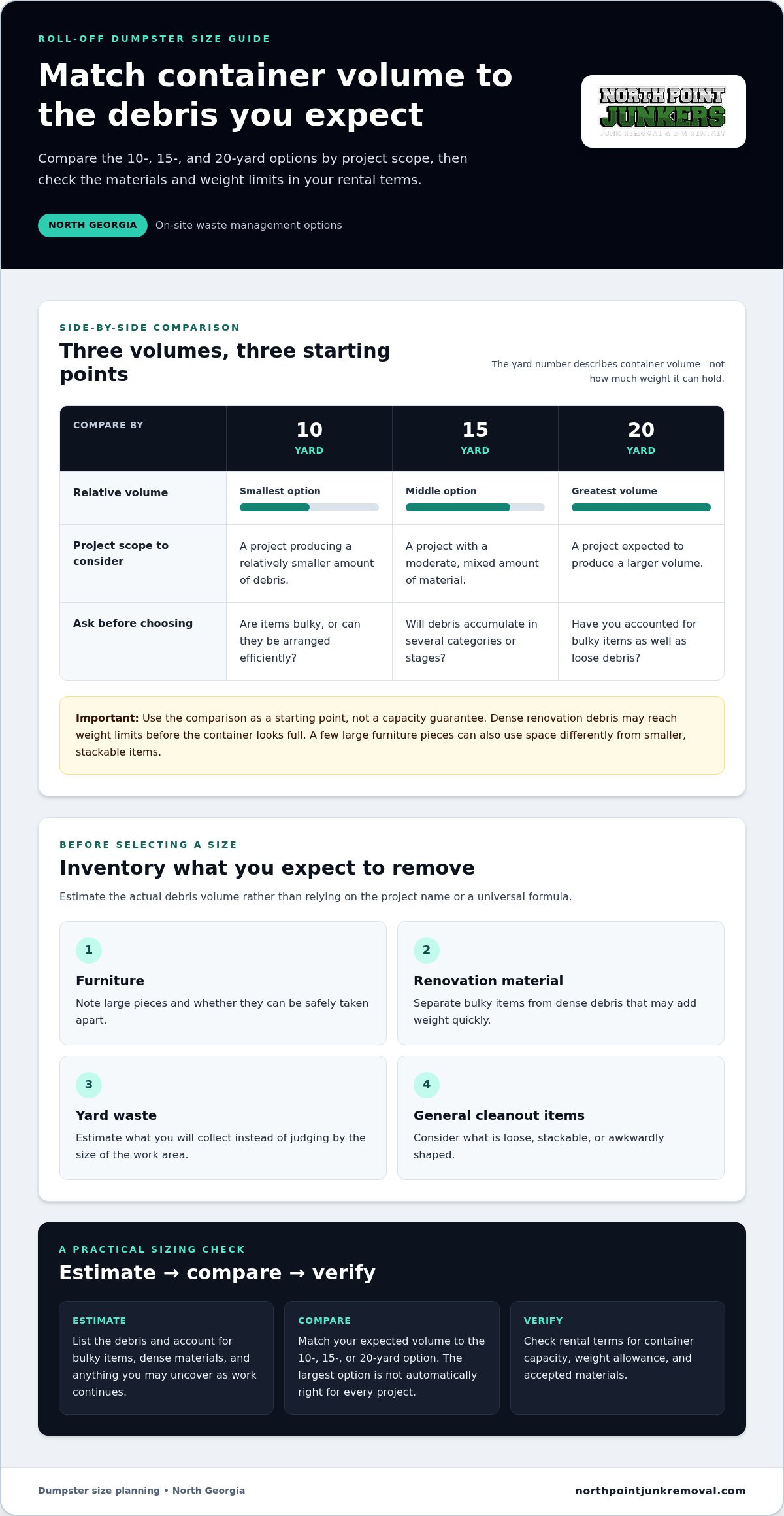
The yard number describes container volume, not how much weight it can hold. A 10-yard option is the smallest of these choices, a 15-yard option is in the middle, and a 20-yard option offers the greatest volume. The right fit depends on your project’s debris and the rental terms, including accepted materials and any weight limits.
| Option | Project scope to consider | Debris and volume questions |
|---|---|---|
| 10-yard | A project producing a relatively smaller amount of debris | Are items bulky, or can they be arranged efficiently? |
| 15-yard | A project with a moderate, mixed amount of material | Will debris accumulate in several categories or stages? |
| 20-yard | A project expected to produce a larger volume | Are you accounting for bulky items as well as loose debris? |
Use the table as a starting point, not a capacity guarantee. A few large pieces of furniture can take up space differently from smaller, stackable items. Dense renovation debris may reach weight limits before the container looks full. Check the rental terms for capacity, weight allowance, and accepted materials, and factor those details into your plan.
How can you estimate the amount of debris?
Make a quick inventory before selecting a size. Group what you expect to remove:
- Furniture: Note large pieces and whether they can be safely taken apart.
- Renovation material: Separate bulky items from dense debris that may add weight quickly.
- Yard waste: Estimate how much you’ll collect rather than judging by the size of the work area.
- General cleanout items: Consider how much is loose, stackable, or awkwardly shaped.
Estimate the actual volume rather than relying on a universal formula. Break down bulky items only when it’s safe and practical, and leave room for materials you may uncover as work continues. For broader information about the waste and recycling industry, the National Waste & Recycling Association is a useful reference.
Compare your inventory with North Point’s 10-, 15-, and 20-yard dumpster options as you narrow down a roll off dumpster size for your project.
Roll-Off Dumpster Rental or Junk Removal: Which Fits Your Job?
The choice comes down to how you want debris handled. With a roll off dumpster rental, you load the container yourself and control the pace of the work. With junk removal, a crew helps carry and haul items away. Consider how much labor you can take on, whether debris will build up over several work sessions, and whether you need a container on-site during the project.
| Consideration | Dumpster rental | Junk removal |
|---|---|---|
| Loading | You handle loading the container. | A crew handles the removal and hauling. |
| Timing | Useful when you want to load as your project progresses. | Useful when you want items removed without loading a container yourself. |
| Project control | You organize debris and manage the loading process. | You leave the hauling work to the removal crew. |
| On-site storage | Provides a place to collect debris during the project. | Items are hauled away rather than gathered in a rental container. |
When is renting a roll-off dumpster the practical choice?
A rental can suit a renovation, cleanout, or other project that creates debris across several work sessions. You can collect material on-site and load it as you go instead of preparing everything for one hauling visit. The trade-off is that you’re responsible for the labor. Plan who will load the debris, and choose a placement spot with a clear route for delivery and removal.
Roll-off containers are part of a broader waste and recycling industry that includes construction and demolition debris management. The National Waste & Recycling Association provides information about the industry.
When does professional junk removal make more sense?
Junk removal may suit you better if you’d rather have a crew carry and haul items instead of loading a container yourself. It can be a good fit when you don’t need debris stored at the property while work continues. North Point Junk Removal provides residential and commercial junk removal alongside dumpster rentals, so you can choose based on how you want the work handled.
If self-managed loading fits your project, explore dumpster rental options as you plan the next step.
How to Prepare Your Property for Roll-Off Dumpster Delivery
A clear delivery plan helps avoid last-minute obstacles. Before your roll off dumpster arrives, choose a placement area, walk the intended route, and confirm the spot works for delivery and later pickup. A driveway or another accessible private area may be practical, but no surface or location suits every property. Access and site conditions matter.
Where should a roll-off dumpster be placed?
Look for an area the delivery vehicle can reach without blocking essential access. Check the full route, not just the final spot. Trees, overhead lines, gates, parked vehicles, narrow turns, and uneven ground can affect access. Move vehicles and clear obstacles where possible. If the driveway is sloped, narrow, or otherwise difficult to reach, consider another accessible placement area that works with the property’s layout.
Local requirements can vary across Forsyth County and nearby communities. Before delivery, review any rules that apply to your intended placement, especially if the container may sit somewhere other than private property. Don’t assume the same requirements apply in every neighborhood.
How should you organize and load the dumpster?
Organizing debris before loading can make the process easier. Sort materials by type, and keep prohibited or uncertain items separate until you know how they should be handled. Follow the rental terms for accepted materials and fill level. Don’t overfill the container.
Load heavier items carefully and distribute material across the available space rather than concentrating it in one spot. Plan the order of loading so lighter debris doesn’t trap bulky material you still need to add. Don’t force items into the container if they don’t fit safely.
Delivery and pickup preparation checklist:
- Choose placement: Identify an accessible spot that suits the site layout.
- Walk the route: Check driveway space, overhead clearance, gates, trees, vehicles, and uneven areas.
- Clear access: Move parked vehicles and remove obstacles from the planned route.
- Organize debris: Sort materials and keep uncertain items apart.
- Plan pickup: Leave the container accessible and arrange removal when loading is complete.
Ready to plan your placement and project? Explore North Point Junk Removal’s dumpster rental options for on-site waste management in North Georgia.
Rent a Roll-Off Dumpster in North Georgia: Plan the Next Step
A good rental plan starts with the job, not the container. Define what you’re clearing or working on, estimate the debris, compare sizes, then prepare an accessible placement area. North Point Junk Removal offers 10-, 15-, and 20-yard dumpsters for on-site waste management, serving customers in Cumming, Alpharetta, Johns Creek, Milton, Suwanee, Sugar Hill, Buford, Dawsonville, Roswell, Gainesville, Oakwood, Duluth, FloweryDuluth, Coal Mountain, Chestatee, Silver City, Free Home, and Forsyth County.
With a roll off dumpster on-site, you can gather project debris in one place as the work moves along. That can help keep a home cleanout or small-business project organized, especially when materials build up over several stages. Preparing in advance also makes it easier to plan loading and delivery around the property.
What should you have ready before arranging a rental?
Gather a few details before planning the rental. A clear picture of the job helps you estimate debris, compare container options, and think through the delivery route. Note:
- Project type: Describe the cleanout, renovation, landscaping, or other work.
- Approximate debris volume: Think about how much material you expect to collect, including bulky items.
- Material categories: Group furniture, renovation debris, yard waste, or general cleanout items.
- Preferred placement: Identify a spot the delivery vehicle can reach, and consider driveway space, overhead clearance, gates, and parked vehicles.
- Loading plan: Decide who will load the container and how debris will be brought to it.
These details help bring your plans into focus before delivery. For additional perspective on local rental options, see this Cumming dumpster rental comparison guide.
How does a dumpster rental support a North Georgia project?
Instead of moving debris off-site after each part of the job, you can collect it in one on-site location and load the container as the project progresses. For a household cleanup in Cumming or a small commercial project in Alpharetta, this offers a straightforward way to manage accumulating materials while keeping the work organized.
North Point also offers free estimates via photos, a practical starting point for sharing the project scope and expected debris. Once you’ve outlined the job and considered access, explore dumpster rental options and choose the next step that fits your plan.
Make Your Cleanup Plan Work for You
A successful dumpster rental starts with a clear estimate of the debris, a size that fits the project, and a delivery spot with practical access. Then you can load as the work progresses and keep cleanup on your own schedule. If you’d rather have a crew handle the lifting and hauling, junk removal is another option.
North Point Junk Removal offers 10-, 15-, and 20-yard dumpsters for customers managing waste on-site at their own pace. Free estimates via photos can help you start planning with a clearer picture of your project. Whether you’re preparing for a home cleanout or another job, choosing the right roll off dumpster can make the work feel more organized from the start.
Explore the available options and take the next step: explore dumpster rental options.
Frequently Asked Questions
What is a roll-off dumpster?
A roll-off dumpster is a large, temporary container delivered to a property or work site to collect project debris. You load it during the rental period, then arrange for removal. Unlike a curbside trash bin used for routine household waste, it’s intended for a concentrated project such as a cleanout or renovation. The suitable size and accepted materials depend on the rental terms.
How do I choose the right roll-off dumpster size?
Start with the project scope, then estimate the types and volume of debris you expect. North Point offers 10-, 15-, and 20-yard options. Bulky furniture may use space differently from loose debris, while dense materials can affect weight limits. Avoid relying on a generic project-to-size formula. Container dimensions, weight limits, and accepted materials depend on the rental terms.
Can a roll-off dumpster go in my driveway?
A driveway may work if the delivery and pickup route is accessible and the site suits the container’s requirements. Before delivery, check available space, overhead clearance, gates, parked vehicles, and surface conditions along the route and at the intended spot. Placement depends on the property. Local rules may also apply, so review requirements for your community and planned location.
What can I put in a roll-off dumpster?
Accepted materials depend on the rental terms and local disposal requirements. Sort your project debris and keep hazardous or uncertain items separate until you know how they should be handled. Follow the material-acceptance guidance for your rental, and don’t assume a general online list applies to every container. Leave out prohibited items and plan how to handle anything that isn’t accepted.
How does a roll-off dumpster get delivered and picked up?
The process starts with planning the project and arranging delivery to an accessible location. After the container arrives, you load debris according to the rental terms and your project schedule. Once it’s ready, arrange pickup. Before delivery, clear the intended route and consider obstacles such as gates, vehicles, and overhead branches to help make placement and collection straightforward.
Is a roll-off dumpster better than junk removal?
It depends on how you want to handle the labor. A dumpster rental can suit a project where you want to load debris yourself over time and keep it on-site as work progresses. Junk removal is a better fit if you’d prefer a crew to carry and haul items away. Consider your available help, project pace, and need for a collection spot.
Do I need a permit for a roll-off dumpster in Forsyth County?
Permit requirements depend on the placement location and applicable local rules, so don’t assume one rule covers every site. Requirements may differ between private property and a public right-of-way. Review the current rules for your specific address and placement plan before delivery. This applies across North Georgia communities, including Cumming, Alpharetta, Johns Creek, Milton, Suwanee, Sugar Hill, Buford, Dawsonville, Roswell, Gainesville, Oakwood, Duluth, FloweryDuluth, Coal Mountain, Chestatee, Silver City, Free Home, and Forsyth County.