
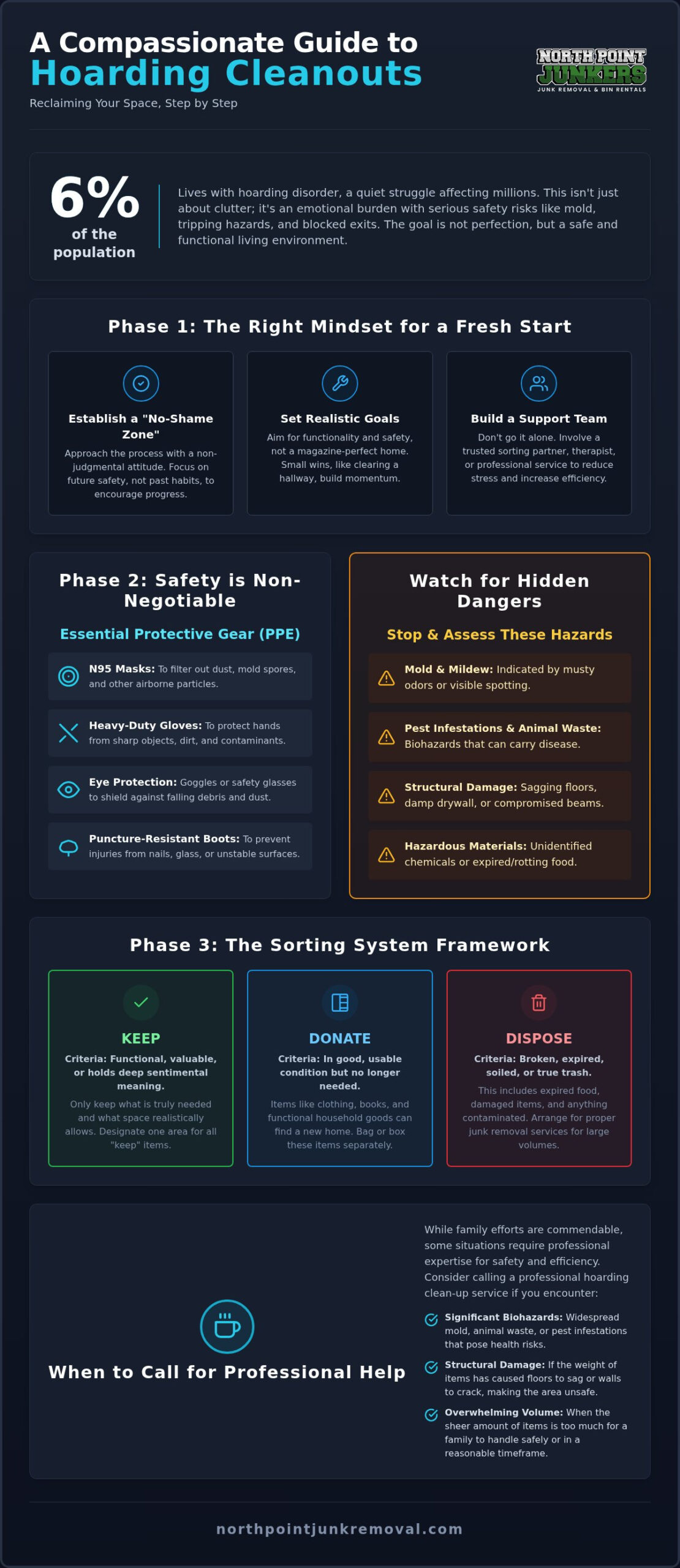
Did you know that up to 6% of the population lives with hoarding disorder? It’s a staggering number that represents millions of families facing the same quiet struggle behind closed doors. If you’re standing in a room filled with years of accumulated items, the weight of the task feels like more than just physical clutter. It’s an emotional burden that can lead to deep shame and genuine safety concerns like mold or tripping hazards. You want your home back, but you don’t know where the trash ends and the treasures begin. Starting a hoarding cleanout is a brave first step, and you don’t have to do it alone.
We understand that this process requires a clinical safety mindset and a neighborly, emotional approach. This guide provides a compassionate, step-by-step roadmap to navigate the complexities of reclaiming your space. We’ll help you move from feeling overwhelmed to having a clear, actionable plan for a safe living environment. You’ll learn how to prioritize safety, sort through belongings with care, and follow a checklist that turns a massive project into a series of manageable victories. Let’s get started on the path to a fresh start.
Key Takeaways
- Prioritize mental readiness by setting realistic goals focused on home safety and functionality rather than immediate perfection.
- Equip yourself with proper safety gear like N95 masks and heavy-duty gloves to safely navigate a hoarding cleanout.
- Build momentum by starting in the smallest rooms first and prioritizing clear pathways to all exits for emergency safety.
- Use clear criteria for sorting belongings to distinguish between functional treasures, donations, and items requiring professional disposal.
- Identify when structural damage or biohazards make professional clean-up services the safest and most efficient choice.
Preparing for a Hoarding Cleanout: Emotional and Mental Readiness
Tackling a hoarding cleanout is an emotional marathon rather than a simple weekend chore. The physical objects are often tied to deep memories or a sense of security; removing them can trigger intense anxiety. You must approach this task with a non-judgmental attitude. Shame is the primary enemy of progress. If the individual feels judged, they’ll likely shut down or resist the process entirely. It’s helpful to learn what causes hoarding before you pick up the first trash bag. Understanding the roots of the disorder helps you maintain the patience needed for the long haul.
Establish a “no-shame zone” for all communication. This means family members agree to focus on the future and the goal of a safe home rather than dwelling on past habits. Set realistic goals from the start. Don’t aim for a “perfect” home that looks like a magazine spread. Instead, focus on safety and functionality. Can you walk through the hallway? Is the kitchen stove accessible? These small, functional wins build the momentum required to finish the project.
Defining the Scope of the Project
It’s vital to know what you’re up against before you start. Heavy clutter might mean stacks of mail and overflowing closets, but a Level 5 hoarding situation involves blocked exits, non-functional bathrooms, and potential structural damage. Identify your primary goal early. Are you cleaning to ensure the resident can age in place safely with the support of Elite Caregivers United LLC, or is this a preparation for a property sale? Clear goals prevent “scope creep” and keep the team focused. When the volume of items blocks exits or creates structural strain, the project has moved beyond a safe DIY task for family members.
Defining the Scope of the Project
You shouldn’t do this alone. A successful hoarding cleanout requires a dedicated team with clearly defined roles. Determine who will make the final decision on whether an item is kept, donated, or tossed. Ideally, this is the individual living in the home, but they may need a trusted “sorting partner” to help them stay on track. Consider involving a therapist or a professional organizer who specializes in chronic disorganization early in the process. Working with a compassionate hoarding cleanup partner ensures that the physical labor is handled efficiently while the emotional needs of the family remain a top priority. A professional team brings the right equipment and a neutral perspective that reduces family tension.
Essential Safety Equipment and Logistics Planning
Safety is the non-negotiable foundation of any hoarding cleanout. Before you move a single box, you must protect yourself from the physical and environmental risks hidden beneath the surface. Dust, mold spores, and sharp objects are common in these environments. You’ll need a specific kit of Personal Protective Equipment (PPE) to stay safe. At a minimum, every person on-site should have an N95 mask to filter airborne particles and heavy-duty work gloves to prevent punctures. Eye protection is also vital to shield against falling debris or dust clouds when moving high piles. Don’t overlook your feet. Wear sturdy, puncture-resistant boots rather than sneakers to avoid injuries from hidden glass, nails, or unstable stacks.
Logistics planning starts with the exits. Your first physical task is to clear wide, unobstructed pathways to every door and window. This ensures a quick escape route in case of an emergency and provides the space needed to move large items out of the house. Keep a well-stocked first aid kit and plenty of hand sanitizer in a designated “clean zone” near the entrance. If the project feels like it’s growing beyond your physical capacity, reaching out to North Point Junk Removal can provide the extra hands and equipment needed to keep the site organized.
Identifying Environmental Hazards
Hidden dangers often lurk in long-settled piles. Watch for the warning signs of mold, such as musty odors or dark spotting on walls and fabrics. Structural damage is another concern; if you notice sagging floors or damp drywall, the area may be unsafe to enter. Pest infestations or animal waste require extreme caution. These are biohazards that can carry disease. Expired food should be bagged and sealed immediately to prevent further contamination. If you encounter significant amounts of animal waste, rotting structures, or unidentified chemicals, stop work. These situations require professional intervention to ensure the home is remediated safely.
Setting Up Your Sorting Station
Efficiency depends on a clear system. Set up a sorting station in a driveway, yard, or large garage. Create three distinct zones: “Keep,” “Donate,” and “Trash.” Use colored tarps or large signs to prevent items from getting mixed up. Utilizing dumpster rentals is the most effective way to manage the trash zone. Having a container on-site keeps the workspace clear and prevents debris from piling back up inside the home. In North Georgia, the weather can change quickly. Always have heavy-duty tarps ready to cover your “Keep” and “Donate” piles if a sudden afternoon rainstorm rolls through. Keeping the outside organized prevents the indoor chaos from simply migrating to your lawn.
The Ultimate Hoarding Cleanout Checklist: Room-by-Room Strategy
A successful hoarding cleanout relies on momentum. If you start in the most cluttered room, you’ll likely feel defeated within hours. Instead, start with the smallest, least emotional space. This is usually a bathroom or a hallway. These rooms have fewer sentimental items and allow you to see immediate results. Seeing a clear floor early on provides the psychological fuel needed to tackle larger areas later in the day. It’s a simple way to turn an impossible mountain into a series of small, manageable hills.
Safety comes first in every room. Before you begin the deep sort, clear wide pathways to all exits and windows. Every door must open fully to ensure fire safety and easy access for moving large items. Use a “top-to-bottom and back-to-front” methodology. Clean from the ceiling down to the floor and from the back of the house toward the front door. This prevents you from dragging trash or dust through areas you’ve already sanitized. Don’t forget to document your progress. Take “before” photos of each room. On day three or four, when the physical fatigue sets in, looking at those photos will remind you how much you’ve already achieved.
Kitchen and Bathroom Priorities
In these spaces, your priority is removing health hazards. Focus on clearing out expired food, old medicine, and any items that have been contaminated by pests. These are immediate biohazards that need to be bagged and moved to the trash zone right away. Once the surfaces are visible, check for plumbing leaks or water damage. Long-term piles often hide slow drips that can lead to structural rot or mold. After the bulk removal is finished, scrub and sanitize every surface. A clean, functional kitchen or bathroom is a major milestone in any hoarding cleanout.
Living Areas and Bedrooms
Living rooms and bedrooms often contain the most sentimental clutter. To stay efficient, use the “Three-Second Rule.” If you can’t decide to keep an item within three seconds, it’s likely a candidate for the donation pile. If you haven’t used it or looked at it in over a year, you probably don’t need it. While sorting, keep a sharp eye out for lost valuables or critical documents like wills, deeds, and IDs. For furniture that is broken, stained, or infested, don’t waste time trying to fix it. Use single-item removal to get those bulky pieces out of the house quickly so you can reclaim your floor space.
Sorting and Disposal: What to Keep, Donate, or Haul Away
Sorting is where the real work happens. It’s easy to get stuck on a single item for too long. To keep the momentum you built in the earlier room-by-room phase, apply strict criteria to every object you touch. Ask yourself: Does this item function as intended? Does it hold significant sentimental value? Most importantly, is there actual space for it in the new, safe layout of the home? If the answer to any of these is “no,” the item should move to the donation or trash pile. A successful hoarding cleanout requires being honest about what you’ll realistically use in the future.
When donating to local North Georgia charities, follow the “golden rule” of giving. Only donate items in good, usable condition. If an item is stained, torn, or missing parts, it belongs in the trash. The “Trash” category covers anything broken, unsanitary, or hazardous. This includes non-chemical hazards like broken glass or heavily soiled fabrics. For massive piles that exceed local curbside limits, researching junk removal services is the most efficient way to clear the site in a single day. It prevents the clutter from sitting on your lawn and causing secondary stress.
Managing Sentimental Items and Paperwork
Paperwork and keepsakes often create the most “decision fatigue.” Limit the volume of physical memories by creating a “Memory Box.” Choose one sturdy container for photos and small mementos. Once it’s full, you must swap items out rather than adding a second box. For paper clutter, shred sensitive documents immediately to prevent identity theft. Consider digitizing old photos. Scanning them allows you to preserve the memory without the physical footprint, making it easier to keep your living areas clear.
Responsible Disposal in Forsyth County
Being a responsible neighbor means disposing of items ethically. Separate metals and electronics from general waste. These materials can often be recycled, reducing the impact on our local landfills. When the final “Trash” pile is ready, you can schedule same-day junk removal to reclaim your driveway immediately. Please note that while we handle almost everything, we don’t accept hazardous liquids like old paint, motor oil, or chemicals. If you find these during your hoarding cleanout, check with Forsyth County recycling centers for specialized drop-off days. Reclaiming your home is a big job, but scheduling a professional haul makes the final step effortless.
When to Call Professional Hoarding Clean Up Services
While many families begin the process with good intentions, a hoarding cleanout can quickly escalate beyond a weekend project. You should call for professional help the moment you identify structural rot, pervasive mold, or biohazards like animal or human waste. These aren’t just messes; they’re health risks that require specialized training to handle safely. If the sheer volume of items requires multiple large dumpsters or a team of several people to move heavy furniture, professional intervention is the most efficient choice for your safety. It’s better to admit the job is too big than to risk an injury or a health complication.
Beyond the physical labor, emotional tension often stalls progress. Family members might feel overwhelmed or frustrated, leading to arguments that stop the work entirely. Professional hoarding cleanup services provide a neutral, professional buffer. We don’t have an emotional history with the items. This allows us to stay focused on the logistics while treating the resident with the respect they deserve. We function as a friendly guide, keeping the project moving forward when emotions run high.
The North Point Junk Removal Approach
At North Point Junk Removal, we take pride in being a reliable local expert for our neighbors in Cumming and Alpharetta. Our teams are fully insured and bonded, ensuring your property is protected throughout the entire process. We understand that privacy is a top priority during a sensitive cleanout. That’s why we offer free estimates via photos. You can send us pictures of the space for a quick, non-intrusive quote without having anyone walk through the home until you’re ready to start. We aim to provide peace of mind through transparency and neighborly helpfulness.
Post-Cleanout: Maintaining the Space
Reclaiming your space is only the first step toward long-term success. Once the home is clear, set up a strict weekly maintenance schedule to prevent re-cluttering. This might include a “one-in, one-out” rule for new purchases or a designated day for sorting through mail and donations. Ongoing support from a therapist or a professional organizer is often vital to address the underlying causes of the disorder. If you’re ready to take that first step toward a safer home, contact North Point Junk Removal for a compassionate cleanout estimate today.
Start Your Journey Toward a Safer Home Today
Reclaiming a home is about more than just clearing floor space; it’s about restoring safety and peace of mind for you and your loved ones. By prioritizing emotional readiness and following a methodical room-by-room strategy, you’ve already taken the most important step. Remember to lean on your sorting criteria and keep safety at the forefront of every decision. Whether you’re sorting through sentimental items or clearing pathways, every small win brings you closer to a functional living environment.
If the physical or emotional weight of a hoarding cleanout becomes too much to handle, remember that help is just a photo away. North Point Junk Removal is locally owned and operated in Cumming, GA. Our team consists of fully insured and bonded professionals who specialize in discreet, compassionate service. We offer photo-based estimates to keep the process simple and private from the very start. We’re here to provide the steady hand and clear plan you need to cross the finish line.
Get a Free Discretionary Quote for Hoarding Cleanout
You don’t have to face this challenge alone. A clear, safe, and welcoming home is well within your reach, and we’re ready to help you get there.
Frequently Asked Questions
How long does a typical hoarding cleanout take?
A hoarding cleanout usually takes anywhere from one day to a full week depending on the volume of items and the number of rooms involved. Smaller projects focusing on a single garage or basement are often completed in a few hours. However, extreme cases involving entire properties can require several days of intensive labor. We work quickly to minimize disruption, but we never rush the sorting process when sentimental items are involved.
Can I stay in the house while the cleanout is happening?
You can stay in the home, but many residents find it easier to step away during the heavy lifting phases. The noise and dust can be physically taxing, and the sight of items leaving the home is often emotionally difficult. If the project involves structural damage or respiratory risks, we might suggest staying elsewhere for safety. Our team works to keep the environment as controlled and peaceful as possible throughout the day.
What should I do if I find mold during the cleanout?
Stop work in that specific area immediately if you discover mold or damp drywall. Disturbing mold spores can lead to respiratory issues and spread the contamination to other rooms. You should isolate the area and contact a certified mold remediation specialist. While we handle the heavy hauling, mold requires specialized chemicals and equipment that go beyond standard junk removal to ensure the air quality in the home remains safe.
How do I talk to a loved one about starting a cleanout?
Start the conversation by focusing on safety and health rather than the mess itself. Use “I” statements to express your concern for their well-being, such as “I’m worried about you tripping in the hallway.” Avoid using words like “trash” or “junk,” which can trigger defensiveness. Creating a non-judgmental atmosphere is the most effective way to gain their cooperation. Listen to their concerns and involve them in the planning process from day one.
Does junk removal include cleaning the floors and walls?
If the conversation reveals that your loved one needs more than just a clean house to stay safe, Modern Vintage Home Care can provide the personalized in-home support necessary for their continued well-being and independence.
Our service focuses on the physical removal and hauling of items to clear the space. While we sweep up large debris after a hoarding cleanout, we don’t provide deep cleaning services like scrubbing walls, steaming carpets, or disinfecting surfaces. Once we’ve cleared the clutter, the home is much easier for a professional cleaning crew or restoration team to access. This allows them to focus on sanitizing the property without moving heavy piles.
Are hoarding clean-up services covered by homeowners insurance?
Homeowners insurance typically doesn’t cover the cost of a cleanout because it’s categorized as a maintenance issue rather than a sudden accident. However, if the cleanup is necessary to repair damage from a covered event, like a burst pipe or a small fire, your policy might cover certain aspects of the labor. It’s always best to call your insurance agent to verify your specific coverage before starting a large-scale project.
Where do the items go after North Point Junk Removal hauls them away?
We prioritize responsible stewardship by sorting items into three main categories after we leave your property. Usable furniture and clothing go to local donation centers in Alpharetta and Forsyth County. Recyclable materials like scrap metal and electronics are taken to specialized processing facilities. Anything that can’t be reused or recycled is disposed of at a local landfill. This methodical process ensures that as little as possible ends up in the trash.
What items are considered “hazardous” and cannot be removed?
We cannot haul away hazardous liquids or materials that require specialized disposal permits. This includes wet paint, motor oil, gasoline, propane tanks, and harsh chemicals like pesticides or pool chlorine. We also don’t handle medical waste or items contaminated with extreme biohazards. If you find these materials during your project, you’ll need to contact a hazardous waste facility. We can provide guidance on where to find these local drop-off points in North Georgia.