
The dumpster size is only one part of your quote. Dumpster rental prices can also depend on how long you need the container, what you’re disposing of, weight limits, and where it can be placed. That’s why two quotes for the same size may cover different things.
It’s reasonable to want a clear number before work begins, especially when extra time, disposal limits, or tricky placement could affect the total. Comparing quotes gets easier when you look beyond the headline price and understand what each one includes.
This guide explains the main factors that shape a project-specific estimate, without relying on broad averages that may not match your location or job. You’ll also learn how 10-, 15-, and 20-yard dumpsters can suit different projects, when renting a container makes sense, and when professional junk removal may be a better fit if loading and disposal are your main concerns.
Before requesting an estimate, gather a few details: the type and amount of debris, your preferred rental timeline, and the planned placement location. With those details in hand, you can compare options more confidently and plan your cleanup with fewer surprises.
Key Takeaways
- Dumpster rental prices reflect more than container size. Understand which quote details can affect the total and make comparisons clearer.
- Match the dumpster size to the debris you expect, while considering project length and delivery access.
- Choose a rental if you want to load debris and manage disposal at your own pace. Consider junk removal when loading is the bigger concern.
- Prepare details about your project, debris, estimated volume, timing, and placement before requesting an estimate in Cumming or Forsyth County.
- Explore North Point’s 10-, 15-, and 20-yard dumpster options to find a rental approach suited to your project.
What Do Dumpster Rental Prices Cover? Understand the Quote Before Comparing
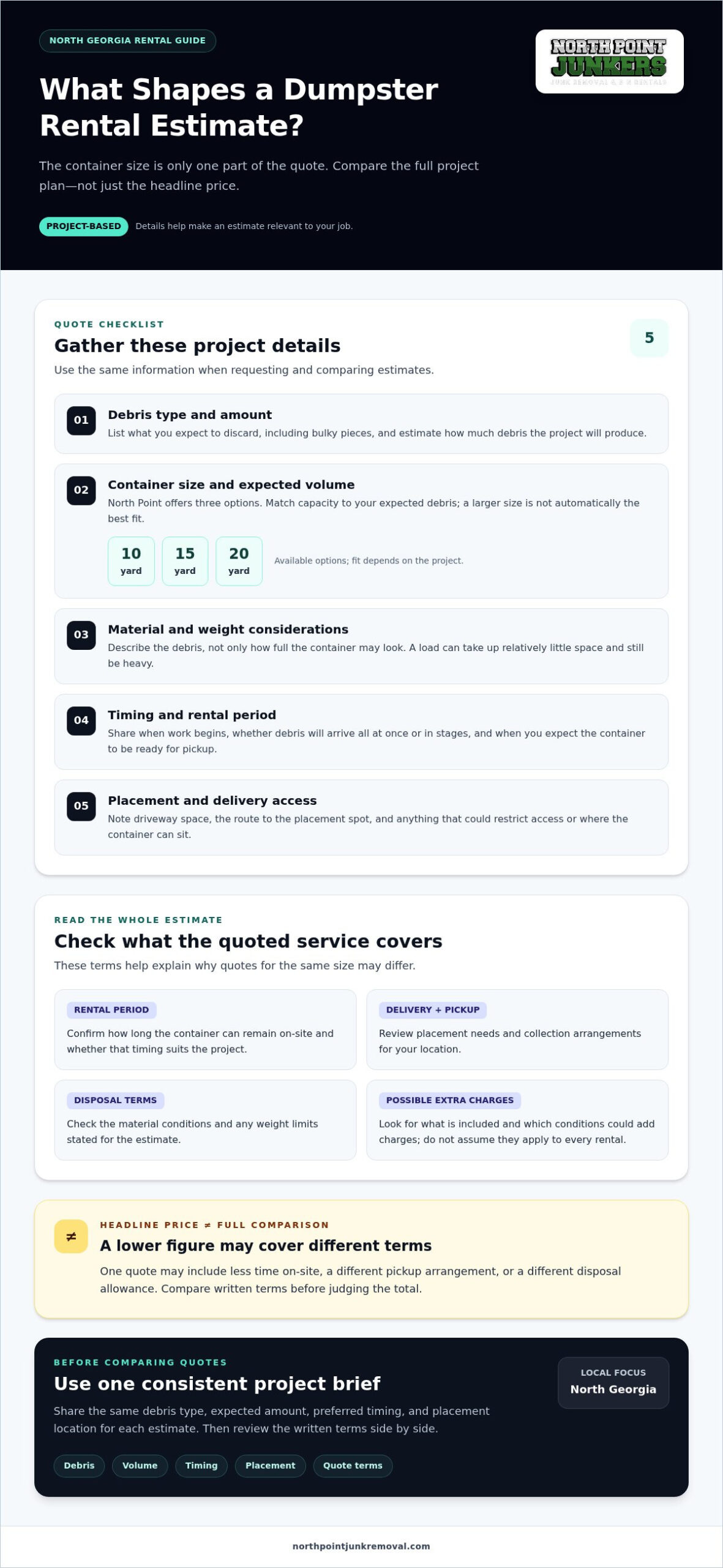
A dumpster rental quote is a project-based estimate shaped by container size, rental period, delivery and pickup arrangements, and disposal terms. To compare options fairly, look at the whole job, not just the size beside a headline price. The estimate should reflect what you plan to discard and how you’ll use the container.
A short cleanup and a renovation that generates debris in stages may call for different rental periods. The placement location also matters for delivery planning, especially when there’s limited room to position the container. North Point offers dumpster rentals for customers who want to manage debris on-site.
Disposal is part of the picture, too. Waste management covers how materials are handled after collection, and waste management principles offer useful background on the wider process. In a rental quote, specific disposal conditions and any weight limit may vary. Those terms define what the quoted service covers.
Which details belong in a dumpster rental quote?
Compare the details that shape the total and the work you’ll need to do. A clear written estimate should explain the rental period, delivery and pickup arrangements, and disposal terms for your project. It should also distinguish any possible additional charges from what’s included, rather than leaving you to assume they apply to every rental.
- Container size: The selected size is one part of the estimate and should reflect the project’s expected debris.
- Rental period: The time the container can remain on-site may affect the quoted total.
- Delivery and pickup: Placement needs and collection arrangements help determine how the rental is planned.
- Disposal terms: Weight limits and material conditions may vary by quote. These terms explain what happens if a load falls outside the stated limits.
For a useful comparison, provide the same project details for each estimate: debris type, expected amount, preferred timing, and placement location. Then review the written terms side by side. This makes differences in coverage easier to spot before you choose a rental approach.
Why is the lowest headline price not always comparable?
A lower headline figure may cover a shorter rental period or a different set of services. One estimate might include less time on-site, while another may describe a different pickup arrangement or disposal allowance. The totals aren’t comparable until you understand those differences.
Project scope matters as well. A cleanout with mostly light household items differs from work that produces dense or bulky debris, and the material can affect disposal conditions. Describe the project accurately and compare written terms, including any conditions that could add charges. That way, you can assess the complete estimate instead of relying on a number that leaves key details unclear.
What Factors Affect Dumpster Rental Prices in North Georgia?
In North Georgia, a useful estimate starts with the job, not a guess based on container size alone. The amount of debris helps determine which dumpster may fit, but project length, delivery access, material type, and disposal conditions also shape the plan. Sharing those details up front helps make the quote relevant to the work you’re doing.
Start with an inventory. Note what you expect to discard, including bulky pieces that take up space, and estimate how much debris the project will produce. A garage cleanout with stacked boxes and furniture has a different profile from a renovation that creates dense building debris. These examples don’t determine a size on their own, but they give you a useful starting point for describing the job.
How does dumpster size influence a rental quote?
A larger capacity may suit a larger project, but choosing more space than you need isn’t automatically the best fit. North Point offers 10-, 15-, and 20-yard dumpster options. Before choosing, list large or awkward items, estimate the debris volume, and consider whether the project will produce waste all at once or in stages. Share those details when requesting a project-specific estimate.
Volume is only one part of the decision. The material can matter because a container’s weight limit and disposal terms may differ by quote. A load can take up relatively little space and still be heavy, so describe the debris instead of estimating only by how full the container may look.
Can access, timing, or debris change the estimate?
Look at the planned drop-off area before requesting a quote. Consider the available driveway space, the route to the placement spot, and anything that could restrict access or limit where the container can sit. Clear details help with delivery planning. If placement is tight, describe the constraint rather than assuming a standard location will work.
Timing is another practical factor. A quick cleanout may follow a different schedule from a renovation or property project that creates debris over time. Think through when work begins, how steadily waste will accumulate, and when you expect the container to be ready for pickup. Rental periods and pickup arrangements are specific to the quote, so include your expected timeline.
Material conditions deserve the same attention. Before loading, understand which disposal terms and material restrictions apply to your estimate. The U.S. Environmental Protection Agency explains landfill regulations and types, offering context on where waste may ultimately go. The quote governs the specific disposal conditions for your project, so describe the debris accurately and read those terms carefully.
For a clearer estimate, bring together four details: a debris list, a rough volume, your project timeline, and the intended placement spot. This gives the rental plan a practical foundation. If you’re weighing sizes, review North Point’s 10-, 15-, and 20-yard options and match the capacity to the work you expect to complete.
Dumpster Rental or Junk Removal: Which Fits Your Project Better?
The better choice depends on how you want the work handled. A dumpster rental keeps a container on-site so you can load debris as the project progresses. Junk removal is a hands-on alternative: a crew handles the lifting and loading, which can simplify a cleanout when you’d rather not manage the hauling yourself. Compare the workflows against your schedule, available space, and workload.
| Consideration | Dumpster rental | Junk removal |
|---|---|---|
| Control of pace | Load debris on your own project timeline, subject to the rental terms. | Removal is organized around the service visit. |
| Loading responsibility | You or your project team load the container. | A removal crew handles lifting and loading. |
| Space | You need a suitable place for the container while it’s on-site. | You don’t need to keep a rental container at the property. |
| Project scope | Can suit work that generates debris over multiple stages. | Can suit a defined group of items or a cleanout where hands-on hauling is the priority. |
When does renting a dumpster make more sense?
Consider a rental for a renovation, garage cleanout, or ongoing property project when you want to add debris as work progresses. Keeping a container on-site lets you clear materials in stages instead of gathering everything for one removal visit. For larger commercial builds or facility upgrades, planning insights from contractors such as Octopus Renovation Group similarly emphasize coordinating phased waste management alongside project timelines. This approach works well when the project spans multiple days and you’re comfortable loading the debris.
Plan the placement first. Check whether the driveway or another spot has room for a container and whether delivery access is clear. Space constraints can affect whether an on-site rental suits your property. The debris and quote terms matter, too, so a rental isn’t automatically the right approach for every material or job.
When is full-service junk removal the simpler choice?
If lifting, loading, or coordinating hauling is the part you most want help with, junk removal may be the more straightforward fit. North Point provides residential and commercial junk removal, with fully insured and bonded professionals handling the hauling. For a home or business cleanout, professional junk removal in Cumming offers an alternative to managing a container and loading it yourself.
Think about the shape of the task. A few bulky items or a clearout where you want help with the physical work may call for a different workflow from a renovation that produces debris gradually. The Bureau of Labor Statistics provides a broader waste management industry overview, but your practical choice comes down to who handles the loading and how waste is generated at your site.
When comparing dumpster rental prices with removal, weigh the full workload, not just the service format. Choose a rental when self-paced loading and on-site access fit your project. Choose junk removal when having a crew handle the hauling better meets your needs—much like how commercial waste specialists such as Greenline Environmental manage end-to-end collection for businesses across London and the South East.
How to Prepare for a Dumpster Rental Estimate in Cumming and Forsyth County
A clear estimate starts with a clear picture of the job. Before requesting dumpster rental prices in Cumming or Forsyth County, gather practical details about what you’re removing, how long the work may take, and where a container could go. This helps shape a quote around your project instead of guesswork.
If you’re new to rentals, use this guide to renting a dumpster in North Georgia for broader planning context. Then prepare the details below.
- Describe the project. Note whether you’re cleaning out a garage, working on a renovation, or clearing a rental property. The project type gives useful context for the debris and schedule.
- List the materials. Describe what you expect to discard, including bulky items and materials that may have specific disposal conditions. Be as precise as you can.
- Estimate the volume. Make a rough inventory of the items or debris piles. Photos and basic measurements can add helpful context, but they don’t replace a project-specific estimate.
- Share your timeline. Explain when the work is expected to begin and how long you think debris will accumulate. A short cleanout and a project completed in stages may need different timing plans.
- Explain placement and access. Identify where you hope the dumpster will sit. Mention driveway dimensions or access constraints, such as a narrow approach, limited turning room, or obstacles near the planned spot.
What should you gather before requesting an estimate?
Keep your notes together so you can describe the same project consistently. Include the project type, approximate debris volume, material list, expected timeline, and proposed placement. Photos or measurements can help explain a pile’s size or the site layout, especially when access is tight. North Point provides free estimates via photos, so include clear pictures of the debris and proposed placement when you request an estimate.
How can local placement and disposal terms affect planning?
Property layout helps determine what placement is practical. Consider driveway space, overhead or nearby obstacles, and the route a delivery vehicle would need to reach the drop-off area. Local placement rules and disposal conditions can vary, so review any requirements that apply to your location along with the terms for your project. For additional local context, see Cumming dumpster rental comparisons.
Before requesting an estimate, be ready to explain what’s being discarded and where the container may fit. This makes the conversation more focused and helps identify which rental details matter for your job. Request a project-specific dumpster rental estimate with your project notes and photos ready.
Choose a North Point Dumpster Rental That Fits Your Project
A good rental choice balances four practical details: how much debris you expect, what it’s made of, how long the work may take, and where a container can be placed. No single detail tells the whole story. A project-specific estimate brings them together so you can choose a capacity and plan that fit the job.
North Point offers 10-, 15-, and 20-yard dumpsters. These are capacity options, not guarantees that a particular size will suit a specific cleanout or renovation. Share what you’re removing and how the project will unfold, then use the estimate to understand which option and rental terms fit your needs. Clear project details also make dumpster rental prices easier to assess for your situation.
Which dumpster size should you consider?
Start by listing the debris and noting the dimensions of bulky items. A few large pieces may take up more room than a pile of smaller items, while dense materials can raise different disposal considerations. Estimate the volume as carefully as you can, but don’t choose a capacity based on volume alone. Material, timing, and quote terms matter, too.
Use your notes to discuss whether the 10-, 15-, or 20-yard option may fit. If you’re uncertain, describe the scope rather than forcing a size decision. North Point can tailor the estimate to the details of your project.
What happens after you request a rental estimate?
A useful request includes the project scope, expected materials and debris volume, approximate timeline, and intended placement area. Include access limitations, such as a tight driveway or obstacles near the drop-off spot. These details help make the estimate specific to the work and location rather than a generic size selection.
Before scheduling, review the written quote and rental terms. Make sure you understand the planned rental period, delivery and pickup arrangements, and applicable disposal conditions. If the project changes, revisit those details so your plan still matches the work.
To get started, gather your project notes and photos of the debris and placement area. Share the scope, materials, timing, and access details to receive a tailored estimate. You don’t need every measurement to be perfect; a clear description is a practical place to begin.
With the right capacity and terms in view, it’s easier to plan the cleanup with confidence. Confirm the debris list and placement plan before moving ahead. Request a dumpster rental estimate when you’re ready to discuss your project.
Make Your Next Cleanup Easier to Plan
A cleanup plan doesn’t have to account for every surprise before you begin. Start with what you know: the work you want to complete, how you’d like debris handled, and any practical limits at the property. Those choices give you a solid foundation for reviewing dumpster rental prices and choosing a next step that fits the way you work.
North Point Junk Removal is locally owned and operated, serving North Georgia communities with dumpster rentals and junk removal. Its service area includes Cumming, Alpharetta, Johns Creek, Milton, Suwanee, Sugar Hill, Buford, Dawsonville, Roswell, Gainesville, Oakwood, FloweryDuluth, Coal Mountain, Chestatee, Silver City, Free Home, and Forsyth County. If you’d rather have a crew handle the lifting and hauling, North Point’s junk removal professionals are fully insured and bonded.
Request a dumpster rental estimate from North Point Junk Removal and share the details that will help shape a tailored quote. A little planning can make the cleanup more straightforward from the start.
Frequently Asked Questions
How much does dumpster rental cost in Cumming, GA?
There isn’t one rental price that applies to every Cumming project. The quote depends on the job and its rental terms, so use a local, project-specific estimate instead of a general online average. North Point Junk Removal serves Cumming and communities including Alpharetta, Johns Creek, Milton, Suwanee, Sugar Hill, Buford, Dawsonville, Roswell, Gainesville, Oakwood, FloweryDuluth, Coal Mountain, Chestatee, Silver City, Free Home, and Forsyth County.
What factors affect dumpster rental prices the most?
The main factors are capacity, rental timing, debris, access, and disposal conditions, though their effect depends on the project. A home cleanout with bulky furniture may call for different planning than a renovation producing dense debris. Describe both the materials and the work that will generate them. Then compare estimates using the same project details so differences in terms are easier to spot.
Are delivery, pickup, and disposal included in a dumpster rental quote?
Inclusions and disposal terms can differ between estimates. Read the written quote for delivery and pickup arrangements, rental period, disposal conditions, and any stated limits. For example, don’t assume a quote for one container covers the same rental duration or disposal allowance as another. Make sure the written terms are clear before scheduling.
What size dumpster should I rent for a home cleanout?
Choose based on the debris you expect, not just the room count or property size. A basement cleanout with large furniture can take up space differently from a clearout of smaller household items. North Point offers 10-, 15-, and 20-yard dumpsters. List bulky items and estimate the debris before selecting a size, then consider capacity alongside the job’s other needs.
Is renting a dumpster cheaper than hiring junk removal?
It depends on the amount of work and whether you want to load the debris yourself. A rental keeps a container on-site for self-paced loading, while junk removal includes hauling handled by a crew. For a small group of items, consider the labor you’d take on with a rental. For a large cleanout, compare the full rental terms with the removal service scope, not price labels alone.
Can I rent a dumpster for a renovation in Forsyth County?
A dumpster rental can support renovation cleanup when the materials, site access, and rental terms fit the project. Before planning placement, consider whether the container would sit on private property or another location, and review current local guidance for any applicable requirements. Describe the renovation debris and proposed drop-off spot in your estimate request to help shape a rental plan for the work and location.
What information do I need to request a dumpster rental estimate?
Prepare a short project description, a rough debris inventory, the materials involved, your expected timeline, and the proposed placement spot. Include access details, such as a narrow driveway or low branches near the route. If the project is still developing, distinguish what’s already known from what may change. Before scheduling, review the capacity, rental period, included services, and disposal terms in the estimate.